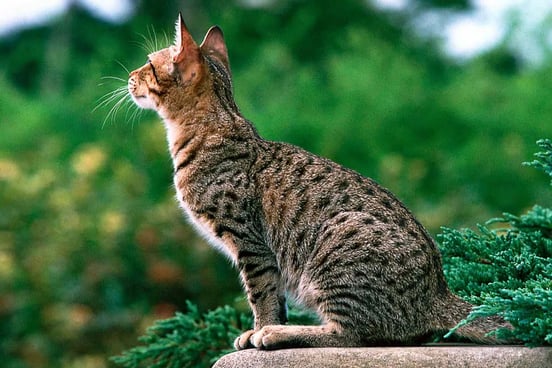
Brown Spotted Tabby, Silver Spotted Tabby, Black, Smoke
Temperament
ActiveAlertCuriousIntelligentLoyal
Description
The Savannah is a hybrid cat breed. It is a cross between a serval and a domestic cat. This hybridization typically produces large and tall offspring.
Article
Discover the Savannah cat, a majestic hybrid of an African serval and domestic cat. From generation differences to care tips, learn if this loyal, dog-like breed is right for you.
With its long legs, striking spotted coat, and exotic silhouette, the Savannah cat is a living testament to the wild's allure. This captivating hybrid, born from the cross between an African serval and a domestic cat, offers more than just a breathtaking appearance; it brings an unparalleled combination of intelligence and loyalty. For those seeking a feline companion that defies the ordinary, the Savannah cat offers a unique adventure in pet ownership.
History & Origins
The Savannah cat breed originated in the United States during the 1980s. The first documented Savannah was born in 1986 when a female domestic cat was bred with a male serval, an African wild cat known for its tall frame and large ears. Breeder Judee Frank is credited with this first successful cross, and the kitten, named Savannah, gave the breed its name.
The breed's development was later championed by Patrick Kelley and Joyce Sroufe. Today, Savannahs are classified by "filial" generations (F1, F2, F3, etc.). An F1 Savannah cat is the direct offspring of a serval and a domestic cat, while subsequent generations (F2, F3) move further away from their wild ancestry, influencing their size and temperament.
Breed Details
Property
Value
ID
13396882-01ce-47eb-b36d-413c4c0f3875
Name
Savannah
Origin
United States
Temperament
Active, Alert, Curious, Intelligent, Loyal
Life Span
12-20
Weight
5.5-11 kg
Length
50-70 cm
Coat Length
Short
Coat Colors
Brown Spotted Tabby, Silver Spotted Tabby, Black, Smoke
The Savannah is renowned for its tall, lean, and athletic build, often described as dog-like in stature. They are among the largest domestic cat breeds, with some F1 and F2 males weighing up to 11 kg (24 lbs). Their most distinctive feature is their incredible height at the shoulder, thanks to remarkably long legs.
They possess a short, dense coat with bold, dark spots. Standard colors include brown spotted tabby, silver spotted tabby, black, and smoke. Their head is small in proportion to their body, topped with large, tall, and wide-set ears—a direct inheritance from the serval.
Temperament & Personality: A Dog-Like Cat
Do not let the wild looks fool you; the Savannah cat forms deep, loyal bonds. They are often called "dog-like" because they frequently follow their owners from room to room.
Intelligence: They are highly intelligent, adept at learning tricks, walking on a leash, and playing fetch.
Energy Level: These cats require high levels of mental and physical stimulation to stay happy.
Social Needs: They are generally good with children and other pets if socialized early, though their high prey drive means they should be supervised around smaller animals.
Savannah Cat Care & Exercise Requirements
Caring for a Savannah is a commitment to an active lifestyle. They have intense physical requirements that must be met through daily interaction.
Vertical Space: High cat trees and shelves are essential to accommodate their leaping ability.
Grooming: Their short coat is low-maintenance. Weekly brushing is sufficient to keep them looking their best.
Enrichment: Use puzzle feeders and interactive toys to prevent boredom-induced destructive behavior. Many Savannahs also enjoy playing in water!
Health Considerations
Savannahs are generally robust but can be predisposed to certain genetic conditions:
Hypertrophic Cardiomyopathy (HCM): A form of heart disease.
Pyruvate Kinase Deficiency (PKDef): A condition which can cause anemia.
Reputable breeders screen for these conditions through DNA testing. With proper care, Savannahs enjoy a long lifespan, typically ranging from 12 to 20 years.
Is a Savannah Cat Right for You?
The Savannah cat is a perfect match for active owners who can provide a dynamic, engaging environment. They are ideal for experienced cat owners who understand feline behavior. This breed is not recommended for those seeking a quiet lap cat or first-time owners unprepared for high-intensity needs.
Before adopting, check your local laws, as some regions have legal restrictions on owning hybrid cat breeds like the Savannah.
The Savannah cat is more than a pet; it's an experience. It seamlessly blends the awe-inspiring elegance of the African savanna with the heartwarming devotion of a domestic companion. By understanding their unique needs—abundant exercise, intellectual challenge, and deep social connection—you open your home to one of the most remarkable and rewarding relationships the feline world has to offer.
3/5
Health Issues
Prone to hypertrophic cardiomyopathy (HCM) and pyruvate kinase deficiency.
Get expert advice about cat care, behavior, nutrition, grooming, and training. Ask our AI cat care expert anything about your cat and receive professional guidance.