United States
12-15
2.5-4 kg
Short
All colors and patterns
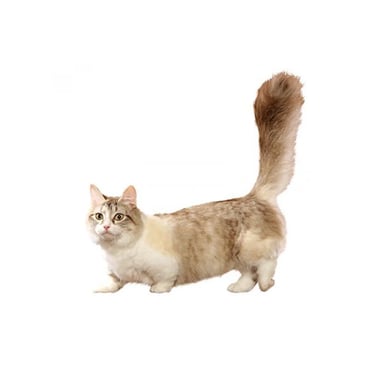
The Munchkin cat or Sausage cat is a breed of cat characterized by its very short legs, which are caused by genetic mutation. The Munchkin is considered to be the original breed of dwarf cat.
The Munchkin cat, famous for its short legs, is an affectionate, playful, and surprisingly agile companion with a heart as big as its personality.
With their distinctive short legs and perpetually kitten-like appearance, Munchkin cats have captured hearts worldwide. Far from being hindered, these charismatic felines use their unique build to develop a charming, low-to-the-ground scamper, earning them the affectionate nickname 'Sausage Cat.' Behind their adorable exterior lies a breed brimming with affection, intelligence, and a playful spirit that defies their stature.
The Munchkin's story began in the United States in the 1980s, though short-legged cats have been documented sporadically throughout history. The modern breed originated from a pregnant stray named Blackberry, who was found in Louisiana and passed the short-legged trait to half of her kittens. This natural genetic mutation, an autosomal dominant gene, became the foundation for the breed. While controversial initially, The International Cat Association (TICA) granted the Munchkin championship status in 2003, recognizing it as the original breed of dwarf cat. Their name is a loving nod to the little people from 'The Wizard of Oz.'
| Property | Value |
|---|---|
| ID | 8e38da2c-6a9f-4cc5-9398-d7131bceab21 |
| Name | Munchkin |
| Origin | United States |
| Temperament | Affectionate, Friendly, Intelligent, Playful, Social |
| Life Span | 12-15 |
| Weight | 2.5-4 kg |
| Length | 25-35 cm |
| Coat Length | Short |
| Coat Colors | All colors and patterns |
| Eye Colors | Gold, Green, Blue, Odd-eyed |
| Hypoallergenic | No |
| Shedding Level | 2/5 |
| Grooming Needs | 2/5 |
| Exercise Needs | 4/5 |
| Affection Level | 5/5 |
| Friendliness | 5/5 |
| Kid Friendly | 5/5 |
| Pet Friendly | 5/5 |
| Playfulness | 5/5 |
| Energy Level | 4/5 |
| Intelligence | 4/5 |
| Vocalization Level |
Munchkins are small to medium-sized cats, typically weighing 2.5 to 4 kg (5.5 to 9 lbs) and measuring 25 to 35 cm in length, not including their tail. Their most defining feature is their very short legs, which are caused by a genetic mutation that affects long bone development. Despite this, they are not fragile and possess a robust, muscular body. They come in all coat colors and patterns, with both short-haired and long-haired varieties. Their expressive eyes can be gold, green, blue, or odd-eyed, adding to their enchanting appearance.
Don't let their short legs fool you—Munchkins are dynamic, confident, and incredibly social cats. Scoring a perfect 5/5 in affection, friendliness, and playfulness, they are quintessential 'people cats' who thrive on interaction. They are highly intelligent (4/5) and energetic (4/5), often engaging in playful antics and solving simple puzzles. Their mobility is remarkable; they can run fast and jump onto furniture (using intermediate steps if needed), though not as high as longer-legged breeds. They are famously excellent with children and other pets, making them ideal for active, multi-pet households. They are not particularly vocal, preferring to communicate through action and presence.
Munchkins are relatively low-maintenance in grooming. With a shedding level of 2/5, a weekly brush is sufficient for short-haired varieties, while long-haired Munchkins need brushing a few times a week to prevent mats. Their exercise needs, however, are high (4/5). They require daily interactive play sessions with wand toys, puzzle feeders, and climbing structures adapted to their height to keep their agile minds and bodies stimulated. Regular nail trimming and dental care are recommended as part of their routine.
The primary health considerations for Munchkins are related to their unique structure. They can be prone to lordosis (an excessive curvature of the spine) and pectus excavatum (a hollowed chest). While not all Munchkins develop these conditions, responsible breeders screen for them. Some individuals may experience mobility issues or osteoarthritis later in life. With proper care, a healthy diet, and regular veterinary check-ups, Munchkins typically enjoy a lifespan of 12 to 15 years. It is crucial to source a kitten from a reputable breeder who prioritizes health and ethical practices.
The Munchkin is perfect for families, singles, and seniors seeking a highly affectionate, playful, and social companion. They are ideal for homes with children and other pets. Prospective owners should be prepared for an active cat that demands engagement and playtime. If you can provide a loving, interactive environment and are committed to potential breed-specific health monitoring, a Munchkin will reward you with endless entertainment and devotion. If you prefer a very sedentary, independent, or high-jumping cat, another breed might be a better fit.
The Munchkin cat proves that great things truly do come in small packages. Their short legs are simply a unique feature of a breed defined by its enormous personality, unwavering affection, and zest for life. More than just a novelty, the Munchkin is a testament to adaptability and charm, offering a lifetime of companionship, playful antics, and heartwarming loyalty to those who welcome them home.
| 2/5 |
| Health Issues | Prone to lordosis (curvature of the spine) and pectus excavatum (hollowed chest). Mobility issues can occur. |
| Images | 1 image |
Get AI-powered advice about your cat's health and care. Enter your cat's information and start a conversation with our veterinary assistant.
Start Chat with AIGet expert advice about cat care, behavior, nutrition, grooming, and training. Ask our AI cat care expert anything about your cat and receive professional guidance.
Start Chat with Expert