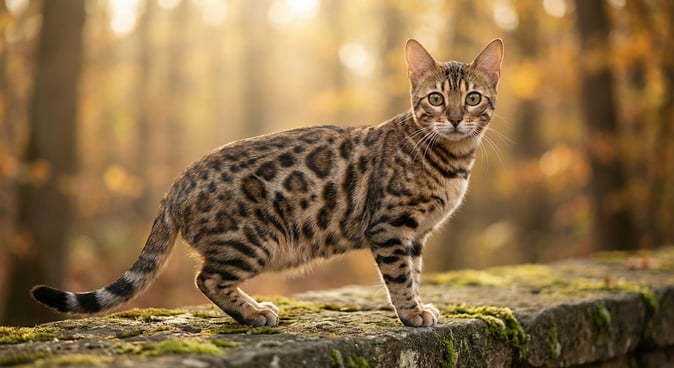
The Bengal cat is a domesticated cat breed created from hybrids of domestic cats and the Asian leopard cat. Bengals have a wild appearance with large spots, rosettes, and a light/white belly.
Article
Discover how the leopard-spotted Bengal went from jungle roots to living-room lap cat in just a few carefully planned generations. This bite-size origin story reveals the breeding breakthrough that tamed wild beauty without losing the heart of gold.
With their striking leopard-like rosettes and boundless energy, Bengal cats bring a touch of the wild into living rooms around the world. Bred from domestic cats and the Asian leopard cat, Bengals combine exotic beauty with an affectionate, playful temperament that cat lovers find irresistible. Whether they're scaling cat trees or curling up beside you, Bengals keep life entertaining.
History & Origin
The Bengal breed began in the United States during the 1960s when breeder Jean Mill crossed a domestic male with a female Asian leopard cat (Prionailurus bengalensis). Her goal was to combine the wild cat's stunning coat with a gentle, house-friendly personality. Early hybrids were fertile only in the female line, so subsequent generations were back-crossed to domestics until the fifth generation (F5), which consistently exhibited predictable, affectionate temperaments. The International Cat Association (TICA) granted Bengal championship status in 1991, and the breed has surged in popularity ever since.
Bengals are medium-to-large cats, typically weighing 4.5–8 kg (10–18 lb) and measuring 35–45 cm (14–18 in) in body length. Their short, plush coat feels silky and requires minimal grooming. The hallmark is the vivid pattern: large, well-defined spots or rosettes—often two-toned like a wild leopard—set against a background of rich brown, cool silver, snow-white, or dramatic charcoal. Snow variants display creamy coats with contrasting markings, while silver Bengals shimmer with a metallic sheen. All coat colors can be paired with gold, green, or captivating blue eyes (common in snows). A light or white belly, striped legs, and a thick, tapered tail complete the exotic look.
Temperament & Personality
Don't let the wild appearance fool you—Bengals are affectionate family members who crave interaction. They score 4/5 for affection and friendliness, bonding closely with their humans and often following them from room to room. Intelligence (5/5) makes them quick learners: many retrieve toys, open doors, or master puzzle feeders with ease. Their vocalization score of 4/5 means you'll enjoy a range of chirps, trills, and conversational meows rather than constant yowling. Expect a social cat that welcomes kids (4/5), other cats, and even cat-friendly dogs (4/5), provided introductions are gradual and respectful.
Care Requirements
Grooming is delightfully simple: a weekly rub with a soft brush or chamois removes loose hair and distributes skin oils, keeping the coat glossy. Shedding is low (2/5), so fur on furniture is minimal. What Bengals demand is activity—exercise needs top the chart at 5/5. Provide tall cat trees, wall-mounted shelves, interactive toys, and daily play sessions to burn off energy. Puzzle feeders challenge their clever minds and prevent boredom-driven mischief such as knocking items off counters. Because they love water, many owners offer a shallow fountain or supervised faucet play, turning grooming into splash time.
Health Considerations
Bengals are generally robust, but responsible breeders screen for several inherited conditions:
Hypertrophic cardiomyopathy (HCM)—annual cardiac ultrasound is recommended.
Progressive retinal atrophy (PRA) and pyruvate kinase deficiency (PKDef)—DNA tests are available; verify parents are clear.
Orthopedic issues—patellar luxation and hip dysplasia can occur; keep cats lean to reduce joint stress.
Anesthetic sensitivity—discuss appropriate protocols with your vet before surgeries or dental cleanings.
With proper care, Bengals live 12–16 years. Routine vaccinations, parasite control, dental hygiene, and a balanced high-protein diet support longevity.
Is This Breed Right For You?
Choose a Bengal if you want an active, engaging companion and can dedicate at least an hour daily to interactive play. They thrive in homes with children, other pets, or work-from-home guardians who appreciate feline supervision. Apartment living is possible, but vertical space and environmental enrichment are essential. If you prefer a quiet lap cat or travel frequently, a lower-energy breed might suit you better. Always purchase from a registered breeder who provides health guarantees and raises kittens underfoot for optimal socialization.
Bengals deliver the best of both worlds: the breathtaking beauty of a wild cat and the loving loyalty of a domestic companion. Their intelligence, athleticism, and affectionate nature create a dynamic household presence that keeps owners entertained and adored in equal measure. For those ready to match their energy and curiosity, a Bengal cat promises a dazzling, doting friend for years to come.
Get expert advice about cat care, behavior, nutrition, grooming, and training. Ask our AI cat care expert anything about your cat and receive professional guidance.