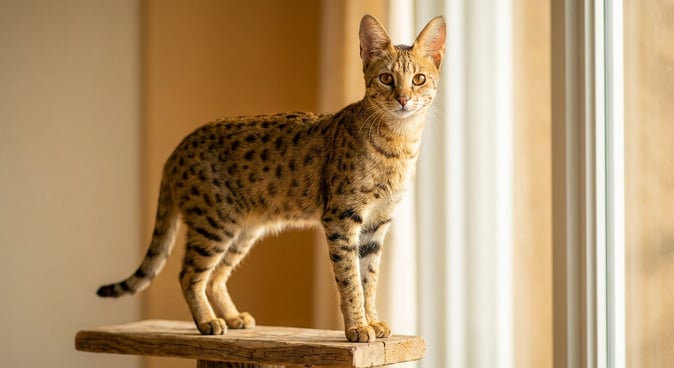
Brown Spotted Tabby, Silver Spotted Tabby, Black, Smoke
Temperament
ActiveAlertCuriousIntelligentLoyal
Description
The Savannah is a tall, lean hybrid breed created by crossing an African Serval with domestic cats. Noted for its spotted coat, long legs, large ears, and dog-like loyalty, it retains a strong prey drive and high activity level. Requires secure space and mental stimulation.
Article
Born from a chance mating between a wild African Serval and a Siamese in 1986, the Savannah cat fuses exotic spots and towering legs with an unexpectedly dog-like devotion. Discover how this striking hybrid leapt from accidental kitten to recognized breed, captivating families who crave a touch of the wild without sacrificing loyalty.
Imagine a feline that greets you at the door, fetches toys, and proudly trots on a leash—yet looks like it just stepped off the African savanna. The Savannah cat, a striking cross between a domestic cat and the wild African Serval, offers exactly that blend of exotic elegance and affectionate companionship. With towering legs, dramatic spots, and an almost canine devotion to their people, these cats rewrite the rulebook on what it means to be a pet.
History & Origin
The Savannah’s story begins in 1986, when Bengal breeder Judee Frank accidentally paired a male Serval with a Siamese domestic cat in Pennsylvania. The resulting kitten—named "Savannah"—inherited her father’s long legs and bold spots along with her mother’s sociable nature. Fascinated by the hybrid’s beauty and intelligence, breeders Patrick Kelley and Joyce Sroufe spent the next decade refining the cross. By 2001, The International Cat Association (TICA) granted the breed championship status, making the Savannah the first hybrid to jump from experimental to fully recognized in record time. Today, only Serval-to-domestic crossings and later-generation Savannah-to-Savannah matings are permitted, ensuring the exotic look while preserving manageable temperaments for family life.
Breed Details
Property
Value
ID
8131646b-9afb-4a00-903e-97b8da56a10d
Name
Savannah
Origin
United States (Serval × domestic cross)
Temperament
Active, Alert, Curious, Intelligent, Loyal
Life Span
12–15
Weight
3.6–11.3 kg
Length
50-70 cm
Coat Length
Short
Coat Colors
Brown Spotted Tabby, Silver Spotted Tabby, Black, Smoke
Savannahs are the basketball players of the cat world: tall, lean, and breathtakingly agile. Males typically weigh 6–11.3 kg (13–25 lb), while females range 3.6–6.8 kg (8–15 lb), yet both appear heavier thanks to long limbs and a deep, aerodynamic chest. From nose to tail they measure 50–70 cm, with hind legs noticeably longer than the front, giving them a high-shouldered, cheetah-like silhouette. The short, close-lying coat showcases bold, dark spots against golden, silver, or smoky backgrounds; melanistic black Savannahs hide their spots in ghost-like fashion. Oversized, cupped ears sit atop a small, triangular head, while hooded, slightly almond eyes gleam in shades of gold, green, or rich brown. Every detail whispers "wild," yet the body is pure athlete, capable of vertical leaps exceeding 2.5 metres.
Temperament & Personality
If cats had zodiac signs, the Savannah would be Aries: energetic, curious, and fearless. They bond fiercely with "their" humans, often following them room to room, chirping a soft, trilling commentary. Fetch? Absolutely. Walks on a harness? Bring on the neighborhood admirers. Their intelligence ranks off the charts—expect them to learn how to open doors, turn on faucets, or raid supposedly cat-proof treat drawers. While affectionate (4/5), they aren’t lap-loungers; instead they prefer head butts, shoulder perches, and interactive games. Multi-pet households require strategy: the prey drive inherited from the Serval means small rodents, birds, or even sluggish cats may be viewed as toys. Properly introduced dogs and confident cats can become sprinting buddies, but supervision is key.
Care Requirements
Grooming is refreshingly low-maintenance; a weekly once-over with a soft brush or chamois cloth removes dead hair and highlights the coat’s glossy sheen. Shedding sits at a moderate 3/5, so expect some hair on furniture but not the tumbleweeds common to fluffier breeds. The real work lies in exercise and enrichment. A Savannah needs daily outlets for its 5/5 energy: cat wheels, ceiling-height cat trees, puzzle feeders, and leash adventures. Without stimulation they invent their own entertainment—usually at your expense. A secure, outdoor enclosure (think "catio" on steroids) lets them sunbathe safely; ordinary window screens won’t withstand a bored Savannah’s persistence. Diet should be high-protein, low-carb: premium kibble supplemented with raw or wet food mimics the muscle meat they crave and helps maintain lean muscle mass.
Health Considerations
Overall, Savannahs are a hardy, long-lived breed, typically thriving 12–15 years. Responsible breeders screen for hypertrophic cardiomyopathy (HCM), the most common heart disease in cats, via annual echocardiograms. Because early-generation males (F1–F3) are often sterile, most pet-quality kittens are F4 or beyond, which also reduces size slightly and improves fertility while retaining the dramatic look. Routine vaccinations, dental care, and parasite control are the same as for any domestic cat, but travel considerations differ: many jurisdictions classify early-generation hybrids as "wild" animals, so check local laws before purchasing. Pet insurance may also apply breed-specific riders, so read the fine print.
Is This Breed Right For You?
Choose a Savannah if you want an interactive, adventurous companion and can commit serious playtime every single day. They shine in homes with older children who enjoy fetch marathons and clicker-training sessions. Apartment living is possible only if you can cat-proof cabinets, provide vertical space, and dedicate evening hours to interactive wand toys. Budget matters: kittens range $1,500–$20,000 depending on generation and coat quality, plus you’ll invest in sturdy trees, outdoor enclosures, and high-protein food. If you travel frequently or prefer a serene lap cat, opt for a mellower breed. But for experienced cat lovers seeking a devoted, breathtakingly beautiful partner in crime, the Savannah delivers a lifetime of wild wonder without ever booking a safari.
The Savannah cat offers a rare fusion of untamed beauty and heartfelt loyalty, turning everyday life into a miniature adventure on the savanna. With the right mix of space, stimulation, and affection, this spotted athlete will reward you with dog-like devotion, acrobatic antics, and a friendship as bold as its coat. If you’re ready to trade couch-potato evenings for leashed walks and gravity-defying leaps, the Savannah might just be your perfect copilot.
3/5
Health Issues
Generally healthy; screen for hypertrophic cardiomyopathy (HCM). Early-generation males (F1–F3) often sterile; later generations (F4+) recommended for pet homes.
high-energy pets
dog-like cats
Cat's Doctor
Get AI-powered advice about your cat's health and care. Enter your cat's information and start a conversation with our veterinary assistant.
Get expert advice about cat care, behavior, nutrition, grooming, and training. Ask our AI cat care expert anything about your cat and receive professional guidance.