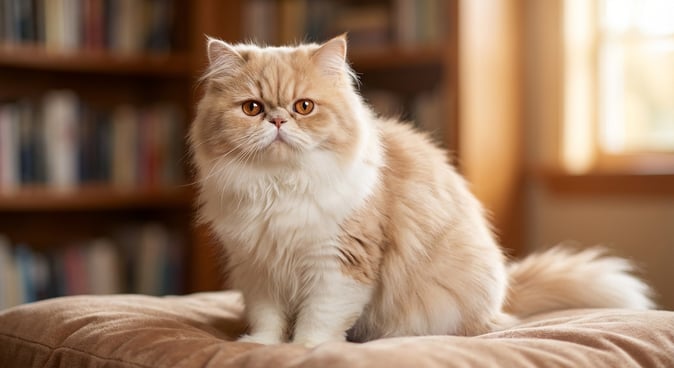
The Persian cat is a long-haired breed of cat characterized by its round face and short muzzle. It is also known as the 'Persian Longhair' in English-speaking countries.
Article
Journey from the sands of ancient Persia to the velvet cushions of Victorian parlors—discover how the world’s most glamorous feline earned its crown as the aristocrat of cat breeds.
With their cloud-like fur, expressive copper eyes, and unmistakable flat faces, Persian cats have reigned as one of the world’s most beloved breeds for over 400 years. Beneath the glamorous coat lies a calm, affectionate soul who prefers a quiet lap to chaotic play sessions. Whether you’re drawn to their regal appearance or their sweet, gentle temperament, understanding what makes a Persian tick is the first step toward a happy life together.
History & Origin
The Persian’s story begins in the high plateaus of Iran—once Persia—where longhaired cats were first documented in the 1600s. Italian traveler Pietro della Valle is credited with bringing the first pairs to Europe in 1620, describing them as “gray, silky” cats unlike any seen in the West. By the Victorian era, Persians had become status symbols among British aristocracy, showcased at the first organized cat show in 1871 at London’s Crystal Palace. Selective breeding shortened the muzzle and amplified the coat, transforming the original desert cat into the cobby, flat-faced beauty we recognize today. The breed arrived in North America in the early 1900s and quickly topped registration lists, a position it still holds in many countries.
Persian catPersian Longhairlong-haired catsflat-faced catscalm cat breedslap cats
Persian - Cat Breeds
Physical Characteristics
Persians are medium-to-large cats, typically weighing 3–6 kg (7–13 lb) and measuring 40–50 cm from nose to tail base. Their silhouette is cobby—short-legged, broad-chested, and muscular—yet draped in an extravagant long coat that can take on more than 80 color and pattern combinations, including pristine white, jet black, shimmering silver, golden chinchilla, classic tabby, tortoiseshell, calico, bi-color, smoke, and rare cameo. Eye color varies by coat: copper is most common, but white Persians may have dazzling blue or odd eyes (one blue, one copper), while silver and golden lines often display vivid green. The breed’s hallmark is the brachycephalic head: a round skull, tiny ears set far apart, full cheeks, and an extremely short, snub nose that creates the signature “pansy-face.”
Temperament & Personality
If cats had royalty, the Persian would be the quiet monarch content to reign from a velvet cushion. Affection level scores a solid 4/5, yet their love is shown through serene presence rather than acrobatics. They are calm, gentle, and famously quiet—vocalization barely registers 1/5—communicating with soft chirps or expressive eyes rather than demanding meows. Energy and playfulness both sit at 1/5; a Persian kitten may bat a feather for five minutes before retiring to the sofa for a six-hour nap. This makes them excellent companions for seniors, apartment dwellers, or families seeking a low-speed friend. They score 4/5 for kid- and pet-friendliness, tolerating respectful children and cat-friendly dogs with polite indifference. While not razor-sharp problem solvers (intelligence 3/5), they excel at reading human moods and will quietly offer comfort after a stressful day.
Care Requirements
Grooming is the Persian religion. The breed’s ultra-long, cottony coat is a five-out-of-five shedding powerhouse that matts within days without daily attention. Invest in a quality stainless-steel comb and schedule 15–20 minutes every evening to work through the ruff, armpits, and under-tail areas. A monthly bath with degreasing cat shampoo keeps the coat silky and reduces oil buildup that can cause skin fold dermatitis. Daily face wiping prevents tear stains common in flat-faced cats; use a separate cloth to clean nose folds and eye corners. Despite scant exercise needs, provide a short cat tree or window perch to encourage gentle stretching and prevent obesity. Feed measured portions of high-protein kibble or wet food—Persians can be prone to dental malocclusions, so incorporate dental treats or raw chicken necks for natural scraping.
Health Considerations
The same adorable face that melts hearts can also restrict airflow. Brachycephalic airway syndrome means some Persians snore, wheeze, or overheat in summer; keep rooms cool and avoid stressful car rides on hot days. Polycystic kidney disease (PKD) once affected up to 40 % of the breed, but DNA testing now allows breeders to produce PKD-negative lines—always ask for proof of parental testing. Progressive retinal atrophy (PRA) can cause late-onset blindness; reputable breeders screen for the rdAc mutation. Hypertrophic cardiomyopathy (HCM), the most common feline heart disease, may appear in middle age, so annual cardiac ultrasounds are advised. Eye issues include cherry eye (prolapsed gland) and entropion (inward-rolling lids) that require surgical correction. Finally, crowded flat jaws predispose Persians to dental malocclusions; introduce tooth-brushing early and schedule annual dental cleanings.
Is This Breed Right For You?
Choose a Persian if you crave a tranquil, decorative companion who lives to lounge beside you while you read or binge-watch television. They fit apartments, single-person households, or serene families with older children who understand gentle handling. Pass if you want a playful acrobat, dislike grooming, or work 12-hour shifts away from home—Persians crave human presence and can become depressed when left alone for long stretches. Budget for professional grooming every 6–8 weeks plus potential veterinary costs related to brachycephalic and renal issues. In return you’ll gain a sweet, steadfast friend whose quiet purr and melting gaze turn any sofa into a throne.
Fun Facts
The world’s first cloned cat, CC (CopyCat), was a calico Persian created by Texas A&M scientists in 2001.
White Persians with blue eyes have a 60–80 % chance of congenital deafness, similar to Dalmatians.
Hollywood loves Persians: Mr. Tinkles in “Cats & Dogs” and the pampered show cat in “Babe: Pig in the City” are both Persians.
Owning a Persian is like keeping a living work of art: the luminous coat, the pansy face, the soft, undemanding companionship. Yes, the grooming is real and the health considerations serious, but devotees insist nothing compares to the moment a serene Persian settles onto your lap, purrs like a distant Rolls-Royce engine, and turns those copper eyes on you as if to say, “All is well.” Provide daily brushes, gentle climate, and plenty of love, and this ancient aristocrat will reward you with a decade or more of quiet, loyal devotion.
Get expert advice about cat care, behavior, nutrition, grooming, and training. Ask our AI cat care expert anything about your cat and receive professional guidance.