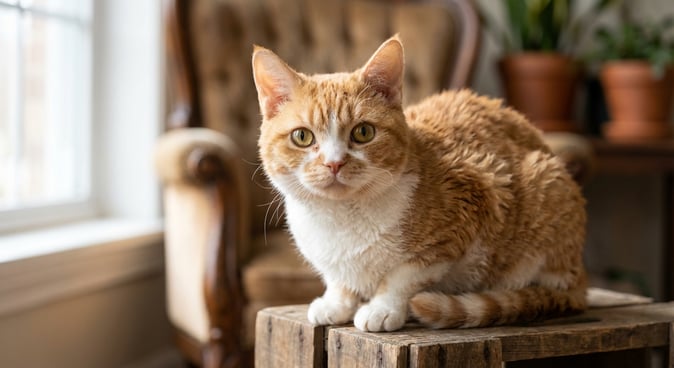
The American Wirehair is a breed of domestic cat that originated in upstate New York in 1966. As of 2017, though the breed is well-known, it is ranked as the most rare of the 41 CFA breeds, with only 22 registered that year. Its wiry, springy coat is unique among cat breeds.
Article
Born from a single kitten’s surprise spring-like coat on a 1966 New York farm, the American Wirehair is America’s own home-grown, steel-wool sweetheart—discover how one genetic twist turned a barn-cat fluke into a cherished, show-stopping breed.
Imagine a cat whose fur feels like steel wool spun into silk, whose demeanor is as steady as a lighthouse, and whose rarity makes every encounter feel like finding treasure. That’s the American Wirehair: a home-grown American original that quietly charms everyone it meets. Whether draped across your lap like a living hot-water bottle or batting a toy with gentle curiosity, this breed proves that the best things come in wiry packages.
History & Origin
The American Wirehair’s story begins in 1966 on a small farm in upstate New York. A spontaneous genetic mutation produced a single red-and-white kitten with crimped, springy fur among an otherwise ordinary litter of Domestic Shorthairs. Local breeder Joan O’Shea recognized the uniqueness of the coat and, with fellow enthusiasts, founded a breeding program. Because the wire coat is a dominant mutation, outcrossing to American Shorthairs maintained type while preserving the signature texture. CFA granted championship status in 1978, yet the breed has remained elusive—only 22 kittens were registered worldwide in 2017, making it the rarest of CFA’s 41 recognized breeds.
Weighing 3.5–5.5 kg (8–12 lb) and measuring 30–40 cm from shoulder to tail base, the American Wirehair is a medium-sized cat built for comfort, not extremes. The head is round with prominent cheeks, a square muzzle, and expressive, wide-set eyes that sparkle in shades of gold, copper, hazel, green, or even blue in colorpoint varieties. Ears are medium, set wide, and sometimes tipped with delicate wisps that echo the coat’s crimp.
But the star of the show is the coat: each hair—guard, awn, and down—is crimped, hooked, or kinked, creating a resilient, springy texture that bounces back when touched. The density gives the cat a plush, padded feel, yet the overall length remains short. Whiskers and eyebrows share the same curl, often breaking off short and adding to the breed’s endearingly tousled expression. Every color and pattern is accepted, from classic brown tabby to shaded silver, tortoiseshell, and pointed; the coat is truly a canvas for feline art.
Temperament & Personality
Think of the American Wirehair as the feline equivalent of a golden retriever—easy-going, affectionate, and unfailingly polite. Affection level scores a solid 4/5; these cats crave human company but are not clingy. They follow their people from room to room, offering quiet commentary with soft chirps (vocalization 2/5), then settle companionably nearby. Energy clocks in at a moderate 3/5, meaning they’ll chase a feather wand with gusto but won’t dismantle your shelves at 3 a.m.
Their calm demeanor makes them stellar family cats: kid-friendly 4/5, pet-friendly 4/5. Guests are greeted with curious head-bumps rather than dashes under the bed. Playfulness remains kitten-like into adulthood—expect spontaneous somersaults with toy mice—but they read the room and tone it down when toddlers toddle or seniors nap. Intelligence (4/5) shows in puzzle-solving prowess; hide treats in a cardboard castle and watch them engineer a siege.
Care Requirements
Grooming is refreshingly simple for such a distinctive coat. The wiry texture resists matting, so weekly brushing with a soft slicker or rubber curry is enough to remove dead hair and distribute skin oils. Baths are rarely necessary; if you must, use a mild shampoo and towel-dry gently—blow-dryers can over-fluff the crimp. Shedding sits at a moderate 3/5; expect seasonal upticks in spring and fall, but nothing like a double-coated breed.
Exercise needs align with their moderate energy: two 10-minute interactive play sessions daily plus a repertoire of batting toys keep them fit. Puzzle feeders tap into their intelligence and prevent boredom pounds. Because they are social, provide a window perch, a cat tree, and—if you work long hours—a companion pet. They adapt happily to indoor-only life but appreciate supervised patio time in a secure catio.
Nutrition follows standard feline rules: high-protein, grain-inclusive or grain-free according to your vet’s advice, portion-controlled to prevent obesity. Fresh water in wide ceramic bowls (their whiskers are sensitive) completes the menu.
Health Considerations
American Wirehairs are generally robust, benefiting from the diverse gene pool of their American Shorthair ancestors. Average lifespan is 10–16 years. The breed can carry a genetic predisposition to hypertrophic cardiomyopathy (HCM), so reputable breeders screen breeding cats with annual echocardiograms. Ask for documentation of HCM-clear parents and a written health guarantee.
Routine dental care is vital; introduce tooth-brushing early to prevent periodontal disease. Keep vaccinations, parasite control, and annual vet checks current. Because their crimped whiskers can be brittle, avoid excessive rubbing that might break them short. Otherwise, expect the usual senior-cat issues—arthritis, kidney changes—and schedule semi-annual exams once your cat reaches seven years.
Is This Breed Right For You?
Choose an American Wirehair if you want a loving, low-drama companion who gets along with kids, dogs, and other cats. They fit apartments as easily as sprawling houses, provided you offer daily play and affection. Travelers should consider two so they can keep each other company. Allergy sufferers, note: the breed is not hypoallergenic, though the tight coat may retain less dander than some others.
Be prepared for rarity; waitlists for kittens can stretch six months to a year, and colors cannot be guaranteed. Reputable breeders charge $800–$1,500 depending on pedigree and region. Alternatively, watch breed-specific rescues—adult Wirehairs occasionally need re-homing when owners relocate. If you value uniqueness wrapped in an easy-care, teddy-bear personality, the American Wirehair will reward you with years of quiet devotion and the endless fascination of that extraordinary coat.
The American Wirehair is America’s best-kept feline secret: a rare treasure with a coat like coiled velvet and a heart that bends toward everyone it meets. Quietly playful, unfailingly gentle, and as low-maintenance as a cat can be, it offers the perfect balance of affection and independence. If you’re lucky enough to share your sofa with one of these springy-coated sweethearts, you’ll understand why enthusiasts guard the secret—and why every crimped whisker feels like a tiny miracle of American cat history.
2/5
Health Issues
Generally healthy; may carry genetic predisposition to hypertrophic cardiomyopathy (HCM).
American cat breeds
easy grooming cats
unique cat coats
affectionate cats
Cat's Doctor
Get AI-powered advice about your cat's health and care. Enter your cat's information and start a conversation with our veterinary assistant.
Get expert advice about cat care, behavior, nutrition, grooming, and training. Ask our AI cat care expert anything about your cat and receive professional guidance.