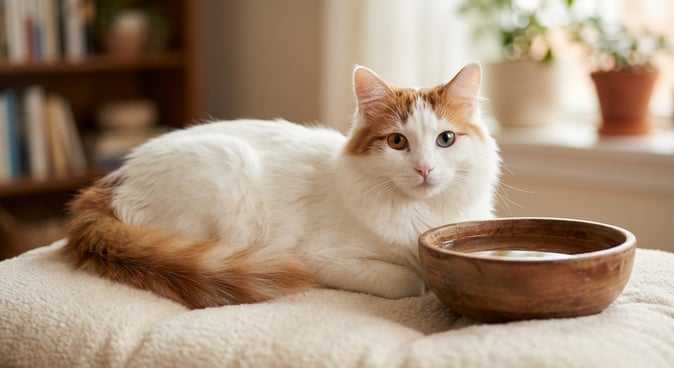
The Turkish Van is a rare, semi-long-haired breed known for its distinctive color pattern—mainly white with colored markings restricted to the head and tail—and its unusual love of water. Originating in the Lake Van region of Turkey, it is energetic, intelligent, and forms strong bonds with its family.
Article
Discover the Turkish Van, the rare, lake-loving feline whose waterproof coat and powerful swimming instincts have enchanted Turkish villagers for centuries before splashing onto the global stage.
Picture a cat that leaps into your bubble bath instead of sprinting away. That’s the Turkish Van, a striking, semi-long-haired breed from Turkey’s Lake Van region whose affectionate loyalty and high-octane playfulness have earned it the nickname "the swimming cat." With a snow-white body crowned by colorful head and tail markings, the Van combines beauty, brains, and an adventurous spirit few felines can match.
History & Origin
Turkish Vans have roamed eastern Turkey for centuries, isolating themselves around rugged Lake Van where their waterproof coat and agile swimming skills developed naturally. Local legends celebrated the cats as palace guardians and good-luck charms long before two English photographers, Sonia Halliday and David Halliday, exported a pair in 1955. The breed slowly gained Western recognition, earning full championship status with CFA in 1994 and today remains rare worldwide, with most breeding programs carefully guarding the gene pool to maintain its regional heritage.
Turkish Vans are medium-to-large cats, weighing 3–8 kg (7–18 lb) and stretching 45–60 cm from nose to tail tip. Males are noticeably broader through the shoulders, giving them a powerful, swimmer’s silhouette. The signature "Van pattern" is a color restriction gene that leaves the body chalk-white while allowing red, cream, black, blue, tabby, or tortoiseshell on the head and tail; ideally color should cover no more than 20% of the cat. Eyes may be brilliant amber, sapphire blue, or odd-eyed (one of each), and the odd-eyed variety can occasionally show partial deafness linked to the white spotting gene.
The coat is semi-long, single, and cashmere-soft, lacking a woolly undercoat. This seasonal garment grows longer in winter, yet dries in minutes thanks to its water-repellent texture. The tail becomes a dramatic plume, often banded like a raccoon’s, perfectly balanced for swimming strokes.
Temperament & Personality
If felines had an honors program for athletics and problem-solving, the Van would graduate top of the class. Energetic (5/5) and fiercely intelligent (5/5), these cats invent games—fetching toys, opening drawers, turning faucets on—and expect you to join. They bond deeply (affection 4/5) but are not clingy; Vans follow you room-to-room offering quiet commentary (vocalization 2/5) rather than constant meows.
Their playful antics persist well into adulthood, earning them the label "the Peter Pan of cats." Expect leaping to high shelves, tag-team wrestling with feline housemates, and—most famously—splashing in any available water: aquariums, toilets, your morning coffee. Provide sturdy scratching towers and puzzle feeders or risk having your curtains repurposed into climbing ropes.
Care Requirements
Grooming: Despite glamorous length, the single coat resists matting. Brush twice weekly with a stainless-steel comb; daily during spring shed (shedding level 3/5). Bathing is rarely required—ironically, their water-loving coat also sheds dirt quickly—but many owners keep a shallow "splash pool" for supervised swims.
Exercise: Plan 30–40 minutes of active play daily. Interactive wand toys, fetch, and clicker-trained agility keep the Van mentally sharp and physically fit. Secure outdoor enclosures or leash walks satisfy their explorer streak far better than free-roaming.
Diet: High-protein, calorie-dense food supports their muscular frame and high metabolism. Measure meals; these clever cats master refrigerators and treat bags with ease. Fresh water—ironically—should be offered in heavy ceramic bowls to prevent tipping.
Health Considerations
Turkish Vans are generally robust, living 12–17 years. Reputable breeders screen for hypertrophic cardiomyopathy (HCM); annual cardiac ultrasounds are advised. Odd-eyed whites may carry the W-gene linked to unilateral deafness, so BAER testing is recommended. Routine dental care and weight control ward off periodontal disease and joint stress. Vaccinations, parasite control, and a safe indoor environment keep the adventurous Van out of veterinary trouble.
Is This Breed Right For You?
Ideal Van owners crave an interactive, dog-like companion and don’t mind a bit of feline-induced splatter on bathroom floors. Families with respectful children, other pets, and ample play space will delight in the Van’s friendly, adaptable nature. Singles in small apartments who work long hours may find the breed’s exercise demands challenging unless they invest in environmental enrichment and daily play sessions. If you cherish quiet, sedate lap cats, look elsewhere; if you want an athletic teammate who greets guests, learns tricks, and occasionally cannonballs into your bath, the Turkish Van will steal your heart—and probably your washcloth.
The Turkish Van is equal parts athlete, scholar, and water-loving clown wrapped in a luxurious, low-maintenance coat. For owners ready to match its energy and curiosity, this rare Turkish treasure rewards with unwavering loyalty, playful conversation, and a lifetime of splashy memories.
2/5
Health Issues
Generally healthy; occasional hypertrophic cardiomyopathy (HCM) and rare hearing issues in odd-eyed whites.
Turkey cat breeds
family-friendly cats
intelligent cats
Cat's Doctor
Get AI-powered advice about your cat's health and care. Enter your cat's information and start a conversation with our veterinary assistant.
Get expert advice about cat care, behavior, nutrition, grooming, and training. Ask our AI cat care expert anything about your cat and receive professional guidance.