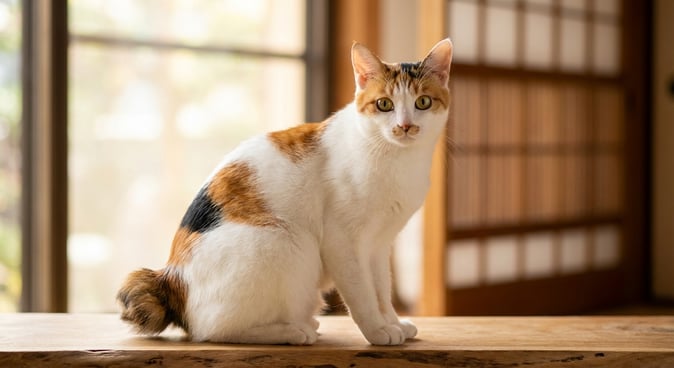
The Japanese Bobtail is an ancient breed native to Japan, distinguished by its unique 'bobbed' tail that resembles a pom-pom or rabbit tail. These cats are highly social, intelligent, and vocal, often communicating with soft chirps and meows. They are active, playful, and form strong bonds with their families.
Article
Step into the land of the rising sun and meet the Japanese Bobtail, a 1,000-year-old living legend whose playful pom-pom tail once guarded silk manuscripts in ancient temples. Discover how this charming, mouse-hunting muse became Japan’s most beloved feline icon.
With a tail that looks more like a whimsical pom-pom than a typical feline appendage, the Japanese Bobtail has captured hearts for over a millennium. These enchanting cats, native to Japan, are renowned for their distinctive appearance and equally captivating personalities. From ancient temple guardians to modern-day family companions, Japanese Bobtails have woven themselves into the fabric of Japanese culture and are increasingly winning admirers worldwide.
History & Origin
The Japanese Bobtail's story begins over 1,000 years ago in Japan, making it one of the world's oldest natural cat breeds. Legend has it that these cats arrived in Japan from China or Korea as gifts to the Emperor, quickly becoming prized for their mouse-hunting abilities that protected precious silk manuscripts in Buddhist temples. By the 7th century, the breed was well-established throughout Japan, with records showing they were kept by nobility and commoners alike.
Japanese Bobtailancient cat breedpom-pom tailaffectionate catsactive catsfamily-friendly cats
Japanese Bobtail - Cat Breeds
The breed's most famous cultural representation is the Maneki-neko, or "beckoning cat" figurine, believed to bring good fortune and prosperity. These ceramic cats, always depicted with a raised paw and distinctive bobbed tail, can be found in businesses and homes across Japan and beyond. The Japanese Bobtail's natural mutation became so intertwined with Japanese culture that artists and writers have celebrated it in countless works throughout the centuries.
Physical Characteristics
The Japanese Bobtail's most striking feature is undoubtedly its unique tail, which typically measures 2-4 inches long and resembles a rabbit's tail or pom-pom. Each tail is unique, with curves, angles, or kinks that create a fingerprint-like pattern. This natural genetic mutation affects the tail's vertebrae but, unlike the Manx breed, causes no spinal issues or health problems.
These medium-sized cats typically weigh between 2.5-5 kg and measure 30-35 cm in length. They possess a lean, muscular build that hints at their athletic nature. Their hind legs are slightly longer than their front legs, giving them a distinctive gait and impressive jumping ability. The head forms an equilateral triangle with high cheekbones, large upright ears, and oval eyes that can be gold, blue, green, copper, or even odd-eyed (two different colors).
The breed comes in both short and long-haired varieties, though short hair is more common. Their silky coat comes in an extraordinary variety of colors and patterns. The most prized and traditional coloration is Mi-ke (pronounced "mee-keh"), meaning "three-fur" in Japanese. This calico pattern of white, black, and red is considered particularly lucky in Japanese culture.
Temperament & Personality
Japanese Bobtails are the extroverts of the cat world, scoring perfect 5/5 ratings for affection, friendliness, and playfulness. These cats truly believe they're part of the family and want to be involved in every aspect of daily life. Whether you're cooking dinner, working on your computer, or entertaining guests, your Bobtail will likely be right there, offering "assistance" and commentary.
Their intelligence is remarkable—they can learn tricks, play fetch, and even figure out how to open doors or cabinets. Many owners report their Bobtails learning to respond to their names, come when called, and follow commands much like dogs. This intelligence, combined with their high energy levels, means they need plenty of mental stimulation and interactive play.
Communication is another hallmark of the breed. Rather than the typical meow, Japanese Bobtails often communicate through soft chirps, trills, and gentle coos. They're not overly vocal, but they will happily engage in "conversations" with their humans, responding when spoken to and offering commentary on household activities.
Care Requirements
Despite their luxurious appearance, Japanese Bobtails are surprisingly low-maintenance. Their silky coat sheds minimally (2/5 rating) and requires only weekly brushing to remove loose hair and distribute natural oils. During shedding seasons in spring and fall, more frequent brushing may be beneficial. Their grooming needs score just 2/5, making them ideal for busy households.
Exercise is a different story—these active cats need substantial daily activity (4/5 rating). They love climbing, jumping, and exploring, so cat trees, shelves, and interactive toys are essential. Puzzle feeders, laser pointers, and feather wands will help burn their abundant energy. Many enjoy learning tricks or playing fetch, making them ideal candidates for clicker training.
Japanese Bobtails thrive on companionship and don't do well when left alone for long periods. They get along wonderfully with children, other cats, and even cat-friendly dogs, earning perfect 5/5 scores across the board for compatibility. Their social nature means they often do best with a feline companion if their humans are away during the day.
Health Considerations
One of the Japanese Bobtail's greatest strengths is its robust health. Unlike some other tailless breeds, the gene responsible for their bobbed tail doesn't cause spinal or neurological problems. These cats typically live 15-18 years, with many reaching their late teens in good health.
The breed has no specific genetic health issues, though they can develop common feline conditions like any cat. Their main health concern is obesity—these food-loving cats can easily become overweight if their diet isn't carefully monitored. Portion control and regular exercise are crucial for maintaining their lean, athletic build.
Regular veterinary check-ups, vaccinations, and dental care will help ensure a long, healthy life. Their active lifestyle and natural athleticism often keep them fit well into their senior years, though they may slow down slightly with age.
Is This Breed Right For You?
The Japanese Bobtail makes an excellent choice for families, singles, and seniors who want an interactive, affectionate companion. They're perfect for households where someone is home frequently or where there are other pets for company. Their gentle nature and patience make them exceptional with children, while their intelligence and trainability appeal to those who want a more dog-like cat.
However, they're not ideal for people who want an independent, low-maintenance pet. These cats need attention, interaction, and mental stimulation. They don't do well when left alone for long workdays without companionship or entertainment. Their high energy levels mean they're not couch potatoes—they want to play, explore, and be part of the action.
If you're looking for a cat that will greet you at the door, follow you around the house, engage in play sessions, and sleep curled up beside you, the Japanese Bobtail could be your perfect match. Their unique appearance, combined with their loving personality and robust health, makes them a joy to share your life with.
The Japanese Bobtail offers the best of both worlds: an ancient, natural breed with distinctive good looks and a thoroughly modern, people-oriented personality. Their pom-pom tails may catch your eye, but it's their loving hearts, sharp minds, and playful spirits that will capture your soul. Whether you're drawn to their cultural significance, unique appearance, or affectionate nature, a Japanese Bobtail will bring joy, laughter, and companionship to your home for many years to come.
5/5
Vocalization Level
4/5
Health Issues
Generally healthy and robust. The tail mutation is a natural genetic trait and does not cause the spinal issues seen in Manx cats. Some lines may be prone to obesity if overfed.
Japanese cat breeds
intelligent cats
social cats
lucky cats
Cat's Doctor
Get AI-powered advice about your cat's health and care. Enter your cat's information and start a conversation with our veterinary assistant.
Get expert advice about cat care, behavior, nutrition, grooming, and training. Ask our AI cat care expert anything about your cat and receive professional guidance.