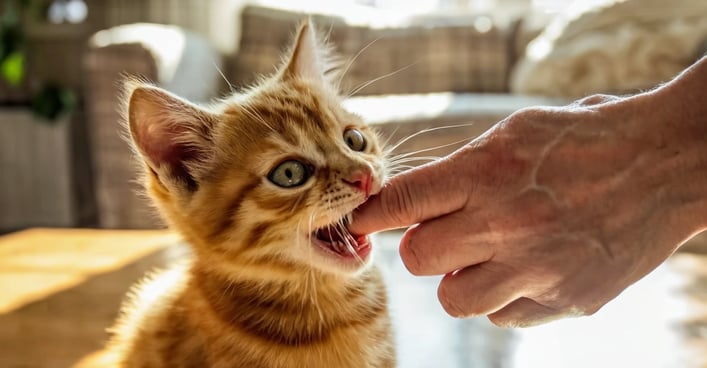
Why Is My Kitten Biting? A Complete Guide to Stopping Aggressive Play (2026)
Learn why kittens bite and discover effective, humane techniques to redirect aggressive play and raise a gentle, well-mannered adult cat.
Share this page
Why Is My Kitten Biting? A Complete Guide to Stopping Aggressive Play (2026)
Kitten biting is a universal feline experience. While it's a normal part of their development, teaching appropriate behavior early is crucial for preventing long-term issues. By understanding the why behind the bite and learning how to redirect it, you can foster a gentle, well-mannered companion.
Understanding Why Kittens Bite
Normal Developmental Stages
Exploration:
A kitten's mouth is their primary sensory tool.
They test their environment and learn about objects through biting.
This behavior stems from natural curiosity and discovery.
Play Behavior:
Biting is practice for essential hunting skills.
Littermates play roughly to learn boundaries and bite inhibition.
It's a primary outlet for releasing pent-up energy.
Provides a clear, immediate consequence without punishment.
Implementing Brief Time-Outs
When to Use This Method:
For persistent biting that doesn't respond to redirection.
When the kitten is overexcited and cannot calm down.
How to Do It Correctly:
Calmly and gently place the kitten in a small, safe, boring room (like a bathroom).
Ensure there are no toys, food, or fun in the space.
Leave them alone for 5-10 minutes maximum.
Release them only once they are calm. Do not scold upon release.
Teaching Long-Term Bite Inhibition
Gradual Pressure Training
Stage 1: Tolerate Gentle Mouthing
If the kitten gently puts their mouth on you, freeze. Pulling away can trigger a chase instinct.
Only react when actual pressure is applied.
Stage 2: Yelp at Any Pressure
The moment you feel teeth pressure, yelp "Ouch!" and withdraw briefly.
Reward gentler behaviors like licking or nuzzling with calm praise.
Stage 3: Phase Out All Mouth-on-Skin Contact
Gradually shape the behavior until no mouthing is allowed.
This process requires patience and can take weeks to months.
The Imperative of Consistency
For Success, Everyone Must:
Follow the exact same rules and responses.
Use the same redirection techniques.
Provide no exceptions, as mixed messages confuse the kitten.
Proactive Prevention Strategies
Provide Adequate Physical & Mental Play
Energy Management Schedule:
Aim for 2-3 structured play sessions daily, each 15-20 minutes long.
A vigorous play session before bedtime is especially effective in curbing nighttime "zoomies" and biting.
Appropriate Play Activities:
Use wand toys to simulate prey (chase, pounce, capture).
Provide solo toys like balls and motorized mice for independent play.
Incorporate training sessions using treats to engage their brain.
Learn to Recognize Pre-Bite Warning Signs
Common Signals of Overstimulation or Agitation:
Twitching skin, especially on the back.
Swishing or thumping tail.
Ears flattening or rotating backward.
Dilated pupils.
A stiffening body posture.
Your Action Plan:
The instant you see these signs, stop all interaction.
Allow the kitten to leave. Do not restrain or continue petting.
Respecting their boundaries builds trust.
Practice Proper Handling
Gentle Interaction Guidelines:
Pet in the direction of the fur, typically on the head, chin, and cheeks.
Avoid commonly overstimulating areas like the belly for prolonged periods.
Keep petting sessions short and sweet, always monitoring body language.
When to Seek Professional Help
Normal vs. Problematic Behavior
Typical Kitten Biting:
Decreases in frequency and intensity with age and training.
Occurs in a playful context with relaxed body language.
Responds positively to redirection and training methods.
Concerning Biting Behavior:
Increases in frequency or intensity over time.
Regularly breaks the skin or causes injury.
Is accompanied by growling, hissing, or aggressive posturing.
Is fear-based or related to resource guarding (food, toys).
Shows no improvement after weeks of consistent training.
Consult a Professional If You Observe:
A sudden, unexplained change in behavior.
Escalating aggression that worries you.
Biting paired with other symptoms (lethargy, not eating).
Fear-based biting where the kitten seems constantly anxious.
Resources: Your veterinarian can rule out medical causes (like pain) and refer you to a certified cat behaviorist or trainer.
Addressing Special Circumstances
The Single Kitten
The Challenge: Kittens raised alone miss critical lessons in bite inhibition taught by littermates.
Solutions:
Be exceptionally patient and consistent with training.
Increase structured play and environmental enrichment.
Consider adopting a second kitten of similar age (if feasible) to provide appropriate feline socialization.
Soothing the Teething Kitten (3-6 Months)
Offer chilled teething toys or a frozen wet washcloth to chew.
Provide rubber chew toys designed for kittens.
Serve wet food or water that has been slightly chilled.
Gently massage their gums with a finger.
Managing a Multi-Pet Home
Always supervise initial interactions between the kitten and other pets.
Ensure older pets have plenty of escape routes and high perches.
Separate animals if play becomes too rough or stressful for any participant.
Feed pets separately to prevent food-related tension.
Estimated Costs & Timeline
Basic Training Supply Costs
Item
Purpose
Estimated Cost
Wand Toys
Interactive play, hand safety
$10 - $25
Chew/Kicker Toys
Teething relief, redirection
$10 - $20
Puzzle Feeders
Mental stimulation, energy channeling
$15 - $35
Training Treats
Positive reinforcement
$5 - $15
Total Initial Investment
$40 - $95
Professional behavior consultations typically range from $100-$300 per session but are often unnecessary with early, consistent training.
Realistic Timeline for Improvement
First 2 Weeks:
Frequent testing of boundaries.
Biting is common as the kitten learns the new rules.
Weeks 3-4:
Noticeable reduction in bite pressure.
Better response to redirection and the "yelp" method.
Months 2-3:
Significant improvement in behavior.
Occasional lapses during high excitement or fatigue.
Month 4 and Beyond:
Established gentle play habits.
Well-mannered adult behavior, with play bites being rare and soft.
Final Thoughts
Kitten biting is a natural phase, not an act of defiance. Your patience and consistent guidance are the most powerful tools you have. By redirecting their instinctual behaviors to appropriate outlets, you are not just stopping bites—you are building a lifelong language of trust and respect with your cat.
Core Principles to Remember:
Hands are for love, toys are for play.
Redirect, don't punish. Use toys to channel energy.
Yelp and pause to teach bite inhibition naturally.
A tired kitten is a well-behaved kitten. Prioritize ample play.
Consistency across all family members is non-negotiable.
Be patient. Behavioral change takes time and repetition.
Your kitten isn't being "bad"—they are learning how to be a cat in a human world. With your gentle, steadfast guidance, they will mature into the gentle companion you envision.
Get expert advice about cat care, behavior, nutrition, grooming, and training. Ask our AI cat care expert anything about your cat and receive professional guidance.