Why Do Cats Purr? The Science Behind Cat Purring (2026)
Discover the fascinating science of cat purring—from healing vibrations to complex communication. Learn what your cat's purr really means and how it benefits you both.
Share this page
Why Do Cats Purr? The Science Behind Cat Purring (2026)
The soothing sound of a cat purring is one of life's simple pleasures, but it's far more than just a sign of contentment. Modern science reveals that purring is a complex physiological behavior with multiple purposes, including communication, self-healing, and even manipulation. Understanding why cats purr deepens our connection to these enigmatic companions.
How Do Cats Purr?
The Physical Mechanism
Vocal Cord Vibrations:
Purring originates from neurological signals in the brain.
These signals cause the laryngeal muscles to twitch rapidly, between 25 to 150 times per second.
This rapid movement separates the vocal cords, and as air passes through during both inhalation and exhalation, it creates the continuous purring sound.
Unique Feline Trait:
Unlike other vocalizations, purring can occur during both inhaling and exhaling, creating an uninterrupted rumble.
This ability is present in all domestic cats and certain wild feline species.
Purring cats have a completely ossified (rigid) hyoid bone in their throat.
Roaring cats possess a more flexible, ligament-based hyoid apparatus, which allows for roaring but prevents true purring.
Why Do Cats Purr? 5 Key Reasons
1. Contentment and Bonding
The Classic Interpretation:
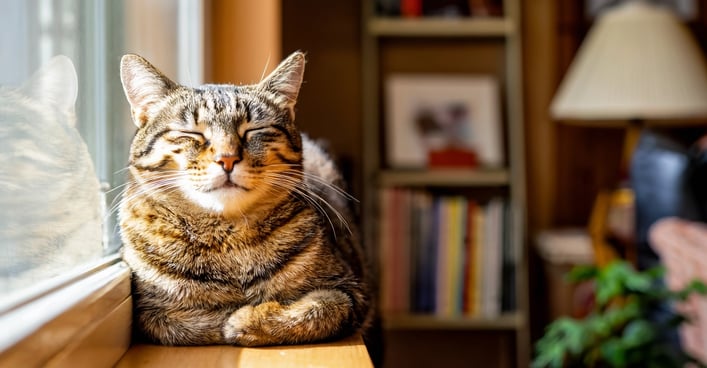
Purring most commonly signals relaxation and happiness, often during positive interactions like petting, cuddling, or resting in a favorite spot.
Associated Body Language:
Relaxed, loose posture
Half-closed or slowly blinking eyes
Kneading ("making biscuits")
Gentle head-butting or rubbing
2. Mother-Kitten Communication
Critical for Development:
Newborn kittens purr while nursing. This vibration acts as a tactile signal to the mother that they are feeding well and content.
The mother cat often purrs in return, creating a calming, bonding feedback loop. Since kittens cannot meow while nursing, purring serves as their primary communication.
3. Self-Healing and Pain Relief
The Remarkable Healing Purr:
Scientific studies have identified that a cat's purr falls within a frequency range (25-150 Hz) known to have therapeutic properties.
Proven Benefits Include:
Bone Growth & Repair: Frequencies of 25-50 Hz are optimal for stimulating bone density and healing fractures.
Muscle and Tendon Repair: Vibrations between 50-150 Hz aid in muscle recovery and reduce atrophy.
Pain Reduction & Inflammation: Purring may naturally lower pain perception and reduce swelling.
Enhanced Breathing: The vibration can even improve respiratory function.
4. Stress Relief and Self-Soothing
Not Always a Happy Sound:
Cats frequently purr in stressful or painful situations as a self-calming mechanism. This is why you might hear your cat purr at the vet's office, after an injury, or during labor.
5. The "Solicitation" or Manipulative Purr
The "Feed Me" Purr:
Researchers have identified a specific purr used to solicit food or attention from humans. This purr embeds a high-frequency cry (220-520 Hz) within the lower rumble.
This frequency is strikingly similar to a human infant's cry, which instinctively triggers a caregiving response, making it very effective at getting our attention.
When Do Cats Purr? Context is Key
Situation
Likely Meaning
Being petted, cuddling, after eating
Contentment, bonding, pleasure
At the veterinarian, during grooming, after a scare
Stress, anxiety, self-soothing
While nursing (kittens), when injured or ill
Communication with mother, self-healing, pain management
Health Benefits of Purring: For Cats AND Humans
Benefits for Cats
Accelerated Healing: Faster recovery from surgery, fractures, and soft-tissue injuries.
Natural Pain Management: Provides a non-pharmaceutical method for pain relief.
Interacting with a purring cat offers measurable therapeutic effects:
Lowers Blood Pressure & Stress: The act of petting a purring cat reduces cortisol and can lower heart rate.
Releases Oxytocin: The "bonding hormone" that promotes feelings of love and reduces anxiety.
Improves Mood and Sleep: The rhythmic sound and vibration have a calming, meditative effect, which can alleviate symptoms of depression and insomnia.
Understanding Your Cat's Purr: A Practical Guide
Signs of a "Happy Purr"
Relaxed, loose body posture
Eyes softly closed or blinking slowly
Seeking physical contact or rubbing against you
Kneading with paws
Signs of a "Stressed or Painful Purr"
Tense, crouched, or hiding body language
Dilated pupils
Ears flattened back
Purring in an unusual context (e.g., alone in a corner)
When to Be Concerned
If purring is accompanied by any of the following, consult your veterinarian:
Lethargy or loss of appetite
Hiding for extended periods
Aggression when touched
Any other significant change in behavior
Frequently Asked Questions (FAQs)
Can all cats purr?
Yes, all domestic cats have the anatomical ability to purr. Among wild cats, the ability to purr versus roar is mutually exclusive due to throat structure.
Why doesn't my cat purr?
Some cats are simply less vocal or may purr at volumes too low for humans to hear. A quiet cat is not necessarily an unhappy cat; look for other signs of contentment like relaxed body language and kneading.
Can cats control their purring?
Purring is generally considered a voluntary behavior, though it can be triggered automatically in certain situations (like nursing). The exact neurological control is still being studied.
Is purring always a good sign?
No. While often positive, purring can also indicate stress, pain, or illness. Always interpret the purr within the full context of your cat's environment and body language.
The Evolution and Mystery of the Purr
Why Did Purring Evolve?
Scientists propose several complementary theories:
Bonding: To strengthen the mother-kitten connection.
Healing: As a survival mechanism to promote recovery from injuries during rest.
Communication: A low-energy way to signal non-threatening intentions to other cats or humans.
Manipulation: The "solicitation purr" may have evolved specifically to appeal to human caregivers.
What We Still Don't Know
Despite advances, mysteries remain:
The precise neural pathway that initiates and controls purring.
Why the purr's frequency range so perfectly overlaps with therapeutic vibration bands.
The full extent of its vibrational healing effects on different tissues.
Conclusion
A cat's purr is a multifaceted marvel of nature—a tool for healing, a language of emotion, and a bridge to human hearts. It serves as a:
Healing mechanism that mends bones and soothes pain.
Communication system for bonding and solicitation.
Emotional barometer that reflects both joy and distress.
Key Takeaways for 2026:
Context is crucial. A purr alone doesn't tell the whole story; observe your cat's entire demeanor.
It's mutually beneficial. The purr's healing frequencies and calming effects extend to human caregivers.
It's a survival tool. Purring likely evolved for healing, bonding, and communication, giving cats an evolutionary edge.
The next time your feline friend curls up and begins that familiar rumble, appreciate it as one of the most sophisticated and beneficial forms of communication in the animal kingdom—a true testament to the unique and enduring bond between cats and humans.
Get expert advice about cat care, behavior, nutrition, grooming, and training. Ask our AI cat care expert anything about your cat and receive professional guidance.