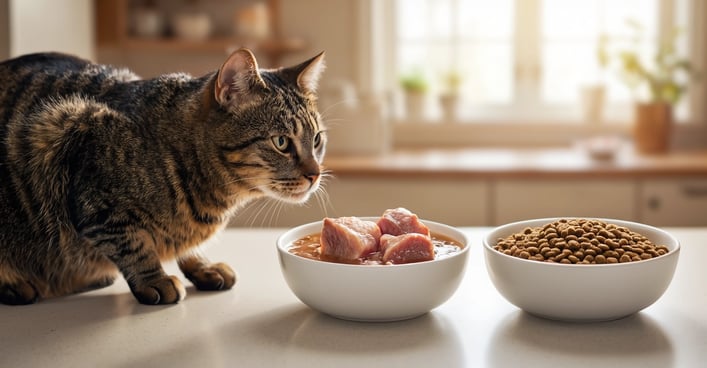
Wet vs. Dry Cat Food: The 2026 Complete Comparison Guide
Deciding between wet and dry cat food? Our 2026 guide compares nutrition, health impacts, cost, and convenience to help you choose the best diet for your feline.
Share this page
Wet vs. Dry Cat Food: The 2026 Complete Comparison Guide
Choosing the right food for your cat is one of the most important decisions you'll make as a pet owner. The debate between wet and dry food is long-standing, with valid points on both sides. This comprehensive guide for 2026 cuts through the noise, providing an objective, science-backed comparison of nutrition, health impacts, cost, and convenience to help you make the best choice for your unique feline.
Introduction
The wet versus dry food debate has divided cat owners for decades. With passionate arguments on both sides, making the right choice for your feline companion requires understanding the nutritional science, practical considerations, and your individual cat's needs.
This comprehensive 2026 comparison examines both options objectively, helping you make an informed decision—or find the perfect balance between the two.
Wet vs. Dry Cat Food: The 2026 Complete Comparison Guide - Articles
Wet Food:
75-85% moisture – Closely mimics the natural moisture content of prey.
Supports hydration – Helps cats meet their daily water intake naturally.
Benefits urinary & kidney health – Dilutes urine, reducing the risk of crystals and supporting renal function.
Dry Food (Kibble):
6-10% moisture – Highly concentrated and dry.
Requires supplemental water – Cats must drink significantly more from a bowl.
Risk of chronic mild dehydration – Especially for cats with a low thirst drive.
Why Moisture Matters:
Cats evolved from desert-dwelling ancestors and have a naturally low thirst drive. In the wild, they derive 70-75% of their water intake from prey. Wet food aligns with this evolutionary biology, promoting optimal hydration.
Protein Content & Quality
When compared on a Dry Matter Basis (moisture removed), the differences become clear:
Food Type
Typical Protein % (Dry Matter)
Notes
Premium Wet Food
40-55%
Often uses more animal-based protein, fewer fillers.
Premium Dry Food
35-45%
Requires some carbohydrates for the extrusion process.
Budget Wet Food
35-45%
May contain more by-products and plant proteins.
Budget Dry Food
25-35%
Often relies heavily on plant-based protein and fillers.
Key Insight: Look for named meat sources (e.g., "chicken," "salmon") as the first ingredients. The AAFCO minimum for adult maintenance is 26% protein on a dry matter basis.
Carbohydrate Content
Wet Food:
0-10% carbohydrates (dry matter).
Lower carb options are widely available and more species-appropriate.
Highly recommended for diabetic cats or those prone to obesity.
Dry Food:
15-35% carbohydrates (dry matter) – needed to form the kibble.
Even "grain-free" formulas can be high in carbs from potatoes, peas, or lentils.
Feline Biology: Cats are obligate carnivores with no biological requirement for dietary carbohydrates. High-carb diets can contribute to weight gain, diabetes, and inflammation.
Calorie Density & Weight Management
Wet Food:
70-100 calories per 3 oz can.
Lower calorie density with higher volume helps cats feel fuller.
Easier for portion control and weight management.
Dry Food:
300-500 calories per cup.
Highly calorie-dense – easy to overfeed with just a small volume.
Free-feeding (leaving kibble out all day) is a major contributor to feline obesity.
Health Considerations: What Science Says
Urinary & Kidney Health
Wet Food is Strongly Advocated:
Increased water intake from wet food dilutes urine, reducing the risk of painful crystal formation, urinary blockages (a life-threatening emergency), and supporting kidney function. It is the top dietary recommendation for cats with a history of Feline Lower Urinary Tract Disease (FLUTD) or Chronic Kidney Disease (CKD).
Dry Food Consideration:
While some prescription dry diets are formulated for urinary health, they do not provide intrinsic hydration. Cats on dry food must consume adequate water separately, which many fail to do.
Dental Health: Debunking the Myth
The Common Myth: "Dry food cleans teeth."
The Reality: Most cats swallow kibble whole with minimal chewing. The abrasive action is negligible, and the carbohydrates can actually feed plaque bacteria. Dental disease is prevalent in cats regardless of diet.
What Actually Works:
Regular tooth brushing with pet-safe toothpaste.
Veterinary dental cleanings under anesthesia.
Approved dental treats or water additives (as a supplement, not a solution).
Weight Management & Diabetes
Wet Food Benefits:
Its high protein, high moisture, and low carb profile promotes satiety, lean body mass, and stable blood sugar levels. It is the cornerstone of dietary management for overweight and diabetic cats.
Dry Food Challenges:
The high calorie and carbohydrate content can contribute to weight gain and insulin resistance. Free-feeding dry food is strongly linked to obesity.
The Long-Term View: While dry food has a lower upfront cost, the potential for higher veterinary bills due to dehydration-related issues (urinary, kidney) must be factored into the total cost of ownership.
Storage & Safety
Dry Food: Store in a cool, dark place in an airtight container. Use within 4-6 weeks of opening to prevent fat rancidity.
Wet Food: Refrigerate opened cans and use within 3-5 days. Warm to room temperature before serving. Discard any uneaten food after 2 hours.
Making the Decision: What's Best for Your Cat?
When Wet Food is the Better Choice
Medical Conditions: Urinary issues, kidney disease, diabetes, constipation, obesity.
Life Stages: Kittens (needing dense nutrition), seniors (with dental or kidney concerns).
Individual Traits: Cats with a low thirst drive, picky eaters who prefer the aroma.
When Dry Food Can Work
Practicality: For owners with long work hours, multi-cat households, or tight budgets.
Enrichment: Excellent for use in puzzle feeders and food-dispensing toys.
Preference: Some cats simply prefer the texture and crunch.
The Recommended Mixed Feeding Approach
Combining wet and dry food is a popular and often ideal strategy, balancing hydration with convenience.
Sample Feeding Plan:
Primary Meals: Wet food in the morning and evening for hydration and satiety.
Supplemental Feeding: A measured portion of dry food in a puzzle feeder for mental stimulation and grazing.
General Portion Guide (Consult Your Vet):
Cat Weight
Wet Food (per day)
Dry Food (if mixed, per day)
5-7 lbs
3-5 oz (1 small can)
Up to 1/8 cup
8-10 lbs
6-7 oz
Up to 1/4 cup
11-13 lbs
8-9 oz
Up to 1/4 cup
14+ lbs
10+ oz
Up to 1/3 cup
Always adjust based on your cat's age, activity level, and veterinary advice.
Available through veterinarians for specific conditions: Hill's Prescription Diet, Royal Canin Veterinary Diet, Purina Pro Plan Veterinary Diets.
How to Successfully Transition Foods
Always transition gradually over 7-10 days to avoid gastrointestinal upset.
Day
Old Food
New Food
1-2
75%
25%
3-4
50%
50%
5-6
25%
75%
7+
0%
100%
Tips:
To encourage wet food: Warm it slightly to enhance aroma.
To encourage dry food: Mix a small amount into the wet food, or add a bit of water to soften it.
If your cat refuses: Try a different texture (pate vs. chunks in gravy) or protein source. Be patient.
Frequently Asked Questions (FAQ)
1. Is wet food really better for cats?
For most cats, yes, primarily due to its superior hydration benefits. However, a high-quality dry food or a mixed diet can also support a healthy life.
2. Can I mix wet and dry food?
Absolutely. This is a highly recommended approach by many veterinarians and nutritionists.
3. How long can wet food sit out?
Discard it after 2 hours at room temperature (1 hour in hot weather) to prevent bacterial growth.
4. Why won't my cat eat wet food?
Texture or temperature preference is common. Try different brands, flavors, and warming the food. Transition slowly.
5. Is expensive food worth it?
Often, yes. Premium foods typically use higher-quality, named meat ingredients and fewer low-nutrient fillers. Focus on the ingredient list, not just the price.
6. Can cats live on dry food only?
They can survive, but they may not thrive. A dry-only diet increases the lifelong risk of dehydration-related health issues.
Conclusion
There is no universal "best" food for every cat. The optimal diet depends on a balance of your cat's health status, age, and preferences with your lifestyle and budget.
Key Takeaways for 2026:
Hydration is Key: Wet food provides essential moisture for long-term urinary and kidney health.
Quality Over Type: A high-quality ingredient list is more important than the form of the food.
Mix for Balance: A combined feeding strategy often offers the best of both worlds.
Your Vet is Your Partner: Always consult your veterinarian, especially for cats with medical conditions, to create a personalized nutrition plan.
The best food is one that supports your cat's health and wellbeing—and that they will happily eat every day.
Disclaimer: This guide provides general educational information. It is not a substitute for professional veterinary advice. Always consult your veterinarian for diagnosis and treatment plans, including personalized dietary recommendations for your cat.
Get expert advice about cat care, behavior, nutrition, grooming, and training. Ask our AI cat care expert anything about your cat and receive professional guidance.