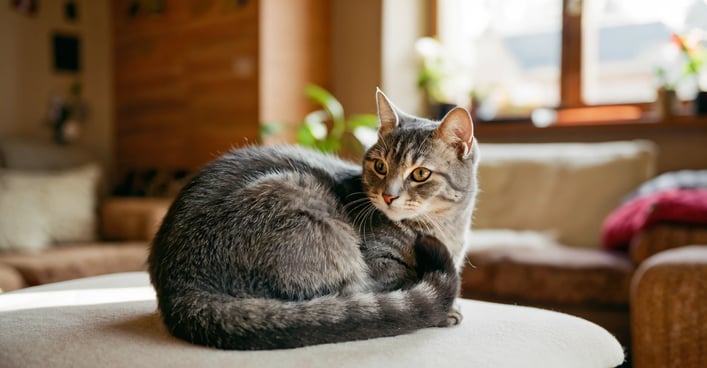
Understanding Cat Body Language: Your Complete Guide for 2026
Decode your cat's secret signals. Learn to read tail positions, ear movements, vocalizations, and subtle cues to build a deeper bond with your feline friend.
Share this page
Understanding Cat Body Language: Your Complete Guide for 2026
Cats are masters of non-verbal communication, speaking volumes through subtle gestures and postures. Learning to interpret this silent language is the key to a deeper, more trusting relationship with your feline companion. This comprehensive guide will help you decode the signals, prevent misunderstandings, and recognize when your cat is happy, stressed, or in need of space or care.
The Fundamentals of Feline Communication
Multimodal Communication
Cats communicate through multiple, simultaneous channels:
Visual: Body posture, tail carriage, ear position, and facial expressions.
Auditory: Meows, purrs, hisses, chirps, and other vocalizations.
Olfactory: Scent marking via rubbing, scratching, and pheromones.
Tactile: Rubbing, head bunting, kneading, and physical contact.
The Golden Rule: Context is Everything
No single signal tells the whole story. Always interpret body language by considering:
A curved tip ("question mark") is an especially cheerful hello.
Horizontal Tail
Neutral, relaxed, or cautiously observant.
A tense, straight-back position indicates focused alertness, often seen during hunting.
Lowered Tail
Submissive, unsure, or mildly anxious.
Tucked tightly between legs signals significant fear.
Puffed Tail
Fearful, startled, or defensive.
The "bottle brush" tail is an attempt to look larger to a perceived threat.
Tail Movements
Slow Swish: Focused concentration, often before a pounce.
Rapid Thrashing: Agitation, anger, or frustration. A clear "back off" signal.
Tip Flicking: Mild irritation or intense concentration.
Wrapped Around Body: Self-comfort, contentment, or keeping warm.
Wrapped Around You or Another Cat: A sign of affection and bonding.
Ear Signals: Directional Mood Indicators
Common Ear Positions
Forward & Relaxed: Content, alert, and interested in surroundings.
Forward & Pinned ("Airplane Ears"): Highly alert, possibly in hunting mode or assessing a situation.
Flattened Sideways: Anxious, nervous, or feeling threatened.
Flattened Back Against Head: Fearful, submissive, or defensively aggressive. A serious warning.
Swiveling Independently: Tracking sounds; a sign of high alertness or curiosity.
The Eyes: Windows to Feline Emotion
The Language of Gaze
The Slow Blink: A "cat kiss." Slow closing and opening of the eyes signifies trust, comfort, and affection. You can return this gesture to say "I love you too."
Direct, Unblinking Stare: In cat language, this is a challenge or threat. Friendly cats use soft, brief glances.
Soft, Half-Closed Eyes: A sign of deep contentment and trust.
Pupil Dilation
Dilated (Large) Pupils: Can indicate excitement (play), fear, or low light. Context is crucial.
Constricted (Small) Pupils: Can signal aggression (with other tense body language), contentment, or a reaction to bright light.
Important Note: A visible third eyelid (nictitating membrane) when your cat is awake often indicates illness, pain, or eye issues and warrants a veterinary visit.
Body Posture: The Overall Message
Common Postures
Relaxed & Content: Loose muscles, normal posture, may lie on side with belly exposed (a sign of trust).
Note: Urine spraying (on vertical surfaces) is a territorial behavior, distinct from litter box problems, and is often stress-related.
Recognizing Stress, Anxiety, and Pain
Subtle Signs of Distress
Cats are experts at hiding discomfort. Watch for changes in baseline behavior:
Overgrooming or lack of grooming.
Increased hiding or withdrawal.
Changes in appetite or litter box habits.
Uncharacteristic aggression or clinginess.
Body Language of Pain
Hunched, tense posture.
Reluctance to move, jump, or be touched.
Squinted eyes, flattened ears.
Guarding a specific body part.
Crucial: Any sudden or persistent change in behavior should prompt a veterinary check to rule out medical causes first.
Practical Guide: Reading Your Cat's Mood
"I Want to Play": Play crouch, wiggling hindquarters, dilated pupils, chattering.
"Pet Me Now": Approaches with upright tail, rubs against you, slow blinks, head bumps your hand.
"Please Give Me Space": Moves away, flattens ears, tail twitches or thrashes, avoids eye contact.
"I Don't Feel Well": Hiding, changes in normal routines, unusual posture (hunched), reduced interaction.
Common Misunderstandings to Avoid
Myth
Reality
Result of Misreading
Belly up = wants a belly rub
Usually shows ultimate trust, not an invitation.
Can lead to a defensive bite or scratch.
Tail wagging = happiness
Typically signals agitation, irritation, or concentration.
Surprise when an "agitated" cat reacts.
Purring = always happy
Can also indicate pain, stress, or self-comfort.
Missing crucial signs of illness.
Hissing = aggression
It's a fear-based warning. The cat is scared.
Punishing fear worsens the problem.
Conclusion
Mastering cat body language transforms coexistence into a profound dialogue. By observing the whole picture—tail, ears, eyes, posture, and context—you learn to respect your cat's boundaries and respond to their needs. This understanding fosters immense trust, leading to a more confident, affectionate, and harmonious relationship with your unique feline companion. Remember, the most important dialect is the one you and your individual cat develop together.
Related Articles:
Solving Common Cat Behavior Problems: A Modern Guide
Clicker Training for Cats: Build Bonds Through Positive Reinforcement
Introducing Cats: A Stress-Free Step-by-Step Protocol
Managing Feline Stress: Identification and Soothing Strategies
Get expert advice about cat care, behavior, nutrition, grooming, and training. Ask our AI cat care expert anything about your cat and receive professional guidance.