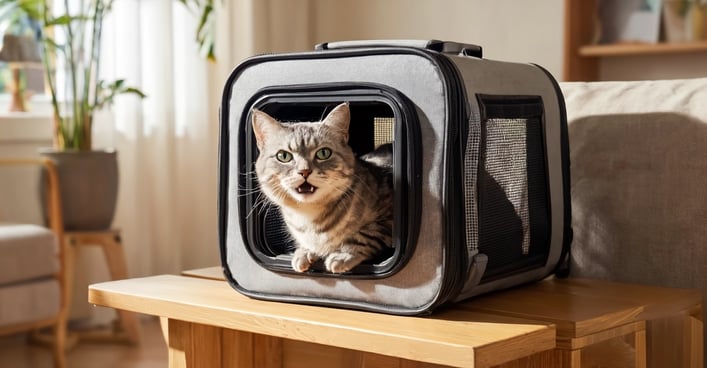
The Ultimate Guide to Cat Carriers: 2026 Reviews & Selection Tips
Find the perfect cat carrier for stress-free travel. Our 2026 guide reviews top-rated hard-sided, soft-sided, backpack, and rolling carriers for every need and budget.
Share this page
The Ultimate Guide to Cat Carriers: 2026 Reviews & Selection Tips
A high-quality cat carrier is a non-negotiable investment for every responsible pet owner. It ensures your cat's safety and comfort during vet visits, travel, and emergencies while significantly reducing stress for both of you. This definitive 2026 guide reviews the best carriers on the market and provides expert advice to help you make the perfect choice.
Best For: Airline cargo travel, destructive cats, and long-term durability.
Best Soft-Sided Carrier: Sherpa Original Deluxe
Price Range: $40 - $90
Available Sizes: Small, Medium, Large
Key Features:
Quilted nylon exterior
Large mesh ventilation panels
Spring wire frame (flexes for under-seat fit)
Adjustable shoulder strap
Machine-washable base pad
Pros:
"Guaranteed On Board" airline approval program
Very comfortable to carry
Collapses flat for storage
Attractive, non-clinical design
Multiple entry points
Cons:
Not suitable for chewers or escape artists
Base could be more rigid
Durability limited with aggressive cats
Premium price for a soft carrier
Sizing can be confusing
Best For: Airplane cabin travel, calm cats, and style-conscious owners.
Best Budget Hard-Sided: Amazon Basics Two-Door Top-Load
Price Range: $25 - $40
Available Sizes: 19", 23"
Key Features:
Durable plastic shell
Front and top loading doors
Secure latch closures
Adequate ventilation holes
Sturdy carrying handle
Pros:
Extremely affordable
Two-door convenience simplifies loading
Surprisingly sturdy construction
Good airflow
Cons:
Very basic, no-frills design
Can feel heavy for its size
Lacks interior padding
Plastic can feel thin
Latches may require careful handling
Best For: Budget-conscious owners, occasional use, or as a reliable backup carrier.
Best for Nervous Cats: PetLuv Happy Cat Carrier
Price Range: $50 - $80
Size: One size (adjustable interior)
Key Features:
Four-sided mesh windows (can be covered)
Exceptionally spacious interior
Integrated seatbelt straps for car travel
Can double as a pet bed at home
Multiple access points
Pros:
Reduces anxiety (cat can see in all directions)
Very roomy for comfort
Panels can be covered to create a secure den
Multi-functional design
Ideal for long car trips
Cons:
Bulky when stored
Not approved for airline travel
Premium price point
Can be awkward to carry when loaded
Some cats may prefer a more enclosed space
Best For: Car trips, anxious cats, and multi-cat households for temporary transport.
Best Backpack Carrier: PetAmi Deluxe Pet Carrier Backpack
Price Range: $40 - $60
Size: One size (fits cats up to 18 lbs)
Key Features:
Well-ventilated design with mesh windows
Soft Sherpa-lined bedding
Adjustable chest and waist straps
Convenient side pockets
Includes a collapsible travel bowl
Pros:
Very comfortable for the wearer
Excellent ventilation
Affordable price
Multiple color options
Well-padded, cozy interior
Cons:
Interior space is somewhat limited
Not ideal for extended trips
Cat faces backward
Can get warm in hot weather
Durability may be limited with heavy use
Best For: Short trips, hiking, urban commuting, and confident cats.
Best Rolling Carrier: Pet Peppy Premium Airline Approved Carrier
Price Range: $80 - $120
Size: One size (fits cats up to 20 lbs)
Key Features:
Converts from wheeled to shoulder-carry mode
Telescoping handle
Includes removable fleece bedding
Full mesh ventilation panels
Folds relatively flat for storage
Pros:
Highly versatile carrying options
Eliminates lifting in wheeled mode
Excellent for navigating airports
Comfortable, padded interior
Stylish appearance
Cons:
Higher price point
Wheels add extra weight
Can be tippy on uneven surfaces
Offers less protection than hard-sided models
Not for extra-large cats
Best For: Airport travel, elderly or mobility-challenged owners, and transporting heavy cats.
Best for Large Cats: Necoichi Portable Stress-Free Cat Cage
Price Range: $50 - $70
Size: One size (extra spacious)
Key Features:
Pop-up, easy-assembly design
Exceptionally roomy interior
Collapses completely flat
Multiple entry points
Can connect to other Necoichi products
Pros:
Ample space for large cats
Extremely easy to store
Excellent ventilation
Surprisingly lightweight
Can serve as a temporary enclosure
Cons:
Not secure for aggressive or escape-prone cats
Fabric construction offers minimal protection
Not approved for airline travel
Structure can collapse if bumped forcefully
Best For: Multiple cats, temporary housing at shows, and calm large breeds.
Best Top-Loading Carrier: Petmate Two Door Top Load Kennel
Price Range: $30 - $60
Available Sizes: 19", 24"
Key Features:
Traditional hard carrier with a top door
Secure squeeze-latch closures
Durable plastic construction
Steel wire doors
Sturdy carrying handle
Pros:
Top loading is easier for resistant cats
Very secure and robust
Excellent value for money
Easy to clean
Widely available
Cons:
Heavy
Industrial, unattractive appearance
Ventilation less comprehensive than newer models
Handle is not ergonomic
Can be noisy
Best For: Difficult-to-load cats and general veterinary visits.
Key Features to Consider When Choosing
Size and Dimensions: Getting It Right
How to Measure Your Cat:
Length: Base of tail to tip of nose.
Height: Floor to top of head or ears while sitting.
Weight: Use an accurate pet scale.
Carrier Sizing Guidelines:
Cat Size
Recommended Carrier Dimensions
Important Notes
Small (under 8 lbs)
17"L x 11"W x 10"H
Minimum safe size
Medium (8-14 lbs)
19"L x 12"W x 12"H
Standard size for most cats
Large (14-20 lbs)
23"L x 15"W x 15"H
Always measure your cat first
Extra Large (20+ lbs)
28"L x 20"W x 19"H
Limited carrier options available
Airline Requirements (Always Verify):
Under-seat Cabin: Typically max 17"L x 11"W x 9"H.
Cargo Hold: Varies by airline; IATA-compliant hard kennels required.
Crucial: Confirm exact dimensions with your airline before booking.
Entry Options
Front Loading: Traditional. Best for cooperative cats who walk in willingly.
Top Loading: Essential for resistant, scared, or aggressive cats. Allows you to place them in gently from above.
Multiple Entry (Front & Top): The most versatile option. Provides easier access for veterinary exams and loading.
Ventilation
Non-Negotiable Requirements:
Ventilation on a minimum of three sides.
Made of sturdy mesh or metal grate.
Provides adequate airflow for temperature regulation and comfort.
Quality Indicators:
Rip-resistant, reinforced mesh.
Metal grates on hard-sided models.
Large total surface area for air exchange.
Positioned to allow cross-ventilation.
Security Features
Essential Safety Elements:
Secure latches (not just zippers on soft carriers).
Metal hardware (superior to plastic).
Positive locking mechanisms.
Reinforced seams on soft carriers.
No gaps or potential escape points.
Escape Prevention Tips:
Test all zippers, latches, and seams before each use.
Regularly inspect for wear and tear.
Ensure all openings are fully secured.
For extra-nervous cats, consider using a zip tie as a secondary lock.
Look for an interior leash attachment point.
Catering to Specialized Needs
Airline Travel
For Cabin Travel:
Must fit under the seat. Soft-sided carriers are generally preferred.
Check your airline's specific "under-seat" dimensions.
Carriers with "Guaranteed On Board" programs (like Sherpa) simplify the process.
For Cargo Travel:
Hard-sided, IATA-compliant kennels are mandatory.
Must have proper ventilation and attached food/water dishes.
"Live Animal" stickers and orientation arrows are required.
Required Documentation:
Health certificate (usually within 10 days of travel).
Up-to-date vaccination records.
Airline-specific forms.
Note: Sedation is strongly discouraged by most airlines and veterinarians.
Car Travel Safety
Critical Safety Features:
Integrated seatbelt straps or loops.
Crash-tested models (look for certification).
Must be secured in the seat; never left loose.
Excellent ventilation for car temperature fluctuations.
Comfort for Long Trips:
Enough room for the cat to stand, turn, and lie down.
Absorbent, washable bedding.
Plan for access to water during stops.
Schedule regular breaks for litter box use.
Veterinary Visit Optimization
Features Vets Love:
Top-opening design or a removable top.
Easy-to-clean, non-porous surfaces.
Good visibility for monitoring the cat.
Quick-release, simple latches.
Training Your Cat to Love Their Carrier
Building Positive Associations (A 3-4 Week Plan)
Step 1: Introduction & Exploration (Week 1)
Place the carrier in a common living area with the door removed or open.
Make it inviting with soft bedding, catnip, and favorite toys inside.
Allow your cat to explore it voluntarily—never force them in.
Feed treats near the carrier opening.
Step 2: Creating Comfort (Week 2)
Begin feeding meals inside the carrier.
Praise all calm behavior around and inside the carrier.
Practice closing the door briefly while they eat, then immediately open it.
Step 3: Short Contained Sessions (Week 3)
Gently place your cat in the carrier, give high-value treats, and let them out.
Gradually increase the duration with the door closed (start with 30 seconds).
Lift the carrier and move it a short distance before releasing them.
Step 4: Practice Trips (Week 4+)
Take short, positive car rides that end at home (not the vet).
Offer lavish praise and treats upon returning home.
Gradually extend ride duration.
Include a "dry run" to the vet parking lot.
Making the Carrier a Safe Space at Home
Keep it accessible in a quiet corner, lined with familiar bedding.
Use it as a regular nap spot by placing it where your cat likes to sleep.
Occasionally hide treats inside to encourage voluntary use.
Maintenance, Care & Cost Analysis
Cleaning Protocol
After Each Use:
Remove and launder all bedding.
Wipe the interior with a pet-safe disinfectant.
Clean the exterior.
Allow it to air dry completely.
Perform a quick inspection for any damage.
Monthly Deep Clean (If Used Frequently):
Hard Carriers: Wash with soap and water, followed by a disinfectant rinse.
Soft Carriers: Machine wash if allowed, or hand wash thoroughly.
Always air dry completely to prevent mildew.
Check and tighten all hardware, zippers, and straps.
Storage Between Uses
Store in an accessible location, not buried in a closet.
Keep the door open to maintain its identity as a safe space.
Leave familiar-smelling bedding or a t-shirt inside.
Periodically check for pests, odors, or material degradation.
Cost Analysis & Value Assessment
Carrier Type
Budget Tier
Mid-Range Tier
Premium Tier
Hard-sided
$25 - $40
$40 - $75
$75 - $150
Soft-sided
$20 - $40
$40 - $70
$70 - $120
Backpack
$30 - $50
$50 - $90
$90 - $150
Rolling
$60 - $90
$90 - $130
$130 - $200
Understanding Value:
A $60 carrier used monthly for 5 years costs about $1 per use.
A $25 carrier replaced yearly for 5 years costs about $2.08 per use.
Investment in quality often provides better long-term economy and safety.
The Bottom Line: Our 2026 Recommendations
For most cat owners, the Sherpa Original Deluxe offers the ideal balance of comfort, portability, and airline-cabin approval for routine vet visits and travel.
For cats requiring maximum security, frequent cargo travel, or for owners with escape-artist felines, the Petmate Sky Kennel remains the gold standard in durable, hard-sided protection.
Your Success Checklist:
Measure Accurately: Ensure proper fit for comfort and safety.
Match Type to Need: Choose the style (hard, soft, backpack, rolling) that fits your primary use case.
Invest in Training: Spend weeks building positive associations—it transforms the travel experience.
Maintain Diligently: Regular cleaning and inspection extend the carrier's life and ensure safety.
A well-chosen carrier is a long-term investment in your cat's wellbeing and your peace of mind during every journey you take together.
Last Updated: 2026 Safety First: Always secure your cat in a carrier during car travel. A loose cat is a dangerous projectile in an accident and can cause driver distraction.
Get expert advice about cat care, behavior, nutrition, grooming, and training. Ask our AI cat care expert anything about your cat and receive professional guidance.