catscare.xyz Your comprehensive guide to cat breeds, care, and everything feline.
Language & Social Links Connect © 2026 catscare.xyz. All rights reserved.
The Ultimate Cat-Proofing Guide: A Room-by-Room Safety Blueprint for 2026 Protect your curious feline with our comprehensive safety guide. Learn how to identify and eliminate hidden dangers in every room of your home.
The Ultimate Cat-Proofing Guide: A Room-by-Room Safety Blueprint for 2026
Creating a sanctuary for your cat means viewing your home through a feline lens. Cats are natural explorers—climbers, chewers, and investigators driven by curiosity. This detailed guide will help you systematically identify and neutralize potential hazards, transforming your living space into a secure and cat-friendly environment.
Foundational Safety Principles
Understanding Feline Behavior
How Cats Interact with Their Environment:
Vertical Explorers: They climb curtains, shelves, and appliances.Small-Space Investigators: They seek out areas behind and under furniture.Oral Investigators: They chew on cords, plants, and small objects.Paw Testers: They bat items to test their properties.Scent Followers: They are attracted to food, chemicals, and plants.
Risky Behaviors to Anticipate:
Leaping onto unstable high surfaces.
Chewing on inappropriate items (pica).
Drinking from toilets or open sinks.
Squeezing into small, confined spaces.
Playing with string-like objects that pose ingestion risks.
Essential Safety Equipment
The Ultimate Cat-Proofing Guide: A Room-by-Room Safety Blueprint for 2026 - Articles Recommended Protective Gear:
Child safety locks for cabinets
Cord organizers and protective covers
Secure cabinet latches
Stove knob covers
Trash cans with locking lids
Appropriate pet gates
A well-stocked pet first aid kit
Living Room Safety
Furniture and Decor Hazards Secure Heavy and Unstable Items:
Anchor bookshelves and tall furniture to wall studs.
Mount televisions securely to prevent tipping.
Stabilize floor lamps and other freestanding decor.
Remove precarious items from table edges.
Common Decor Dangers & Solutions:
Item Primary Risk Recommended Solution Candles Fire, severe burns Use flameless LED alternatives Glass vases/figurines Breakage, lacerations Relocate to inaccessible high shelves Small decorations Choking, intestinal blockage Display inside locked cabinets or cases Tassels & fringes Ingestion, strangulation Remove or securely tie up out of reach Essential oil diffusers Respiratory & dermal toxicity Eliminate or place in a completely secure, ventilated area
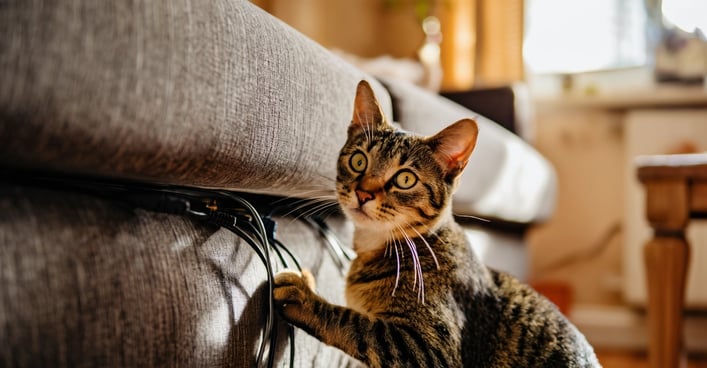
Electronics and Cords Cord Management is Critical:
Use rigid cord covers or cable management boxes.
Apply pet-safe bitter deterrent sprays to discourage chewing.
Unplug electronics when not in use.
Conceal power strips within protective enclosures.
Entertainment Center Safety:
Ensure TVs are firmly mounted.
Manage cable clutter to prevent entanglement.
Remove small, enticing items from open shelves.
Plant Safety Common Toxic Plants to Remove:
Lilies: Extremely toxic; even pollen can cause kidney failure.Pothos, Philodendron, Dieffenbachia
Sago Palm, Aloe Vera, Ivy varieties
Cat-Safe Plant Alternatives:
Spider plants, Boston ferns, Bamboo palm
Cat grass (wheatgrass), Catnip, Valerian
Most orchids (Phalaenopsis)
Kitchen Safety
Food Hazards Common Toxic Foods for Cats:
Food Toxic Component Potential Symptoms Chocolate Theobromine Vomiting, tremors, seizures, death Onions/Garlic Thiosulfate Hemolytic anemia Grapes/Raisins Unknown Acute kidney failure Xylitol Artificial sweetener Hypoglycemia, liver failure Alcohol Ethanol Depression, coma, respiratory failure Caffeine Methylxanthines Hyperactivity, cardiac arrhythmias Raw bread dough Yeast Gastric dilation, alcohol poisoning Cooked bones Splintering Choking, gastrointestinal perforation
Store all human food in sealed containers or cabinets.
Use trash cans with secure, locking lids.
Wipe countertops clean immediately after food preparation.
Establish a strict "no table scraps" policy.
Educate all household members and guests.
Appliance Safety
Install stove knob covers to prevent accidental activation.
Prefer using back burners.
Never leave cooking food unattended with an open flame.
Discourage counter-surfing, especially during cooking.
Keep doors closed at all times when not in active use.
Always perform a visual and physical check inside before starting. Store detergent pods and rinse aids in locked cabinets (they resemble toys).
Check that your cat is not nearby before closing the door.
Avoid storing toxic items (like certain fruits) on low, accessible shelves.
Cleaning Supplies
Use childproof locks on all cabinets containing cleaners.
Store chemicals on high shelves in a locked closet if possible.
Never leave cleaning products unattended during use.
Rinse surfaces thoroughly after cleaning.
Hazardous vs. Safer Cleaners:
Toxic: Bleach, ammonia, phenols (in some disinfectants), toilet bowl cleaners, drain openers.Safer Alternatives: Diluted white vinegar, baking soda, castile soap, commercial pet-safe cleaners.
Bathroom Safety
Toilet Risks
Drowning risk for kittens and senior cats.
Exposure to toxic chemical cleaners.
Intestinal blockage from drinking treated water.
Make "lid down" a non-negotiable household rule.
Consider toilet lid locks for determined cats.
Switch to pet-safe toilet bowl cleaners.
Keep the bathroom door closed if necessary.
Medicine & Personal Care Common Toxic Medications:
Medication Potential Effect on Cats Acetaminophen (Tylenol) Fatal ; causes methemoglobinemiaNSAIDs (Ibuprofen, Naproxen) Kidney failure, gastric ulcers Antidepressants (SSRIs) Serotonin syndrome, neurological issues ADHD Medications Severe hyperactivity, seizures, hyperthermia Sleep Aids (Benzodiazepines) Severe sedation, coma, respiratory failure Vitamins containing Iron Iron toxicity, organ damage
Personal Care Product Hazards:
Essential oils (e.g., tea tree, peppermint, citrus).
Mouthwash (contains alcohol).
Minoxidil (Rogaine) – extremely toxic.
Fluoride toothpaste.
Use a locked medicine cabinet.
Never leave pills or products on counters.
Clean up any spills immediately.
Apply products like hairspray with the cat out of the room.
Bedroom Safety
Sleeping Arrangements Considerations for Safe Co-Sleeping:
Be mindful of accidentally rolling onto a small kitten.
Provide pet stairs or a ramp for elderly cats to access the bed safely.
Be aware of your cat's location before adjusting heavy blankets.
Consider a separate cat bed nearby for new kittens.
Closet and Drawer Dangers
Mothballs: Contain naphthalene or paradichlorobenzene (highly toxic).Small items like buttons or beads (choking).
Thread, yarn, or string (risk of linear foreign body).
Shoes with loose laces.
Replace mothballs with cedar blocks or sachets.
Keep closet doors firmly closed.
Store all sewing and craft supplies in latching containers.
Remove laces from shoes stored in accessible areas.
Window Safety Screen Security is Non-Negotiable:
Regularly check that window screens are firmly secured in their tracks.
Consider installing reinforced pet-proof screens.
Use window guards for apartments on high floors.
Never rely on adjustable or "sliding" screens alone.
Use cord cleats, wraps, or tension devices to keep cords taut and high.
Cut looped cords to prevent strangulation.
Opt for cordless window coverings where possible.
Laundry & Utility Room Safety
Washer and Dryer Protocol The Golden Rule: ALWAYS CHECK INSIDE BEFORE STARTING.
Keep appliance doors closed when not in use.
Perform both a visual and a physical check of the drum.
Feel for warmth, as cats may seek out the residual heat.
Store laundry pods and packets in a high, locked cabinet—they look like toys.
Liquid detergent can cause chemical burns; clean spills immediately.
Keep cats out of the room while sorting and loading laundry.
Ironing and Supplies
A hot iron left unattended.
An unstable ironing board tipping over.
Ingestion of spray starch or sewing supplies.
Unplug and cool the iron in a secure place immediately after use.
Store the ironing board flat against a wall or in a closet.
Keep sewing kits and related supplies in a locked container.
Home Office Safety
Electronic and Cord Hazards
Use cable sleeves or conduits to bundle and conceal cords.
Apply bitter-tape or cord covers as a chewing deterrent.
Elevate power strips off the floor.
Always turn off and unplug paper shredders.
Store paper cutters, staplers, and scissors in drawers.
Be vigilant with small items: rubber bands, paper clips, push pins.
Keep printer inks and toners in sealed containers.
Office Supply Ingestion Risks Item Primary Risk Rubber bands Intestinal blockage and obstruction Paper clips Internal puncture or laceration Erasers Choking or gastrointestinal blockage Pins & tacks Oral or internal puncture wounds Glue sticks/Adhesives GI upset, potential toxicity
Use desk organizers with lids.
Implement a clean-desk policy at the end of the day.
Store all supplies in drawers fitted with childproof latches.
Conduct regular "kitten-eye-view" floor checks.
Garage, Basement & Outdoor Areas
Chemical Storage Extremely Hazardous Substances:
Antifreeze (Ethylene Glycol): Sweet-tasting and lethal in tiny amounts.Rodenticides, Insecticides, Herbicides
Fertilizers, Pool Chemicals
Motor oil, Gasoline, Paint thinners
Clean any spill immediately with an absorbent material like cat litter.
Consider switching to propylene glycol-based "pet-safe" antifreeze.
Store all automotive chemicals in a locked, high cabinet.
General Garage Safety
Keep the garage door closed at all times.
Visually confirm your cat is not in the garage before closing the door.
Ideally, prevent cat access to the garage entirely.
Tap the hood or honk the horn before starting the car in cooler weather (cats seek engine warmth).
Check underneath the vehicle before moving it.
Keep car windows rolled up when parked.
Balcony, Patio & Outdoor Safety
Preventing High-Rise Syndrome
Cats can fall from windows or balconies while chasing insects or birds.
They may misjudge distances or slip off unstable railings.
Install durable, pet-proof netting or mesh enclosures.
Never leave cats unsupervised on an open balcony. Ensure balcony railing gaps are less than 2 inches wide.
Remove furniture that could be used as a launching pad.
Safe Outdoor Enclosures (Catios) Design Principles for a Secure Catio:
Sturdy construction with no weak points.
Mesh or wire gaps no larger than 1-2 inches.
Secure, locking latches—cats can learn to open simple ones.
Include areas of shade, shelter, and safe climbing structures.
Plant only non-toxic greenery within.
Unsupervised time on a harness/leash (can lead to tangling).
Free access to an open, unfenced yard.
Porches or decks without full enclosure.
Seasonal & Holiday Hazards
Holiday Decorations Christmas Dangers & Solutions:
Tinsel & Ribbon: Cause linear foreign bodies. Avoid completely. Ornaments: Use shatter-proof varieties and place fragile ones high on the tree.Tree Water: Can contain fertilizers/bacteria. Use a covered tree stand.Lights: Use cord protectors and unplug when unattended.Secure the Christmas tree to a wall or ceiling to prevent tipping.
Halloween & Thanksgiving:
Keep candy (especially chocolate) well out of reach.
Be cautious with costumes, which can cause stress or entanglement.
Never leave lit pumpkins or candles unattended.
Be mindful of increased door traffic.
Summer and Winter Specifics
Ensure all window screens are secure before opening windows.
Never leave a cat in a parked car. Provide ample fresh water and cool resting spots.
Be cautious with lawn fertilizers and pesticides.
Guard against space heaters and fireplaces with protective screens.
Wipe paws after walks to remove ice melt products.
Check for antifreeze leaks under parked cars.
Be aware of increased rodent poison use in colder months.
Emergency Preparedness
Pet First Aid Kit
Sterile gauze pads and rolls, self-adhering bandage wrap
Blunt-tipped scissors, tweezers, digital thermometer (pet-specific)
Saline eye wash, antiseptic wipes
Hydrogen Peroxide (3%): To induce vomiting ONLY under direct veterinary instruction. Emergency blanket, disposable gloves
Flashlight with extra batteries
Critical Information to Keep With the Kit:
Your primary veterinarian's phone number and address.
The nearest 24-hour emergency veterinary clinic contact.
ASPCA Animal Poison Control Center: (888) 426-4435 (fee may apply).A copy of your cat's medical records and current medications.
Recognizing Poisoning Common Signs of Toxicity:
Vomiting, diarrhea, or excessive drooling
Difficulty breathing, coughing
Tremors, seizures, or loss of coordination
Lethargy, weakness, or collapse
Pale, blue, or yellow gums
Remove your cat from the source of poison.
Do not administer any home remedies unless instructed by a professional. Call your vet or poison control immediately with the substance and amount ingested.
Room-by-Room Safety Checklist Use this actionable list to audit your home systematically.
Living Room
Kitchen
Bathroom
Bedroom
Throughout the Entire Home
Final Thoughts Cat-proofing is not a one-time task but an ongoing commitment to your pet's well-being. As your cat ages, your home changes, or new products are introduced, risks can evolve. Regular safety walk-throughs, thinking like a curious cat, and erring on the side of caution are the best strategies for prevention.
The peace of mind that comes from a secure home is invaluable. Your vigilance allows your feline companion the freedom to explore and play safely, enriching both their life and yours.
Last Updated: February 2026 Disclaimer: This guide provides general safety information. When in doubt about a specific product or situation, consult your veterinarian or a pet safety expert immediately.
Cat's Doctor Get AI-powered advice about your cat's health and care. Enter your cat's information and start a conversation with our veterinary assistant.
Start Chat with AI Cat's Expert Get expert advice about cat care, behavior, nutrition, grooming, and training. Ask our AI cat care expert anything about your cat and receive professional guidance.
Start Chat with Expert