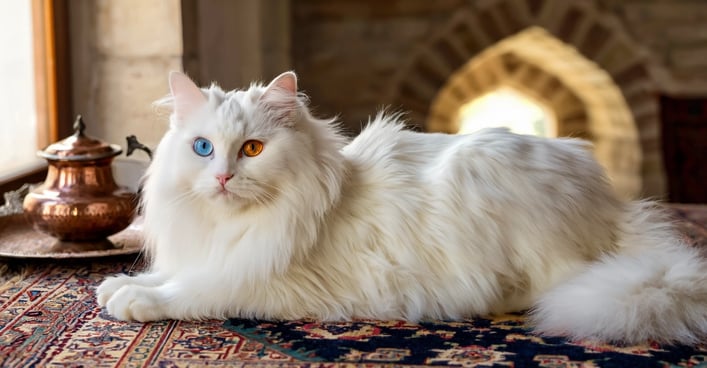
Turkish Angora vs Turkish Van: A 2026 Guide to Ancient Turkish Cat Breeds
Compare the elegant Turkish Angora and the water-loving Turkish Van. Discover their unique histories, temperaments, and which ancient Turkish treasure is right for your home.
Share this page
Turkish Angora vs Turkish Van: A 2026 Guide to Ancient Turkish Cat Breeds
Turkish Angora and Turkish Van cats are two of Turkey's most treasured natural breeds, having developed over centuries in their native land with minimal human intervention. While they share a common origin and some physical traits, they diverge significantly in coat patterns, affinity for water, and personality. This comprehensive 2026 guide will help you understand these ancient feline treasures and choose the perfect Turkish companion for your lifestyle.
Ancient Origins and History
Turkish Angora History
Origin: Ankara region (historically known as Angora), Turkey.
Historical Significance: One of the world's oldest natural cat breeds.
Original Status: Treasured by Turkish royalty and nobility.
Near Extinction: Faced decline in the early 1900s, often outcrossed with Persians.
Preservation Efforts: Revived through a dedicated breeding program at the Ankara Zoo.
Formal Recognition: Recognized by the Cat Fanciers' Association (CFA) in 1972.
Cultural Symbol: Officially designated a national treasure of Turkey.
Turkish Van History
Origin: The rugged Lake Van region in eastern Turkey.
Historical Significance: An ancient natural breed with a storied past.
Local Legend: Often called the "swimming cat" and linked to folklore, including tales of Noah's Ark.
Unique Trait: Renowned for its unusual love of water and swimming ability.
Formal Recognition: Gained CFA recognition in 1994, much later than the Angora.
Colors: Originally known for dominant white, but now accepted in a wide variety of colors and patterns.
Turkish Van Coat:
Length & Texture: Semi-longhaired with a single, cashmere-like coat. It is uniquely water-resistant.
Grooming Needs: Weekly brushing is sufficient; their lack of undercoat minimizes matting.
Seasonal Shedding: Undergoes a dramatic seasonal molt, often referred to as "blowing" their coat.
Colors: Strictly the "Van pattern"—a predominantly white body with colored markings restricted to the head and tail.
Shared Advantage: Both breeds are relatively low-maintenance due to their single coats without dense undercoats.
The Distinctive Van Pattern
This is the most critical visual distinction between the two breeds.
Feature
Turkish Angora
Turkish Van
Color Pattern
Any color or pattern is acceptable.
Van pattern ONLY (white with color on head and tail).
Body Color
Can be any solid, tabby, or other pattern.
Predominantly white.
Head Markings
Any pattern is allowed.
Colored markings on the head only.
Tail
Can be any color.
Must be fully colored.
Body Spots
Pattern can appear anywhere.
Small, random colored patches on the body are permissible.
Distinctive Physical Features
Feature
Turkish Angora
Turkish Van
Head Shape
Wedge-shaped, medium in length.
Broad, modified wedge.
Eyes
Almond-shaped; any color. Odd-eyed (heterochromia) is common.
Rounded; typically amber, blue, or odd-eyed.
Ears
Large, pointed, wide-set, and heavily tufted.
Medium to large, well-feathered.
Neck
Slim and elegant.
Short and muscular.
Body
Long, slender, and graceful.
Muscular, broad-chested, and athletic.
Legs
Long and slender with dainty paws.
Medium length, muscular, and strong.
Temperament and Personality: Character Comparison
Turkish Angora Personality Profile
Activity Level: High (8/10)
Intelligence: Exceptionally high (10/10)
Affection Style: Deeply devoted but independent; forms a strong bond with one special person.
Vocalization: Moderate; uses a soft, communicative voice.
Social Nature: Selective; can be reserved with strangers.
Key Behavioral Traits:
Extremely intelligent and curious problem-solvers.
Known for opening doors, cabinets, and figuring out puzzles.
Athletic, graceful, and often mischievous.
More likely to "help" with your activities than be a lap cat.
Enjoys interactive play and high perches.
Owner Insight:"My Turkish Angora is convinced she's the smartest being in the house. She's probably right—she's solved more problems than I have!"
Turkish Van Personality Profile
Activity Level: High (8/10)
Intelligence: Very high (9/10)
Affection Style: Affectionate, involved, and often described as "dog-like."
Vocalization: Moderate.
Social Nature: Friendly but maintains an independent streak.
Key Behavioral Traits:
Famous for its fascination with and love of water (may swim or play in water bowls).
Exhibits retrieving behavior and will follow owners from room to room.
Energetic, excellent hunters, and "into everything."
Playful and requires active engagement.
Owner Insight:"My Turkish Van doesn't just watch me shower—he joins me! He also fetches his toys like a puppy. He's utterly unique."
Temperament Comparison Table
Trait
Turkish Angora
Turkish Van
Affection Level
7/10
8/10
Activity Level
8/10
8/10
Playfulness
8/10
9/10
Intelligence
10/10
9/10
Vocalization
5/10
5/10
Independence
6/10
5/10
Child Friendly
6/10
7/10
Pet Friendly
5/10
6/10
Water Interest
Moderate
HIGH
The Swimming Cat: Understanding the Turkish Van's Water Love
The Turkish Van's Unique Trait
Natural Affinity: Genuinely enjoys water, a trait rare among domestic cats.
Potential to Swim: Many will swim voluntarily in pools, bathtubs, or lakes.
Physical Adaptation: Their single, cashmere-like coat is water-resistant and dries quickly.
Household Behavior: Often fascinated by running taps and may join owners in the bath or shower.
Important Note: Not every Turkish Van will swim. Interest varies by individual. Early, positive exposure to water can encourage this behavior, but it should never be forced.
Turkish Angoras and Water: While some individuals may play with dripping taps, a strong love of water is not a defining breed trait for the Angora.
Care and Maintenance Requirements
Grooming Comparison
Aspect
Turkish Angora
Turkish Van
Brushing Frequency
Weekly
Weekly
Shedding
Seasonal, moderate
Seasonal, can be heavy ("blowing coat")
Matting Risk
Low
Low
Bathing
Rarely needed
May be more frequent due to water play
Professional Grooming
Rarely required
Rarely required
Exercise and Enrichment Needs
Both breeds are active and intelligent, requiring:
Daily interactive play sessions (wand toys, fetch).
Ample vertical space (cat trees, shelves).
Puzzle feeders and treat-dispensing toys for mental stimulation.
A safe, engaging environment to explore.
For Turkish Vans: Consider incorporating supervised water play (shallow pans, fountains) and games that satisfy their retrieving instincts.
Health and Lifespan Comparison
Turkish Angora Health Overview
General Health: A robust natural breed with few major genetic problems.
Primary Concerns:
Deafness: Associated with the gene for white coat and blue eyes. Not all white, blue-eyed Angoras are deaf, but the risk is present. Responsible breeders test for this.
Ataxia: A rare hereditary neurological condition found in some lines. Genetic testing is available.
Average Lifespan: 12-18 years.
Turkish Van Health Overview
General Health: An exceptionally robust breed hardened by natural selection.
Primary Concerns: Very few known hereditary health issues.
Average Lifespan: 12-17 years.
Health Summary Table
Factor
Turkish Angora
Turkish Van
Overall Health
Excellent
Excellent
Genetic Issues
Minimal
Very Minimal
Deafness Risk
In white/blue-eyed individuals
Minimal
Typical Lifespan
12-18 years
12-17 years
Expected Veterinary Costs
Low to Moderate
Low
Cost of Ownership in 2026
Initial Purchase Costs
Expense
Turkish Angora
Turkish Van
Kitten (Pet Quality)
$800 - $1,500
$700 - $1,200
Kitten (Show/Breeding)
$1,500 - $3,000
$1,000 - $2,000
Adult Cat (Rescue/Rehome)
$200 - $600
$200 - $500
Note: Both breeds are relatively rare, which can affect availability and price. Always prioritize reputable breeders who health-test.
Estimated Annual Costs (For Either Breed)
Expense
Estimated Annual Cost
High-Quality Food
$600 - $900
Routine Veterinary Care
$300 - $500
Grooming Supplies
$50 - $100
Litter
$200 - $300
Toys, Scratching Posts, Enrichment
$150 - $250
Pet Insurance (Optional)
$300 - $600
Total Annual Range
$1,600 - $2,650
Pros and Cons Summary
Turkish Angora
Advantages (✅):
Brilliant Companion: Extremely intelligent, engaging, and entertaining.
Low-Maintenance Beauty: Silky coat is easy to care for; elegant in many colors.
Longevity: Generally healthy with a long lifespan.
Living History: Carries the prestige of an ancient, natural breed.
Disadvantages (❌):
Rarity: Can be difficult to find from ethical breeders.
Selective Affection: Independent; may not be a constant lap cat.
Mischievous Intelligence: Requires cat-proofing as they get into everything.
Turkish Van
Advantages (✅):
Unique Water Love: The "swimming cat" offers a truly one-of-a-kind experience.
Dog-Like Devotion: Affectionate, interactive, and may follow you around.
Robust Health: Very few known genetic health concerns.
Striking Look: The unique Van pattern and often odd-eyed gaze are captivating.
Disadvantages (❌):
Extreme Rarity: One of the rarest breeds; long waitlists are common.
High Energy Demands: Requires an active owner who can provide ample play.
Potential for Mess: Water play can lead to splashed floors and wet surprises.
Strong-Willed: Intelligent and independent, which can make training a challenge.
Which Breed Is Right For You?
Choose a Turkish Angora if you:
Desire an exceptionally intelligent and graceful cat.
Appreciate elegance and a wide variety of coat colors.
Understand and respect a cat's independent nature.
Want a relatively low-maintenance grooming routine.
Can provide plenty of mental stimulation and vertical space.
Value ancient breed heritage and historical significance.
Choose a Turkish Van if you:
Are fascinated by the idea of a cat that loves water.
Want an active, playful companion with "dog-like" traits.
Don't mind a bit of water-related mess in your home.
Are prepared for the challenge of finding a rare breed.
Can commit to daily interactive play and engagement.
Desire a robust, healthy cat with a striking and unique appearance.
Special Considerations for Potential Owners
For Busy or Working Households
Neither breed is ideal for homes where they will be left alone for long hours daily. They are social, intelligent, and active cats who can become bored or lonely.
Solutions to Consider:
Adopting two cats (preferably from the same litter or a bonded pair) for companionship.
Hiring a pet sitter or dog walker for midday visits.
Creating an extremely enriched environment with automated toys, puzzles, and cat TV.
If your lifestyle is very sedentary, a different, less demanding breed might be a better fit.
For Turkish Van Households
Embrace the Water: Be prepared for playful splashing and provide safe water play opportunities.
Safety First: Keep toilet lids closed and secure any deep bodies of water.
Enjoy the Uniqueness: This trait is a hallmark of the breed—celebrate it!
Finding a Reputable Breeder in 2026
Essential Questions to Ask Any Breeder:
Do you perform hearing tests on white kittens (for Angoras)?
Can I meet the parent cats to assess their temperament?
What socialization practices do you use with your kittens?
Are the kittens registered with a major cat association (CFA, TICA)?
Do you have a policy requiring kittens to be kept indoors only?
What genetic health screening do you perform on your breeding cats (e.g., testing for ataxia in Angora lines)?
Major Red Flags to Avoid:
Breeders who cannot provide health records or genetic test results.
Catteries that breed multiple, unrelated cat breeds.
Immediate availability of multiple kittens with no waitlist.
Kittens raised primarily outdoors or in isolated conditions.
Prices significantly below the market average.
Last Updated: 2026 | Both the Turkish Angora and Turkish Van are rare treasures that thrive with committed, active owners who appreciate their unique histories and vibrant personalities.
Get expert advice about cat care, behavior, nutrition, grooming, and training. Ask our AI cat care expert anything about your cat and receive professional guidance.