Turkish Angora vs Turkish Van: The 2026 Breed Comparison Guide
Deciding between a Turkish Angora and a Turkish Van? Our 2026 guide compares their looks, personality, care needs, and costs to help you choose your perfect feline friend.
Share this page
Turkish Angora vs Turkish Van: The 2026 Breed Comparison Guide
Two elegant breeds from Turkey often capture the hearts of cat lovers: the graceful Turkish Angora and the robust Turkish Van. While they share a homeland, their histories, appearances, and personalities are wonderfully distinct. This definitive 2026 guide provides a detailed comparison to help you decide which of these captivating cats is the ideal companion for your home.
Origins and History
Turkish Angora Origins
The Turkish Angora is one of the world's oldest natural cat breeds, with origins tracing back to the Ankara region of Turkey. Documented since the 15th century, they were cherished by Turkish royalty. The breed faced near-extinction in the early 20th century but was preserved through dedicated breeding programs in Turkey and later in the United States.
Turkish Van Origins
The Turkish Van hails from the rugged, mountainous area surrounding Lake Van in eastern Turkey. This breed evolved with a unique trait: a love for water. Often called the "swimming cat," the Van developed this affinity from pursuing fish in Lake Van, setting it apart from virtually all other feline breeds.
Turkish Angora vs Turkish Van: The 2026 Breed Comparison Guide - Articles
Physical Appearance: A Side-by-Side Look
Size and Build
Feature
Turkish Angora
Turkish Van
Weight
5-10 pounds
10-20 pounds
Body Type
Slender, delicate, and fine-boned
Muscular, substantial, and robust
Overall Impression
An elegant ballerina
A powerful athlete
Coat and Color
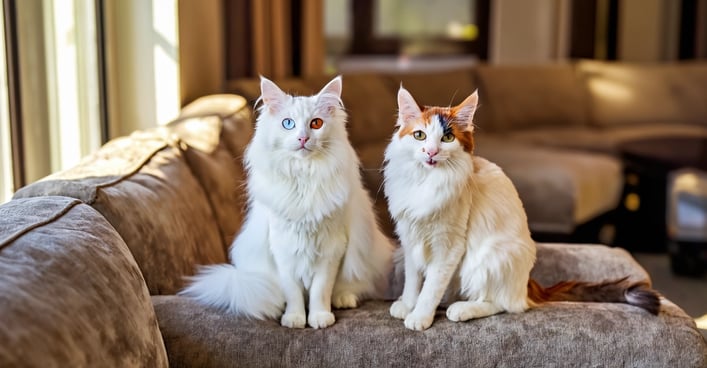
Turkish Angora Coat:
Texture: Single-layer, silky, and flowing.
Length: Medium to long.
Shedding: Minimal undercoat leads to moderate, seasonal shedding.
Colors: While famously white, they come in black, blue, red, cream, and various patterns.
Turkish Van Coat:
Texture: Semi-long with a cashmere-like, water-resistant topcoat and a dense undercoat.
Pattern: Known for the classic "Van pattern"—colored markings restricted to the head and tail with a pure white body.
Shedding: Moderate to heavy, especially during seasonal changes.
Head and Face
Turkish Angora:
Wedge-shaped head with a fine bone structure.
Large, almond-shaped eyes in blue, amber, green, or often odd-eyed (heterochromia).
Tall, pointed ears with slight tufts.
Turkish Van:
Broad, wedge-shaped head with strong cheeks.
Large, expressive eyes in blue, amber, or odd-eyed.
Moderately large ears set high on the head.
Personality and Temperament
Turkish Angora Personality
Think of the Angora as the intelligent, social director of your home:
Highly Intelligent & Trainable: Excels at puzzle toys and can learn tricks.
Playfully Energetic: Maintains a kitten-like zest for life.
Affectionately Independent: Loves companionship but on their own terms.
Vocal Communicator: Uses a soft, melodic voice to converse.
Acrobatic Climber: Seeks out and enjoys high vantage points.
Turkish Van Personality
The Van is the loyal, adventurous athlete:
Dog-Like Devotion: Forms a strong, loyal bond with their family.
The Swimming Cat: Has a unique and famous affinity for water.
Powerfully Playful: An incredible jumper with strong hunting instincts.
Mischievously Charming: Loves interactive games and can be mischievously entertaining.
Grooming and Care Requirements
Grooming Breakdown
Task
Turkish Angora
Turkish Van
Brushing
2-3 times per week (30-45 min weekly)
2-3 times per week, more when shedding (45-60 min weekly)
Bathing
Occasional, as needed
May enjoy it more than typical cats; occasional
Matting Risk
Low (single coat)
Moderate (dense undercoat)
Key Tip
Their silky coat tangles less easily.
Regular brushing is essential to manage the undercoat.
Health and Lifespan
Health Profiles
Turkish Angora
Average Lifespan: 12-18 years
Primary Health Considerations: Deafness (associated with white coat/blue eyes), Hypertrophic Cardiomyopathy (HCM), and a rare genetic condition called ataxia.
Turkish Van
Average Lifespan: 12-17 years
Primary Health Considerations: Hypertrophic Cardiomyopathy (HCM), dental issues, and a propensity for weight gain without adequate exercise.
Recommendation for Both: Annual veterinary check-ups and pet insurance are wise investments for a long, healthy life.
Cost of Ownership (2026 Estimates)
Initial Investment
Item
Turkish Angora
Turkish Van
Kitten from Reputable Breeder
$600 - $2,000
$800 - $2,500
Initial Vet Visit & Vaccinations
$200 - $400
$200 - $400
Essential Supplies
$200 - $400
$200 - $400
Spay/Neuter
$200 - $500
$200 - $500
Total Initial Cost
$1,200 - $3,300
$1,400 - $3,800
Annual Ongoing Costs
Expense
Turkish Angora
Turkish Van
Food & Treats
$40 - $80
$50 - $90
Litter
$15 - $25
$20 - $30
Preventative Healthcare
$250 - $500
$250 - $500
Pet Insurance
$300 - $540
$360 - $600
Toys & Enrichment
$120 - $240
$180 - $300
Annual Total
$725 - $1,385
$860 - $1,520
Ideal Living Environment
Best Home for a Turkish Angora
Space: Adapts well to apartments; vertical space (cat trees, shelves) is a must.
Household: Thrives in homes where they can be involved; good with gentle children and other pets with proper introductions.
Owner: Someone who appreciates an interactive, communicative, and elegant companion.
Best Home for a Turkish Van
Space: Prefers more room to run and jump; a secure catio is a major bonus.
Household: Active families who can engage in play; good with respectful children.
Owner: An active person ready for a loyal, dog-like companion with unique aquatic interests.
Making Your Choice: Which Cat is Right for You?
Choose a Turkish Angora if you want:
An elegant, talkative, and highly intelligent companion.
A cat that adapts beautifully to smaller living spaces.
A relatively low-maintenance coat despite its length.
A social "shadow" who loves to be involved in all your activities.
Choose a Turkish Van if you want:
A unique, water-loving cat with a playful, loyal personality.
A robust, athletic companion for an active home.
A cat with striking, patterned markings and a substantial presence.
A pet with dog-like tendencies, including possible fetch-playing.
Final Thoughts
Both the Turkish Angora and Turkish Van offer unparalleled companionship steeped in history. The Angora is the epitome of graceful intelligence, while the Van is a testament to powerful, playful loyalty.
Your decision should align with your lifestyle, space, and the type of feline relationship you desire. Whether you choose the elegant Angora or the adventurous Van, ensure you source your kitten from a reputable breeder who prioritizes health testing and ethical practices. In return, you'll gain a devoted and enchanting friend for years to come.
Guide updated for 2026. Have experience with these wonderful breeds? Share your stories and tips below!
Get expert advice about cat care, behavior, nutrition, grooming, and training. Ask our AI cat care expert anything about your cat and receive professional guidance.