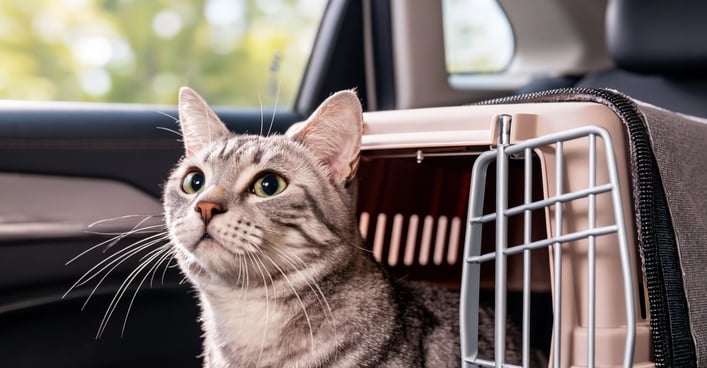
Traveling with Cats in 2026: The Complete Guide to Stress-Free Trips
Master cat travel with our expert guide. Learn carrier training, stress reduction, and essential prep for safe car, air, and international trips with your feline friend.
Share this page
Traveling with Cats in 2026: The Complete Guide to Stress-Free Trips
By Amanda Foster, Certified Animal Transport Specialist | Updated: 2026 | Reading Time: 19 minutes
Introduction
Traveling with cats presents unique challenges that require meticulous preparation. Unlike dogs, most felines find travel inherently stressful and prefer their familiar territories. However, with strategic planning, the right equipment, and proven stress-reduction techniques, you can transform travel into a manageable—and even positive—experience for both you and your cat.
This definitive 2026 guide covers every aspect of feline travel, from short car rides to international flights, empowering you to plan safe, low-stress journeys.
Preparing Your Cat for Travel
Carrier Training: The Foundation of Success
A positive association with the carrier is the single most important factor for stress-free travel. Follow this gradual, reward-based program.
Significantly higher due to noise, separation, and unfamiliar handling.
Availability
Most airlines allow, with size/weight limits.
Option for pets too large for cabin; restricted by breed, season, and airline.
Key Consideration
Your cat must stay in the carrier for the entire flight.
Not all airlines offer this service; strict regulations apply.
Airline-Approved Carrier Requirements
For In-Cabin: Soft-sided carriers are often preferred as they can flex to fit under seats. They must have waterproof lining, secure zippers, and ample mesh ventilation.
For Cargo: Hard-sided, IATA-compliant kennels are required. They must have live animal stickers, proper ventilation on multiple sides, and secure locking mechanisms.
Labeling: Clearly mark the carrier with "Live Animal" stickers, your contact info, and your cat's name.
The Day of the Flight
Before Departure:
Engage your cat in play to expend energy.
Offer a light meal 4+ hours before the flight, but keep water available.
Arrive at the airport early to avoid rushing.
Use the pet relief area if available.
Security Screening:
You will need to remove your cat from its carrier. The carrier goes through the X-ray; you carry your cat through the metal detector.
A secure harness and leash are non-negotiable.
You can request a private screening room for this process.
During the Flight:
Keep the carrier securely under the seat in front of you.
Do not open the carrier during the flight.
If your cat is vocal, speak to them calmly and cover part of the carrier.
Ensuring Smooth Hotel Stays
Finding & Booking Pet-Friendly Accommodations
Book in advance and explicitly confirm the hotel's cat policy (some are "dog-only").
Clarify all fees (per night or per stay), weight limits, and the number of pets allowed.
Reputable pet-friendly chains include Kimpton Hotels (no fee at most), La Quinta, Motel 6, Red Roof Inn, and select Marriott and Hilton properties.
Setting Up a Safe Hotel Room
Create a "Home Base": Upon arrival, set up your cat's carrier with a familiar blanket inside. Keep the door open so they can use it as a safe retreat.
Designate Zones: Place the litter box in the bathroom. Set up food and water bowls away from the litter area.
Cat-Proof the Room: Block access to dangerous spaces under beds or behind furniture. Check that all windows are securely closed and screens are intact.
Prevent Escapes: Hang the "Do Not Disturb" sign at all times. Place your cat in its carrier before opening the door for any reason.
Planning for International Travel
International travel requires advanced planning—start at least 3-6 months before your move or trip.
Key Requirements to Research
For Your Destination Country:
Import regulations from the official government agriculture or DEFRA-style website.
Quarantine requirements (still mandatory in some rabies-free countries).
Specific vaccination protocols (especially for rabies).
Mandatory microchip standard (ISO 11784/11785 is the global standard).
Any banned cat breeds.
Universal & Country-Specific Considerations
Rabies Vaccination & Documentation:
This is the most critical requirement. Ensure the vaccine is current and administered after microchipping.
Some rabies-free countries (e.g., Australia, New Zealand, Japan, UK, Hawaii) require a rabies antibody titer test (RNATT) 3-6 months before entry.
Official Health Certificate:
Must be completed by a USDA-accredited veterinarian.
Often requires USDA APHIS endorsement (stamp of approval), which may involve mailing paperwork.
Issued within a strict timeframe (e.g., 10 days before travel).
Proactive Stress Reduction Strategies
Before Travel
Pheromones: Start a Feliway diffuser in your home 1-2 weeks before departure. Spray the carrier 15 minutes before use.
Natural Calming Aids: Products like Zylkene (hydrolyzed milk protein) or Composure chews can take the edge off. Begin 1-2 days before travel.
Veterinary Solutions: For highly anxious cats, consult your vet about prescription options like Gabapentin. Always conduct a trial at home before travel day to assess your cat's reaction.
During Travel
Maintain Familiarity: Include an unwashed t-shirt or a blanket from your cat's favorite sleeping spot.
Use a Carrier Cover: A partial cover can create a secure, cave-like environment. Ensure at least one side remains uncovered for ventilation.
Stay Calm: Your cat will pick up on your emotional state. Project calm, confident energy.
Contact information for your regular vet and an emergency vet at your destination.
A list of any medications with dosages.
Special Considerations
Senior Cats: Require extra comfort, more frequent breaks, and must have veterinary clearance for travel. They are more sensitive to temperature extremes.
Kittens: Ensure they are old enough and fully vaccinated per your vet's advice. They need more frequent meals and warmth.
Cats with Medical Conditions: Absolute veterinary clearance is essential. Meticulously maintain medication and feeding schedules.
Multi-Cat Travel: Use separate carriers for each cat. This is safer, prevents conflict, and makes management easier.
2026 Travel Cost Breakdown (Estimated)
Travel Type
Typical Cost Range
Key Cost Drivers
Car Travel
$100 - $500+ per trip
Initial supplies ($100-$300), pet-friendly hotel fees ($20-$75/night), fuel.
Domestic Air (In-Cabin)
$250 - $600+ round trip
Airline pet fee ($95-$200 each way), vet health certificate ($50-$150), carrier.
International Air
$500 - $5,000+
All domestic costs, plus additional vet visits, blood tests ($150-$400), USDA endorsement ($50-$150), and potential quarantine fees ($1,000-$3,000+).
Common Mistakes to Avoid
Preparation Pitfalls:
Skipping carrier acclimation training.
Using unapproved sedatives.
Feeding a large meal right before departure.
Assuming all hotels/airlines have the same pet policy.
Not having physical and digital copies of all documents.
On-the-Road Errors:
Opening the carrier in an unsecured area (car, airport).
Leaving your cat alone in a parked vehicle.
Playing loud music or creating a chaotic environment.
Failing to secure the carrier in the car with a seatbelt.
Neglecting to offer water during breaks.
When Travel May Not Be the Best Option
Carefully reconsider travel if your cat:
Has a severe, diagnosed anxiety disorder that doesn't respond to medication.
Is recovering from recent surgery or has a critical, unstable illness.
Is very old and frail, with a poor quality of life.
Would face a prolonged, stressful quarantine at the destination.
In these cases, a trusted pet sitter or a veterinary boarding facility may be a kinder choice.
Conclusion
Successfully traveling with your cat in 2026 is an achievable goal built on a foundation of preparation, patience, and empathy. By starting carrier training early, understanding your cat's unique stress signals, and meticulously planning each leg of the journey, you can ensure their safety and comfort.
Remember, the goal is not just to transport your cat, but to do so in a way that minimizes trauma and preserves your bond. While some cats may never become eager travelers, this guide provides the tools to make any necessary journey as smooth as possible. Always let your cat's wellbeing be the compass that guides your travel decisions.
Continue Your Research:
How to Choose the Perfect Cat Carrier: A 2026 Buyer's Guide
Understanding Feline Anxiety: Signs, Solutions, and Support
Top 50 Pet-Friendly Hotel Chains in the U.S. and Abroad
Step-by-Step Paperwork Guide for International Pet Relocation
Get expert advice about cat care, behavior, nutrition, grooming, and training. Ask our AI cat care expert anything about your cat and receive professional guidance.