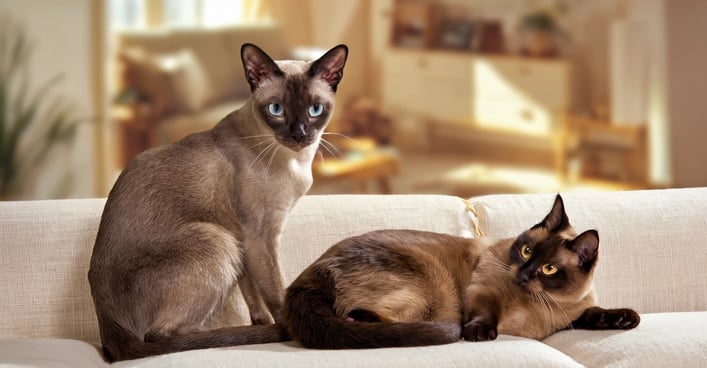
Tonkinese vs Burmese: The Complete 2026 Breed Comparison Guide
Choosing between a Tonkinese and a Burmese? Our detailed guide compares their temperament, health, grooming, and costs to help you find your perfect feline companion.
Share this page
Tonkinese vs Burmese: The Complete 2026 Breed Comparison Guide
Two closely related breeds with Southeast Asian heritage, the Tonkinese and Burmese offer similar companion-oriented temperaments with distinct differences in appearance and personality. Both are celebrated for their affectionate natures, social personalities, and dog-like devotion. Understanding their unique traits is key to selecting the perfect feline friend for your lifestyle.
Breed Overview
Tonkinese Cats
Origin and History
The Tonkinese was developed in the 1960s in Canada by breeder Margaret Conroy, who crossed Siamese and Burmese cats. The goal was to create a breed with moderate features—a perfect balance between the slender Siamese and the stocky Burmese. Though named after the Tonkin region of Vietnam, the breed has no historical connection to the area.
Initially considered a crossbreed, the Tonkinese gained championship recognition from major cat associations in the 1980s and is now recognized as a distinct breed with its own unique standard.
Tonkinese vs Burmese: The Complete 2026 Breed Comparison Guide - Articles
Physical Characteristics
Weight: 6–12 pounds
Length: 12–15 inches
Coat: Short, fine, silky, and close-lying
Colors: Natural, champagne, blue, platinum (in pointed, mink, and solid patterns)
Eyes: Almond-shaped; aqua to blue-green (mink), blue (pointed), gold (solid)
Distinctive Feature: Intermediate, muscular build between Siamese and Burmese
Lifespan: 12–16 years
Body Type: Medium, muscular, and well-balanced
Burmese Cats
Origin and History
The Burmese traces its origins to a single cat named Wong Mau, brought from Burma (now Myanmar) to San Francisco in 1930 by Dr. Joseph Thompson. This walnut-brown cat became the foundation of the breed through careful breeding with Siamese cats.
Developed through selective breeding to establish the rich sable color and distinct type, the Burmese gained recognition in the 1930s and has remained popular for its exotic appearance and delightful personality.
Colors: Sable, champagne, blue, platinum (recognized in some associations)
Eyes: Large, round, golden yellow to gold
Distinctive Feature: Compact, substantial build; often described as a “brick wrapped in silk”
Lifespan: 10–16 years
Body Type: Medium, stocky, muscular, and surprisingly heavy for its size
Physical Characteristics Comparison
Body Type Differences
Tonkinese:
Represents the middle ground between its parent breeds:
Build: Moderate and well-proportioned
Torso: Medium length and well-muscled
Legs: Medium length and proportionate
Head: Modified wedge shape
Overall: Balanced, athletic appearance
Burmese:
Boasts a distinctive, substantial build:
Build: Compact and stocky
Torso: Short with a rounded chest
Legs: Short to medium, sturdy
Head: Rounded with a short muzzle
Overall: Dense and heavy for its size
Coat and Color Differences
Tonkinese Patterns:
Tonkinese display three distinct coat patterns:
Pointed:
Similar to Siamese—darker extremities (ears, face, paws, tail)
Blue eyes
Mink (Signature Pattern):
Unique to the Tonkinese breed
Body color is lighter than points but still visible
Signature aqua eyes
The most popular pattern
Solid (Sepia):
Similar to Burmese—minimal contrast
Gold or green eyes
Subtle shading
Burmese Colors:
Sable (original dark brown)
Champagne (warm beige)
Blue (medium gray)
Platinum (pale gray)
(Note: Recognized colors vary by registry.)
Eye Color Differences
Tonkinese:
Pointed: Blue eyes
Mink: Aqua to blue-green eyes (unique to the breed)
Solid: Green to yellow-green eyes
Burmese:
Gold to yellow eyes
Deep, luminous gold is preferred
Large and exceptionally expressive
Temperament and Personality Comparison
Tonkinese Personality
Social and Engaging:
Tonkinese are outgoing, social butterflies with a "dog-like" devotion to their families. They often greet visitors and make friends easily.
Moderately Vocal:
They are chatty with soft, melodic voices—less loud than Siamese but more communicative than Burmese. They enjoy conversing with their owners.
Playful and Active:
They strike a great balance: playful and energetic, enjoying interactive toys, but not overly demanding. They can entertain themselves when needed.
Intelligent and Curious:
Highly smart, they thrive with puzzle toys, learning tricks, and exploring. This intelligence makes them highly trainable and interactive companions.
Excellent with Families:
Tonkinese typically get along wonderfully with children, other cats, and cat-friendly dogs, thanks to their adaptable nature.
Burmese Personality
Devoted Companions:
Burmese form intense bonds and crave constant human companionship, earning the nickname "Velcro cats." They dislike being left alone.
Dog-Like Loyalty:
Famous for following owners from room to room, greeting them at the door, and wanting involvement in every activity. Many enjoy fetch and leash walking.
Playful for Life:
They maintain a kitten-like playfulness and trusting nature well into their senior years.
Intelligent and Trainable:
Clever and eager to please, they can learn tricks, use puzzle toys, and quickly figure out household routines.
Vocal but Soft-Spoken:
They have soft, sweet voices and use them to communicate their needs, though they are not as loud as Siamese.
Temperament Summary
Trait
Tonkinese
Burmese
Energy Level
Moderate to High
Moderate
Playfulness
High
High
Affection Level
Very High
Very High
Independence
Low
Very Low
Vocalization
Moderate
Moderate
Intelligence
High
High
Social Nature
Very Outgoing
Outgoing
Good with Children
Excellent
Excellent
Good with Other Pets
Very Good
Good
Health and Lifespan
Tonkinese Health
Overall Health:
Generally healthy, benefiting from hybrid vigor, but they can inherit issues from both parent breeds.
Common Health Issues:
Amyloidosis: Kidney disease caused by protein deposits (inherited from Siamese). Regular blood work is recommended.
Inflammatory Bowel Disease (IBD): Digestive disorder, more common in some lines. Manageable with diet and medication.
Dental Issues: May inherit Siamese dental problems, making regular dental care important.
Crossed Eyes/Kinked Tails: Genetic traits from Siamese heritage that don't affect health; less common in modern breeding lines.
Lifespan: 12–16 years
Burmese Health
Overall Health:
Generally healthy but with some breed-specific concerns, particularly in certain regional bloodlines.
Common Health Issues:
Diabetes Mellitus: Higher incidence than many breeds, especially in Australian and European lines. Weight management is crucial.
Hypokalemia: Low blood potassium levels; a genetic condition in some lines. Manageable with supplementation; DNA testing is available.
Flat-Chested Kitten Syndrome: Congenital chest deformity usually outgrown; may temporarily affect breathing.
Gangliosidosis: A fatal genetic storage disease. Reputable breeders perform DNA testing.
Cranial Deformities: Head shape issues in some American lines; responsible breeding has reduced incidence.
Lifespan: 10–16 years
Health Comparison
Health Factor
Tonkinese
Burmese
Overall Health
Good
Good
Diabetes Risk
Moderate
Higher
Genetic Conditions
Amyloidosis risk
Multiple testable conditions
Dental Health
May need attention
Generally good
Average Lifespan
12–16 years
10–16 years
Grooming Requirements
Tonkinese Grooming
Low Maintenance: Their short, silky coat requires minimal care.
Very Low Maintenance: Their short, satin-like coat is among the easiest to maintain.
Brushing: Weekly or even less frequent.
Bathing: Rarely needed.
Shedding: Low.
Tools: A soft brush or cloth is all that's needed.
Grooming Comparison
Aspect
Tonkinese
Burmese
Brushing Frequency
Weekly
Weekly or less
Shedding
Low-Moderate
Low
Coat Texture
Silky
Satin-like
Maintenance Level
Very Low
Very Low
Special Needs
None
None
Exercise and Activity Needs
Tonkinese Exercise Requirements
Moderate to High Activity: Active and playful, requiring regular stimulation.
Daily Needs: 2 play sessions (15–20 minutes each), interactive toys, climbing opportunities, and mental puzzles.
Enrichment: Cat trees, window perches, interactive toys, and plenty of social interaction.
Burmese Exercise Requirements
Moderate Activity: Enjoy play but are slightly less demanding than Tonkinese.
Daily Needs: 1–2 play sessions (15–20 minutes each), interactive play, puzzle toys, and companionship.
Enrichment: Climbing structures, chase toys, and social interaction (preferred over solo play).
Exercise Comparison
Aspect
Tonkinese
Burmese
Activity Level
Moderate-High
Moderate
Play Sessions/Day
2
1–2
Play Style
Active, interactive
Playful, engaging
Environmental Needs
Moderate
Moderate
Social Play
Important
Very Important
Living Environment
Tonkinese Living Needs
Social Environment Required: Thrive in homes with regular companionship.
Ideal Home: People home regularly, plenty of interaction, other pets for company, and available activities.
Indoor/Outdoor: Indoor living is recommended. If given outdoor access, it must be secure and supervised.
Burmese Living Needs
Companionship is Essential: Form strong attachments and need constant interaction.
Ideal Home: Regular human interaction, family members home frequently. Consider a second cat if owners are away long hours.
Indoor/Outdoor: Indoor living is strongly recommended. Their trusting nature makes them vulnerable outdoors; only allow supervised outdoor time.
Cost Comparison
Initial Costs (Kitten)
Expense
Tonkinese
Burmese
Kitten Price
$800–$2,000
$700–$1,500
Initial Vet Visit
$100–$300
$100–$300
Spay/Neuter
$200–$500
$200–$500
Initial Supplies
$300–$500
$300–$500
Total Initial Cost
$1,400–$3,300
$1,300–$2,800
Annual Ongoing Costs
Expense
Tonkinese
Burmese
Food
$500–$1,000
$500–$1,000
Litter
$150–$300
$150–$300
Routine Veterinary Care
$300–$600
$400–$700*
Pet Insurance
$300–$600
$300–$600
Toys & Enrichment
$100–$200
$100–$200
Total Annual Cost
$1,350–$2,700
$1,450–$2,800
*Burmese may have higher costs for diabetes monitoring.
Estimated Lifetime Cost (14 Years)
Cost Category
Tonkinese
Burmese
Initial Costs
$1,400–$3,300
$1,300–$2,800
Ongoing Costs
$18,900–$37,800
$20,300–$39,200
Emergency Fund
$2,000–$4,000
$2,000–$4,000
Total Lifetime Cost
$22,300–$45,100
$23,600–$46,000
Which Breed Is Right for You?
Choose a Tonkinese If You Want:
A social, outgoing cat that greets visitors.
The unique beauty of aqua eyes (mink coloring).
A balance of moderate energy and vocalization.
A highly trainable and intelligent companion.
A cat that adapts well to families with children and other pets.
Time for daily interaction and play.
Choose a Burmese If You Want:
The ultimate "Velcro cat" with intense devotion.
A compact, cuddly, and surprisingly heavy companion.
A cat that stays playful and kitten-like forever.
A loyal shadow that follows you everywhere.
A soft-spoken but communicative friend.
Can provide near-constant companionship and handle potential diabetes monitoring.
Key Similarities Between the Breeds
Both the Tonkinese and Burmese share:
Affectionate, people-oriented, and social personalities.
High intelligence and trainability.
Playful attitudes that last a lifetime.
Short, low-maintenance coats.
A strong need for companionship and indoor living.
Southeast Asian heritage.
Similar price ranges for kittens and care.
Conclusion
The Tonkinese and Burmese are both exceptional companion cats, blending Southeast Asian elegance with delightful, people-loving personalities. Your choice ultimately hinges on subtle preferences:
The Tonkinese offers a slightly more active, socially adventurous cat with the captivating aqua eyes of the mink pattern and a balanced, athletic build.
The Burmese provides intense, velcro-like devotion in a compact, cuddly package, with luminous golden eyes and an eternally youthful spirit.
Both breeds require committed homes where they won't be left alone for long periods. Health considerations differ slightly, with Burmese having a higher diabetes risk and Tonkinese a concern for amyloidosis. Whichever you choose, you'll gain a loving, interactive, and utterly devoted member of the family.
Note: Individual cats may vary from breed standards. Always seek reputable breeders who perform genetic testing for breed-specific conditions. Both breeds require significant companionship and are not suited for homes where they will be regularly left alone for extended hours.
Get expert advice about cat care, behavior, nutrition, grooming, and training. Ask our AI cat care expert anything about your cat and receive professional guidance.