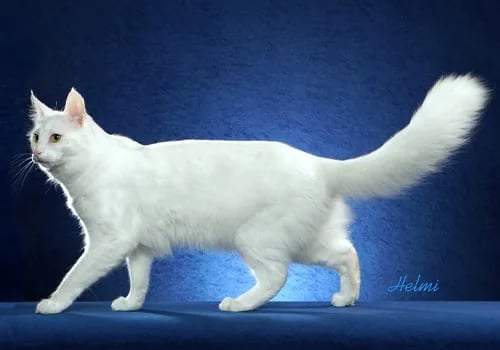
The Turkish Angora is an elegant, ancient breed known for its silky coat, playful intelligence, and deep devotion to its family.
With a history as silky and flowing as its signature coat, the Turkish Angora is a living piece of feline history. This breed, originating in the heart of Turkey, is far more than just a pretty face; it is a bundle of agile energy, sharp intelligence, and profound affection that has captivated humans for centuries. Known for their elegant, ballet-like movements and their tendency to form intense bonds with their chosen person, the Turkish Angora is a companion that combines regal beauty with a playful, dog-like loyalty.
The Turkish Angora is one of the world's oldest natural cat breeds, with its roots tracing back to central Anatolia (modern-day Turkey) for possibly a thousand years. They are named after Ankara, Turkey's capital, which was historically known as Angora. These cats were highly prized for their luxurious, fine coats and were considered national treasures. They were first brought to Europe in the 16th century, where their elegance quickly made them favorites among nobility. For a long time, the all-white variety was the most recognized, but modern breeding programs now celebrate the full spectrum of coat colors, including black, blue, red, and tabby patterns, all while preserving the breed's ancient genetic lineage.
The Turkish Angora is a study in graceful, balanced proportions. Weighing a modest 3 to 5 kg, they are medium-sized cats with a slender, muscular build that speaks to their agility. Their most famous feature is their semi-long, single-layered coat. Unlike many long-haired breeds, it lacks a dense undercoat, giving it a silky, fine texture that flows with their movement and is less prone to matting. The coat comes in a variety of colors and patterns. Their large, almond-shaped eyes can be blue, green, amber, or famously, odd-eyed (one blue and one amber or green). The breed's elegant, plume-like tail is often carried high, like a banner.
The Turkish Angora is a magnificent blend of ancient elegance and modern charm. More than just a cat with a stunning coat and captivating eyes, it is a loyal, playful, and brilliantly intelligent companion that actively participates in family life. By understanding their need for engagement, their specific health considerations, and their deeply affectionate nature, you can provide a wonderful home for one of the cat world's most historic and delightful treasures.
Don't let their delicate appearance fool you—the Turkish Angora is a powerhouse of personality. Scoring a perfect 5/5 in affection and intelligence, they are deeply loyal and form strong, often exclusive bonds with their favorite human. They are highly social (4/5 in friendliness) and integrate well with families, being both kid-friendly and pet-friendly. Their playfulness (5/5) and high energy level (4/5) mean they are constantly on the move, delighting in interactive games, puzzle toys, and even learning tricks. They are communicative without being overly loud (vocalization 3/5), often using soft chirps and trills to converse. This is a cat that wants to be involved in everything you do.
Their beautiful coat is surprisingly low-maintenance given its length. With a grooming need of 3/5, a thorough brushing once or twice a week is usually sufficient to remove loose hair and prevent tangles, thanks to the lack of an undercoat. Their shedding level is moderate (3/5). Their high intelligence and energy (exercise needs 4/5) demand daily interactive play sessions. They thrive with puzzle feeders, feather wands, and access to tall cat trees for climbing. This is not a breed that does well left alone for long periods; they need mental stimulation and companionship.
The Turkish Angora is generally a healthy, long-lived breed with a lifespan of 12 to 18 years. However, there are a few genetic conditions to be aware of. The breed can be prone to a hereditary condition called ataxia, which affects coordination. Responsible breeders screen for this. They may also be susceptible to hypertrophic cardiomyopathy (HCM), a common heart condition in cats. A well-known trait, not an illness, is that white Turkish Angoras with two blue eyes have a higher statistical chance of being born deaf. Regular veterinary check-ups are essential for a long, healthy life.
The Turkish Angora is an ideal companion for someone seeking an interactive, engaging, and devoted feline friend. They are perfect for active individuals, couples, or families with children and other pets who can provide the playtime and attention they crave. They may not be the best fit for someone who is away from home constantly or prefers a more independent, low-energy cat. If you desire a beautiful, brainy cat that will greet you at the door, follow you from room to room, and entertain you with its acrobatics, the Turkish Angora could be your perfect match.
Get AI-powered advice about your cat's health and care. Enter your cat's information and start a conversation with our veterinary assistant.
Start Chat with AIGet expert advice about cat care, behavior, nutrition, grooming, and training. Ask our AI cat care expert anything about your cat and receive professional guidance.
Start Chat with Expert