Back to Articles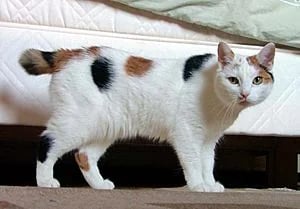
Cat Breeds5 min read
Japanese Bobtail Cat: Guide to the Lucky Pom-Pom Tail Breed
Meet the Japanese Bobtail: Japan's legendary lucky cat featuring a unique rabbit-like tail, high intelligence, and a social, dog-like personality that makes it the ultimate family pet.
Share this page
With a history steeped in Japanese folklore, the Japanese Bobtail is far more than just a cat with a short tail. This ancient breed is a living symbol of good fortune, celebrated for its playful spirit, deep intelligence, and uniquely expressive personality. From its distinctive "pom-pom" tail to its iconic tricolor "Mi-ke" coat, the Japanese Bobtail is a loyal companion brimming with energy and affection.
History & Origin: The Legend of the Maneki-neko
The Japanese Bobtail's history is woven into the cultural fabric of Japan, with depictions appearing in centuries-old paintings, woodblock prints, and sculptures. Believed to have originated in Southeast Asia and brought to Japan over a millennium ago, these cats were revered as protectors of silkworms and symbols of good luck.
The classic tricolor "Mi-ke" (pronounced mee-kay) pattern—white with patches of black and red—is particularly iconic and serves as the real-life inspiration for the famous "Maneki-neko," or beckoning cat figurine found in businesses worldwide. Unlike some tailless breeds, the Japanese Bobtail's genetic mutation is natural and dominant, and it does not typically cause spinal problems, making it a robust and healthy feline lineage.
Physical Characteristics: The Unique "Pom-Pom" Tail
This medium-sized, slender, and athletic cat typically weighs between 2.5 and 4 kg. Its most defining feature is its tail; each is as unique as a human fingerprint—a fluffy "pom-pom" of fur that curves and kinks, resembling a rabbit's tail.
The Japanese Bobtail is a breed of delightful contradictions: ancient yet endlessly playful, elegant yet goofy, independent yet deeply loyal. More than just a pet, they are engaging family members who bring a piece of living history, a dash of good luck, and a whole lot of love into any home willing to embrace their vibrant spirit.