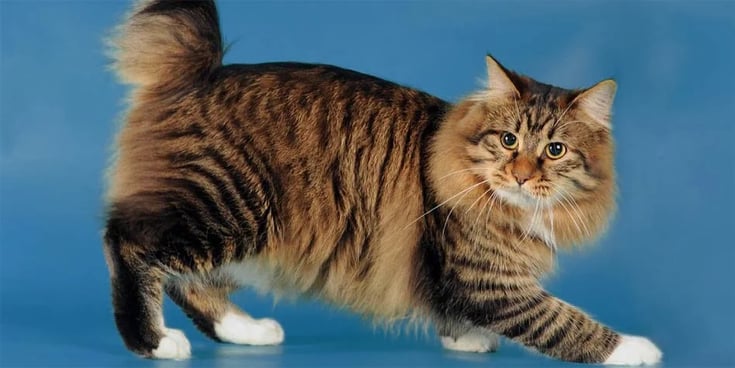
Discover the Cymric cat, a unique tailless breed with a luxurious long coat and a charming 'bunny hop.' Learn about their affectionate personality and care needs.
Meet the Cymric, a captivating feline breed as unique in appearance as it is in heart. Often described as the long-haired version of the Manx, the Cymric is famous for its distinctive tailless silhouette, rabbit-like hop, and a plume of luxurious, flowing fur. If you are looking for a gentle, deeply affectionate, and devoted feline friend, this long-haired wonder might be your perfect match.
The Cymric's story is intrinsically linked to the Isle of Man and its more famous shorthaired relative, the Manx cat. The breed's name, "Cymric" (pronounced kim-rick), is derived from the Welsh word for "Welsh," though its true origins lie off the coast of Britain. For centuries, a natural genetic mutation on the Isle of Man produced cats born without tails. The Cymric is the long-haired expression of this gene. While some registries view it as a separate breed, most consider it a semi-long-haired variety of the Manx. The breed was formally developed and named in Canada, gaining recognition for the stunning double coat that sets it apart.
The Cymric is a solid, muscular, and rounded cat, often described as "roly-poly." Its most famous feature is the absence of a tail, which can range from a complete "rumpy" with just a dimple where the tail would be, to a "stumpy" with a few vertebrae. This taillessness leads to its characteristic hopping gait and powerful hind legs. Weighing 3.5 to 5.5 kg, it is a substantial feline. Its glory is its semi-long, dense double coat, which comes in all possible colors and patterns. The coat is silky and requires regular maintenance. Their expressive eyes can be gold, copper, green, or blue, beautifully complementing their fur.
The Cymric is more than just a long-haired Manx; it is a breed of remarkable charm, intelligence, and resilience. Its tailless silhouette and luxurious coat make it a living work of art, while its affectionate, easy-going heart makes it a truly devoted companion. By understanding and meeting its specific care and health needs, you can welcome a uniquely joyful and loving member into your family for years to come.
Don't let their sometimes solemn expression fool you; Cymrics are affectionate, loyal, and playful companions. This intelligent cat breed learns quickly, often enjoying puzzle toys and learning tricks. They often form a strong bond with one special person, though they are famously friendly and excellent with children and other pets. They possess a moderate energy level and enjoy playful sessions but are equally content to be calm, easy-going lap cats. They are not overly vocal, communicating more through gentle chirps and purrs than loud meows.
The Cymric's beautiful coat demands commitment. Daily brushing is essential to prevent painful mats and tangles and to manage significant loose hair. Despite their sturdy build, they have moderate exercise needs. Interactive play sessions that engage their hunting instincts and intelligence are perfect. Due to potential health issues related to their spine, it is important to provide safe, low-impact play areas and monitor their weight to avoid unnecessary stress on their back.
The defining tailless gene of the Cymric is linked to a serious condition called Manx Syndrome. In some cats, especially those bred from two tailless parents, the gene can shorten the spine too severely, leading to spinal defects and bladder or bowel issues. Symptoms can include incontinence, constipation, and hind-leg weakness. Reputable breeders carefully screen their breeding stock to minimize this risk. Prospective owners should seek breeders who prioritize health and be prepared for potential lifelong management of these conditions. With careful breeding, a Cymric can enjoy a full lifespan of 12–16 years.
The Cymric is an ideal pet for a family or individual seeking a loyal, interactive, and gentle cat. Their kid-friendliness and intelligence make them wonderful for households with children. However, you must be prepared for their substantial grooming needs and be proactive about their health. Potential owners should seek a responsible breeder who tests for Manx Syndrome and be financially prepared for possible veterinary care. If you can provide daily brushing, engaging play, and a watchful eye on their well-being, the Cymric will reward you with a lifetime of unique affection and unwavering loyalty.
Get AI-powered advice about your cat's health and care. Enter your cat's information and start a conversation with our veterinary assistant.
Start Chat with AIGet expert advice about cat care, behavior, nutrition, grooming, and training. Ask our AI cat care expert anything about your cat and receive professional guidance.
Start Chat with Expert