Somali Cat: The Fox-Like Feline Full of Energy and Charm
Discover how a “mistake” in Abyssinian catteries produced the fox-tailed, ever-vibrant Somali cat. This article unwraps the breed’s surprising roots, spirited personality, and why their luxurious coat is anything but accidental.
With their luxuriously fluffy coats, bushy tails, and alert expressions, Somali cats look like miniature foxes prowling through your living room. These stunning long-haired relatives of the Abyssinian combine wild beauty with an affectionate, playful personality that makes them impossible to ignore. If you're seeking an active, intelligent companion who will keep you entertained for hours, the Somali might just steal your heart.
History & Origin
The Somali's story begins not in Somalia as the name might suggest, but rather as a beautiful accident in Abyssinian breeding programs. During the 1950s, breeders in both the United States and Australia began noticing something unusual: some Abyssinian kittens were born with longer, fluffier coats than their short-haired relatives. Initially considered undesirable for showing purposes, these fluffy kittens were often given away as pets.
However, some visionary breeders recognized the unique beauty of these long-haired Abyssinians and began deliberately breeding for this trait. Canadian breeder Mary Mailing played a crucial role in establishing the breed, working with these long-haired variants to create what would become the Somali. The breed was named "Somali" as a geographical nod to neighboring Abyssinia (modern-day Ethiopia), creating a familial connection to their Abyssinian ancestors.
The Somali gained official recognition in the 1970s and has since captured hearts worldwide with its stunning appearance and engaging personality. Today, while still relatively rare compared to other breeds, Somalis have developed a devoted following among cat enthusiasts who appreciate their unique combination of wild beauty and domestic charm.
The Somali cat represents the perfect blend of wild beauty and domestic devotion. With their fox-like appearance, boundless energy, and intelligent affection, they offer a unique feline companionship experience that's both rewarding and demanding. While they require significant time, attention, and activity, Somalis repay their humans with loyal friendship, entertaining antics, and stunning good looks. For those ready to embrace an active, engaged feline relationship, the Somali promises years of joy, laughter, and love wrapped in a gloriously fluffy package.
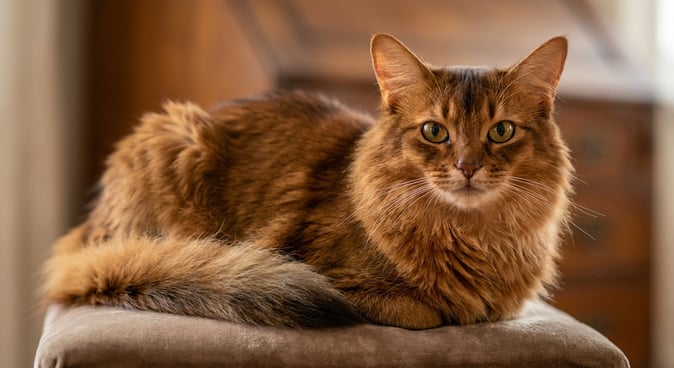
The Somali is a medium-sized cat with a distinctly wild appearance that turns heads wherever they go. Weighing between 3.5-5.5 kg (7.7-12.1 pounds) and measuring 35-45 cm in length, these cats possess an athletic, muscular build that speaks to their active nature. Their most striking feature is undoubtedly their semi-long coat, which creates a magnificent ruff around their neck and gives them their fox-like appearance.
The Somali's coat comes in four recognized colors: ruddy (the most common, a warm golden-brown ticked with black), red (a softer apricot shade), blue (a cool gray-blue), and fawn (a delicate beige). Each hair is ticked with multiple bands of color, creating the breed's characteristic agouti pattern that shimmers in the light. Their plumed tail, often as long as their body, waves like a banner behind them as they move with characteristic grace.
Their large, alert ears sit atop a gently rounded head, while their eyes—ranging from gold to green to copper—are accentuated by dark eyeliner that gives them an exotic, mysterious expression. The overall effect is that of a small wild cat, perfectly adapted for both athletic prowess and domestic companionship.
Temperament & Personality
Don't let their wild appearance fool you—Somalis are devoted companions who form strong bonds with their human families. These cats score a perfect 5/5 for both playfulness and energy level, making them ideal for active households who want an engaged feline friend. They're not content to simply lounge around; Somalis want to be involved in everything you do, from helping you work at your computer to supervising household chores.
Their intelligence (also rated 5/5) means they quickly learn routines, can be taught tricks, and may even figure out how to open doors or cabinets. This clever nature requires mental stimulation—puzzle toys, interactive play sessions, and even agility training can help keep their active minds satisfied. They're known for their ability to fetch and may even walk on a leash with proper training.
Somalis are affectionate without being overly demanding, scoring 4/5 for affection level. They'll follow you from room to room, offering gentle headbutts and soft chirps rather than loud meows. Their moderate vocalization (3/5) means they'll communicate with soft trills and purrs rather than constant yowling. They typically get along well with children and other pets (both rated 4/5), making them excellent family cats who thrive on interaction and play.
Care Requirements
Owning a Somali means committing to regular grooming, though perhaps not as intensive as you might expect for a long-haired breed. Their grooming needs rate 3/5, requiring brushing 2-3 times per week to prevent matting and reduce shedding. During seasonal changes, daily brushing may be necessary as they prepare their coats for temperature shifts. The good news is that Somalis typically enjoy grooming sessions, viewing them as another form of interaction with their beloved humans.
Exercise is where Somali care becomes demanding—these cats need significant physical activity to stay happy and healthy. With exercise needs rated 5/5, they require multiple daily play sessions and benefit from cat trees, climbing shelves, and interactive toys. Without adequate stimulation, Somalis may become destructive or develop behavioral issues. They're excellent candidates for clicker training and can learn complex tricks and routines.
Their high energy extends to meal times—these active cats need quality nutrition to fuel their adventures. Portion control is important as their love of food combined with their playful nature can lead to overeating if not monitored. Fresh water should always be available, and some Somalis enjoy drinking from running water fountains.
Health Considerations
While generally healthy, Somali cats are prone to several inherited conditions that prospective owners should understand. Pyruvate kinase deficiency (PK deficiency) is a genetic condition that affects red blood cells and can lead to anemia. Responsible breeders test for this condition, so always ask for health clearances when adopting a Somali kitten.
Progressive retinal atrophy (PRA) is another concern, an inherited eye disease that can lead to vision loss. Regular veterinary eye exams can help detect this condition early. Renal amyloidosis, a condition where abnormal protein deposits affect kidney function, and dental disease are also seen in the breed, emphasizing the importance of regular veterinary check-ups and dental care.
With proper care, Somalis typically live 12-16 years, though many exceed this range. Regular veterinary visits, a healthy diet, and plenty of exercise help ensure your Somali companion lives a long, happy life. Their shedding level rates 4/5, so be prepared for regular vacuuming and lint rolling, particularly during seasonal coat changes.
Is This Breed Right For You?
The Somali is perfect for active individuals or families who want an engaged, playful companion. If you're looking for a cat who will greet you at the door, help with daily activities, and provide endless entertainment, the Somali fits the bill. They're ideal for homes with children or other pets, as they thrive on interaction and play.
However, this breed isn't for everyone. Their high energy means they're not suitable for people who want a calm lap cat or who are away from home for long periods. They need significant daily interaction and can become destructive or depressed if left alone too often. Their grooming needs, while moderate, still require commitment, and their shedding can be substantial.
First-time cat owners can successfully raise a Somali if they're prepared for the breed's energy and intelligence. These cats reward dedicated owners with unwavering loyalty, endless entertainment, and deep affection. If you're ready for a feline companion who acts more like a perpetual kitten than a sedate adult cat, the Somali might be your perfect match.
family-friendly cats
high-energy cats
cat breed guide
Cat's Doctor
Get AI-powered advice about your cat's health and care. Enter your cat's information and start a conversation with our veterinary assistant.
Get expert advice about cat care, behavior, nutrition, grooming, and training. Ask our AI cat care expert anything about your cat and receive professional guidance.