Siberian Cats: Russia's Gentle Forest Giants with Hypoallergenic Hearts
Discover how Russia’s ancient forest cats evolved into the triple-coated, allergy-friendly Siberian—an enchanting blend of wild strength and gentle devotion ready to steal your heart.
From the dense forests of Russia emerges a feline that combines the majesty of wild cats with the warmth of devoted companions. The Siberian cat, a centuries-old landrace that has only recently entered the formal breeding world, captivates hearts with its luxurious coat, powerful build, and unexpectedly affectionate nature. These gentle giants offer a unique blend of hypoallergenic qualities and family-friendly temperament that makes them increasingly popular worldwide.
History & Origin
The Siberian's story begins in the harsh climate of Russia, where these cats evolved naturally over hundreds of years. Unlike many modern breeds developed through selective breeding programs, Siberians are a landrace – a population that developed naturally while adapting to their environment. These cats roamed the Russian forests, developing their distinctive triple-layered coat to survive brutal winters and their muscular build to navigate the challenging terrain.
Russian literature mentions these cats as early as 1000 AD, where they were prized as both working cats controlling rodents and beloved family companions. They were often featured in Russian fairy tales and folklore, where their intelligence and mystical appearance earned them a special place in cultural heritage. Despite their ancient lineage, Siberians only emerged as a formal breed in the late 1980s when Russian cat fanciers began documenting standards and promoting them internationally.
Physical Characteristics
Siberians are impressive cats, with males typically weighing 6-9 kg (13-20 lbs) and females 4.5-7 kg (10-15 lbs). Their bodies measure 45-60 cm in length, giving them a substantial presence that commands attention. Despite their size, they move with surprising grace and agility, reflecting their forest-dwelling heritage.
The Siberian cat represents a perfect blend of wild beauty and domestic devotion. These Russian forest cats bring centuries of natural selection into our homes, offering hypoallergenic qualities wrapped in a package of gentle affection and playful intelligence. Whether you're drawn to their stunning appearance, impressed by their family-friendly nature, or intrigued by their hypoallergenic potential, Siberians offer a unique feline companionship that enriches any household willing to embrace their active, loving nature.
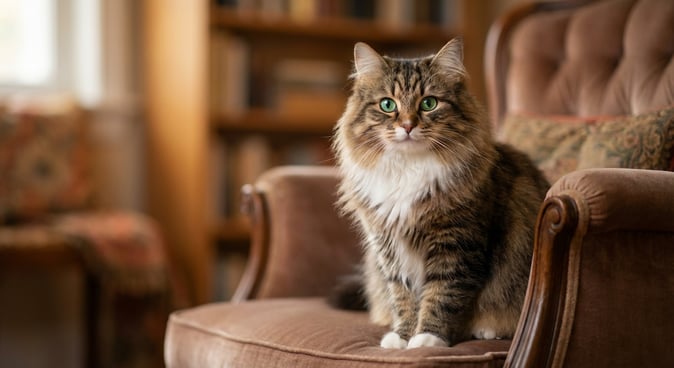
Their most striking feature is undoubtedly their magnificent coat – a triple-layered marvel consisting of a dense undercoat, middle awn hair, and water-resistant guard hairs. This coat comes in all colors and patterns, from classic tabby to colorpoint, solid shades to bi-colors. Their large, expressive eyes, ranging from gold and green to copper, seem to hold the mystery of Russian forests within their depths.
Built for survival, Siberians possess powerful hindquarters that enable their famous "Siberian leap" – an impressive jumping ability that can propel them to the highest shelves with ease. Their large, rounded paws act like natural snowshoes, a reminder of their evolution in harsh winter climates.
Temperament & Personality
Don't let their wild appearance fool you – Siberians are gentle giants at heart. With perfect scores in affection, friendliness, and family compatibility, these cats embody the term "gentle giant." They form deep bonds with their human families and often follow their favorite people from room to room, offering quiet companionship without being overly demanding.
Their energetic nature (4/5) makes them excellent playmates for children, while their high intelligence (5/5) means they can learn tricks, play fetch, and even figure out how to open doors or cabinets. Unlike many vocal breeds, Siberians communicate softly (2/5 vocalization), using gentle chirps and trills rather than loud meows.
Perhaps most remarkably, Siberians possess an almost dog-like loyalty. They often greet family members at the door, enjoy learning tricks, and can even be leash-trained for supervised outdoor adventures. Their adaptability makes them excellent travelers, and they typically handle changes in routine with remarkable composure.
Care Requirements
Despite their luxurious coat, Siberians are surprisingly low-maintenance (grooming needs 3/5). Their coat's natural water-resistance means it rarely mats, requiring only 2-3 brushing sessions per week to remove loose hair and distribute natural oils. During spring and fall shedding seasons (remember their 5/5 shedding level), daily brushing helps manage the increased hair loss.
Their high exercise needs (4/5) mean they thrive in active households where they can climb, jump, and play. Cat trees, puzzle toys, and interactive play sessions are essential for keeping these intelligent cats mentally and physically stimulated. They particularly enjoy water play – a trait unusual among cats – and may join you in the shower or play in running faucets.
Feeding a high-quality diet appropriate for their size and activity level is crucial. Their slow maturation (reaching full size around 5 years) means they benefit from kitten food longer than average breeds. Fresh water should always be available, though many prefer running water from fountains.
Health Considerations
Siberians are generally robust cats with few breed-specific health issues, a testament to their natural evolution. Their average lifespan of 12-15 years reflects their overall hardiness. However, responsible breeders screen for hypertrophic cardiomyopathy (HCM), a serious heart condition that can affect this breed.
Regular veterinary check-ups, including cardiac screening, are essential for early detection of any issues. Their active nature helps maintain healthy weight, but portion control remains important to prevent obesity. Dental care, regular vaccinations, and parasite prevention complete their health maintenance routine.
One of their most remarkable features – being hypoallergenic – makes them suitable for many allergy sufferers. While no cat is truly 100% hypoallergenic, Siberians produce significantly lower levels of Fel d 1, the primary cat allergen. Many severely allergic people successfully live with Siberians, though individual reactions vary.
Is This Breed Right For You?
Siberians make excellent family pets for those seeking an affectionate, interactive companion. Their patience with children, friendliness toward other pets, and adaptability to various living situations make them ideal for active households. However, their high energy levels and need for interaction mean they're not suited for homes where they'll be left alone for extended periods.
Potential owners should prepare for regular grooming, especially during shedding seasons, and provide adequate vertical space for climbing and jumping. Their intelligence requires mental stimulation through puzzle toys, training sessions, or even agility courses. If you're looking for a quiet, gentle companion who thinks he's part dog, the Siberian might be your perfect match.
Consider your lifestyle carefully – these cats live 12-15 years and form deep attachments. They're not merely pets but devoted family members who'll share your life with unwavering loyalty and affectionate companionship.
forest cats
affectionate breeds
cat allergies
active cats
Cat's Doctor
Get AI-powered advice about your cat's health and care. Enter your cat's information and start a conversation with our veterinary assistant.
Get expert advice about cat care, behavior, nutrition, grooming, and training. Ask our AI cat care expert anything about your cat and receive professional guidance.