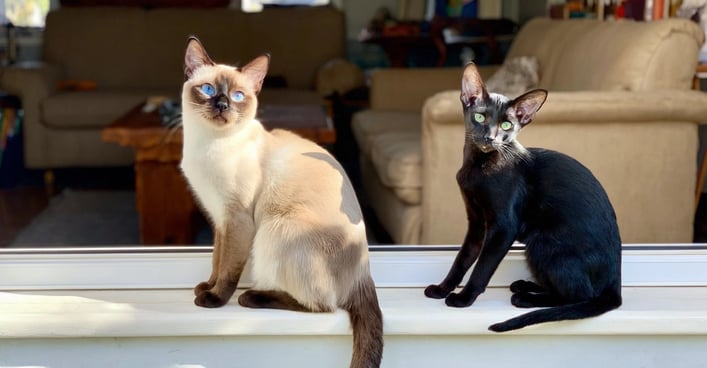
Siamese vs Oriental Shorthair: The Complete 2026 Comparison Guide
Discover the key differences and surprising similarities between Siamese and Oriental Shorthair cats. Learn which elegant, vocal companion is the perfect match for your lifestyle.
Share this page
Siamese vs Oriental Shorthair: The Complete 2026 Comparison Guide
Siamese and Oriental Shorthair cats share a deep ancestral bond and many personality traits, yet they present distinct differences in appearance and breed standards. Both breeds captivate owners who seek intelligent, vocal, and affectionate companions with sleek physiques and engaging personalities. This definitive guide explores every facet of these related yet unique felines.
Historical Origins and Relationship
Shared Ancestry
Common Foundation:
Both breeds trace their roots to the same foundation stock in Thailand (historically Siam). The Oriental Shorthair was developed from Siamese cats through targeted breeding programs in England and America during the mid-20th century.
Breed Relationship:
The Oriental Shorthair is essentially a Siamese-type cat bred in non-pointed colors and patterns. They share identical body types, temperaments, and genetic backgrounds, with coat color and pattern being the primary distinguishing factors.
Siamese vs Oriental Shorthair: The Complete 2026 Comparison Guide - Articles
Siamese Origins
Ancient Thai Heritage:
Origin: Thailand (Siam)
Historical Significance: Revered as temple cats for royalty
First Western Exports: 1800s
Recognition: One of the oldest recognized cat breeds in the Western world
Development:
Siamese cats were considered sacred and cherished by Thai royalty for centuries. Modern breeding has led to two distinct types:
Traditional/Applehead: Features moderate, rounded facial contours.
Modern/Wedgehead: Characterized by extreme, triangular features.
Oriental Shorthair Origins
Mid-20th Century Creation:
Origin: England (1950s), later refined in America
Foundation: Siamese body type infused with diverse color genetics
Purpose: To create a Siamese-type cat in all colors and patterns except colorpoint
Formal Recognition: 1970s
Development:
Breeders crossed Siamese cats with other shorthaired breeds—such as Russian Blues, British Shorthairs, and American Shorthairs—to introduce new colors while meticulously preserving the quintessential Siamese body structure. The result is a vibrant spectrum of colors in a familiar, elegant package.
Physical Characteristics Comparison
Body Type (Nearly Identical)
Feature
Siamese
Oriental Shorthair
Body Type
Sleek, tubular, long
Identical to Siamese
Weight Range
6-12 lbs
6-12 lbs
Build
Fine-boned yet muscular
Identical
Legs
Long and slender
Identical
Tail
Long, thin, tapering
Identical
Overall Impression
Elegant, refined
Identical silhouette
Key Insight:
From a structural perspective, these breeds are virtually indistinguishable. The primary distinctions lie in head shape and, most notably, coat color and pattern.
Head and Facial Features
Siamese (Modern/Wedgehead):
Very long, distinct wedge-shaped head
Large, wide-set ears
Almond-shaped, slanted blue eyes (a breed requirement)
Long, straight nose
Striking, exotic appearance often seen in show lines
Siamese (Traditional/Applehead):
Rounder, more moderate head shape
Smaller ears
Rounder eye shape (still blue)
Shorter nose
A more "classic" or traditional look
Oriental Shorthair:
Long, wedge-shaped head similar to the modern Siamese
Very large ears (often perceived as larger than the Siamese)
Strabismus (Crossed Eyes): A cosmetic issue more historically associated with Siamese lines.
Recommended Health Screening
For Both Breeds:
PRA DNA Testing: Prior to breeding and recommended for pet cats.
Regular Cardiac Screening: Especially for breeding cats.
Bi-Annual Dental Checkups: To manage periodontal disease.
Routine Blood Work: To monitor kidney and liver function over time.
Average Lifespan
Breed
Average Lifespan
Siamese
12-20 years
Oriental Shorthair
12-15 years
With excellent care, preventative vet visits, and a healthy indoor lifestyle, many individuals of both breeds live long, full lives.
Ideal Living Environment
Best Homes for Both Breeds
Ideal Situations Include:
Active households with consistent daily routines.
Owners who work from home or are home frequently.
Families or individuals seeking an interactive "shadow" or companion.
Multi-pet homes (they often enjoy feline or even canine company).
Experienced cat owners who understand high-need personalities.
Indoor-only living with ample environmental enrichment.
Essential Owner Requirements:
Dedicated time for daily interaction and play.
A high tolerance for vocal communication.
Commitment to providing cat trees and vertical territory.
Willingness to engage in training and provide puzzle toys.
Potentially Challenging Situations
These breeds may not be the best fit if you:
Work long hours away from home regularly.
Desire a very quiet, serene household.
Prefer an independent, low-maintenance cat.
Travel frequently without your pet.
Cannot commit to daily interactive play sessions.
Believe cats should have unsupervised outdoor access.
Cost of Ownership Comparison
Initial Acquisition Costs
Source
Siamese
Oriental Shorthair
Pet Quality (Breeder)
$600 - $1,200
$600 - $1,200
Show Quality (Breeder)
$1,000 - $2,500
$800 - $2,000
Adoption/Rescue
$75 - $200
$75 - $200 (less commonly found)
Note: Oriental Shorthairs are less common than Siamese, so finding a reputable breeder may require more research and potentially a longer wait.
Estimated Annual Care Costs
Expense Category
Siamese
Oriental Shorthair
High-Quality Food
$400 - $700
$400 - $700
Litter
$150 - $250
$150 - $250
Routine Veterinary Care
$300 - $600
$300 - $600
Toys, Scratching Posts, Enrichment
$200 - $400
$200 - $400
Professional Grooming
Minimal (owner-done)
Minimal (owner-done)
Total Annual Estimate
$1,050 - $1,950
$1,050 - $1,950
These are estimates; costs vary by location, specific health needs, and owner choices. Always budget for unexpected veterinary emergencies.
Choosing a Reputable Breeder
Key Considerations
Red Flags to Avoid:
No proof of genetic health testing (PRA, etc.) for parents.
Kittens are always "available now" with no waiting list.
Lack of registration papers from reputable associations (CFA, TICA).
The breeder offers multiple, unrelated breeds.
Unwillingness to allow a visit to their home or cattery.
Prices significantly below the standard market rate.
Green Flags of a Responsible Breeder:
Provides complete health documentation for parent cats.
Registers kittens with major cat registries (CFA, TICA).
Requires a spay/neuter contract for pet-quality kittens.
Has a structured kitten socialization program.
Welcomes questions and provides references from past buyers.
Interviews potential buyers to ensure a good home match.
Which Breed Is Right for You?
Choose a Siamese If You:
Love the classic colorpoint (darker points) pattern.
Have your heart set on a cat with striking blue eyes.
Appreciate deep breed history and tradition.
Find it easier to locate reputable breeders due to the breed's popularity.
Desire the "original" expression of this body and personality type.
Choose an Oriental Shorthair If You:
Adore the Siamese personality but prefer solid colors or tabby patterns.
Want a "rainbow" of color options in an elegant package.
Are drawn to green, gold, or odd-eyed cats.
Appreciate the story of modern, purposeful breed development.
Desire a cat that is slightly more unique or uncommon.
Either Breed Is a Perfect Match If You:
Truly want an intelligent, trainable feline companion.
Enjoy having vocal, communicative interactions with your pet.
Can commit significant time to daily play and interaction.
Appreciate a sleek, elegant, and athletic appearance.
Are prepared to provide a stimulating, enriched indoor environment.
Seek a deeply affectionate and engaging lifelong friend.
Final Conclusion
Siamese and Oriental Shorthair cats are, at their core, the same breed presented in different aesthetic wrappers. They share identical body structures, exuberant temperaments, care requirements, and health profiles. Your choice between them ultimately hinges on personal aesthetic preference: the iconic colorpoint pattern with blue eyes versus a breathtaking spectrum of other colors and patterns.
Both breeds are a significant commitment. They demand time, attention, and active participation in their lives. They are not suited for absentee owners or those who cherish absolute quiet. However, for the right person or family—one willing to meet their considerable needs for engagement—both breeds offer 15+ years of intelligent, affectionate, and endlessly entertaining companionship.
Let your preference for color and pattern guide your final decision, secure in the knowledge that the living experience with either a Siamese or an Oriental Shorthair will be remarkably similar and profoundly rewarding.
Related Articles for Further Reading:
Siamese Cat Care: The Complete 2026 Guide
Oriental Shorthair Cat Care: Essentials for a Happy Cat
Most Vocal Cat Breeds: What to Expect
Training Your Intelligent Cat: Tricks, Agility, and Bonding
Get expert advice about cat care, behavior, nutrition, grooming, and training. Ask our AI cat care expert anything about your cat and receive professional guidance.