Back to Articles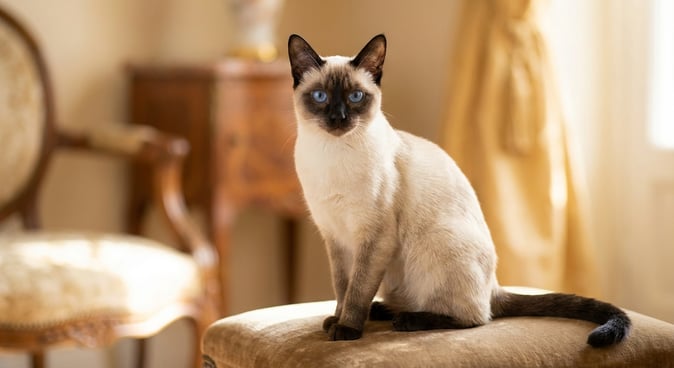
5 min read
Siamese Cats: The Vocal Aristocrats of the Feline World
Discover the regal roots of the Siamese cat, a 14th-century palace guardian whose royal voice and sapphire gaze have enchanted monks, monarchs, and modern fanciers alike. This quick read unveils how the “Vocal Aristocrat” journeyed from sacred Thai temples to London’s first cat show and straight into our hearts.
With sapphire-blue eyes that seem to read your soul and a voice that refuses to be ignored, the Siamese cat has captivated hearts for centuries. Originating from the temples of Thailand, these sleek, color-pointed cats are living art—graceful, intelligent, and fiercely devoted. Whether they're following you room-to-room or conducting loud conversations from atop the fridge, Siamese cats insist on being the star of every household.
History & Origin
The Siamese is one of the world's oldest and most recognizable cat breeds, documented in the ancient Thai manuscript "Tamra Maew" (The Cat-Poems) as early as the 14th century. These cats, known locally as Wichianmat, were treasured by Siamese royalty and Buddhist monks alike—believed to inherit the souls of deceased loved ones and safeguard temples. The breed first dazzled Western audiences in 1871 at London's Crystal Palace Cat Show, and by 1892 Britain's first cat registry had established the Siamese standard. Today their aristocratic heritage lives on in every poised whisker.
Physical Characteristics
Siamese cats are the supermodels of the feline realm: long, lithe, and effortlessly elegant. Adults weigh 3–5 kg (6–11 lb) and measure 30–40 cm (12–16 in) in body length, balanced on slim yet muscular legs and dainty oval paws. Their short, close-lying coat gleams like fine silk and showcases the signature "points"—darker color on the ears, face, paws, and tail—against a pale cream-to-fawn body. The four classic colors are seal (deep brown), blue (slate gray), chocolate (warm milk), and lilac (frosty gray-pink). All Siamese share the same striking azure eyes, set in a wedge-shaped head with oversized, wide-set ears.
From royal Thai palaces to modern-day couches, the Siamese has never lost its knack for turning heads and winning hearts. Their sleek silhouette, color-contrast points, and sky-blue eyes are only the beginning; it's their unabashed affection, razor-sharp wits, and opera-house vocals that create lifelong devotees. Provide plenty of love, play, and conversation, and a Siamese will reward you with two decades of loyal, entertaining companionship.
Tags
SiameseSiamese catvocal catshypoallergenic catsfamily petsintelligent cats