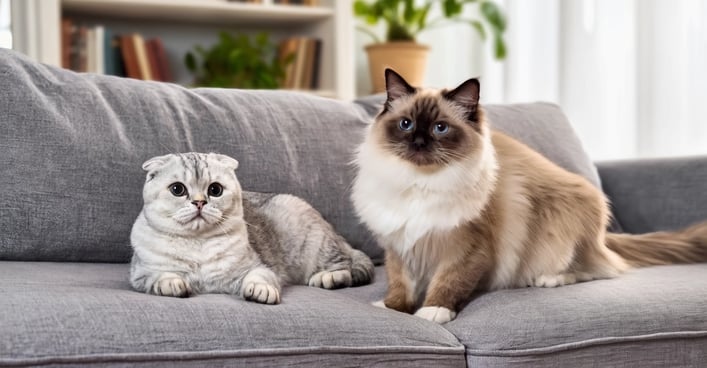
Scottish Fold vs Ragdoll: The 2026 Breed Comparison Guide
Discover the key differences between Scottish Fold and Ragdoll cats. Compare temperament, health, grooming, and ethical considerations to find your perfect feline companion.
Share this page
Scottish Fold vs Ragdoll: The 2026 Breed Comparison Guide
Choosing between a Scottish Fold and a Ragdoll is a decision between two exceptionally affectionate breeds with distinct personalities and care needs. While both make wonderful companions, their differences in appearance, health, and temperament appeal to different lifestyles. This comprehensive guide provides the insights you need to make an informed choice.
Historical Origins
Scottish Fold History
An Accidental Discovery (1961)
The Scottish Fold breed began with a spontaneous genetic mutation in Scotland. A white barn cat named Susie was discovered with uniquely folded ears, a trait she passed to her kittens.
Development Timeline:
1961: Susie is found on a farm in Perthshire, Scotland.
1963: Susie's folded-ear kittens confirm the trait is hereditary.
1966: The breed is registered with the GCCF, but recognition is later suspended due to health concerns.
1970s: Cats are exported to the United States for further development.
1978: The Cat Fanciers' Association (CFA) grants championship status.
Present: Recognized globally, but with strict breeding restrictions due to ethical concerns.
Controversy and Ethics:
The folded ear is linked to a cartilage defect that can cause severe bone and joint disorders (osteochondrodysplasia).
Major cat registries mandate outcrossing with straight-eared cats (British Shorthairs, American Shorthairs) to diversify the gene pool.
Extensive health screening for breeders is essential.
Several countries, including the UK under the GCCF, have banned the breeding of folded-ear cats on welfare grounds.
Genetic Note:
The fold gene is dominant.
Kittens are born with straight ears; the fold develops at around 3-4 weeks of age.
"Straight" offspring from fold parents are crucial for ethical breeding programs.
Ragdoll History
A Deliberate Creation (1960s)
The Ragdoll was developed in Riverside, California, by breeder Ann Baker. She selectively bred a white domestic longhair named Josephine for specific traits: large size, pointed coloration, and an exceptionally docile temperament.
Development Timeline:
Early 1960s: Foundation cat Josephine produces kittens with desirable traits.
1960s-70s: Selective breeding establishes size, coat, and the iconic "floppy" personality.
1965: Ann Baker trademarks the "Ragdoll" name, creating controversy.
1975: The Ragdoll Fanciers Club International forms after a split from Baker's strict control.
1993: The CFA grants championship status.
Present: Consistently ranks among the world's most popular cat breeds.
The Name's Origin:
The breed is named for its tendency to go completely limp and relaxed when picked up, much like a child's ragdoll toy.
Controversial Beginnings:
Ann Baker's eccentric claims and restrictive breeding contracts caused a schism in the breeding community.
Modern Ragdoll lines descend from the breeders who broke away to establish standardized, ethical practices.
Physical Characteristics
Size and Build Comparison
Feature
Scottish Fold
Ragdoll
Weight (F)
6-9 lbs (2.7-4 kg)
10-15 lbs (4.5-6.8 kg)
Weight (M)
9-13 lbs (4-5.9 kg)
15-20+ lbs (6.8-9+ kg)
Body Type
Medium, rounded, compact
Large, long, substantial, semi-cobby
Bone Structure
Medium
Heavy, robust
Overall Impression
Well-balanced, "owl-like"
Powerful, rectangular, "floppy"
Key Distinctions:
Scottish Fold: A compact, rounded cat with a sweet, surprised expression.
Ragdoll: A large, muscular, and heavy-boned cat known for its relaxed posture.
The Defining Features
Scottish Fold – The Folded Ears:
Single Fold: A loose fold at the tips (pet quality).
Double/Triple Fold: A tighter fold lying flat against the head (show quality).
The fold is caused by a cartilage mutation, creating the breed's signature "owl-like" look.
Ragdoll – The "Floppy" Demeanor:
Not a physical feature but a behavioral trait.
When held, they tend to relax their muscles completely, becoming limp and pliable.
Intensity varies by individual, but it's a hallmark of the breed's placid temperament.
Coat Characteristics
Aspect
Scottish Fold
Ragdoll
Length
Short to medium (Longhair variant exists)
Semi-long, flowing
Texture
Dense, plush, resilient
Silky, soft, minimal undercoat
Shedding
Moderate, seasonal
Moderate, seasonal
Matting Risk
Low
Low to moderate (requires brushing)
Patterns
All colors and patterns accepted
Colorpoint patterns only
Color and Pattern Differences
Scottish Fold:
No restrictions. Can be solid, tabby, bi-color, calico, smoke, or shaded.
Eye color corresponds with coat color (copper, gold, green, blue).
Ragdoll:
Colorpoint Restriction: Always has darker "points" (ears, face, legs, tail).
Recognized Patterns:
Colorpoint: Dark points, lighter body.
Mitted: Colorpoint with white paws, chin, and belly stripe.
Bicolor: Colorpoint with a white inverted "V" on the face, white legs, and belly.
Colors: Seal, blue, chocolate, lilac, red, cream, plus lynx (tabby) and tortie variations.
Eyes: Vivid blue eyes are required by breed standard.
Temperament and Personality
Scottish Fold Personality
Core Traits: Sweet, adaptable, quietly affectionate, and observant.
Often sits in a characteristic "Buddha pose" with paws tucked.
Enjoys being near their people without being overly demanding.
Moderately playful and intelligent, often enjoying puzzle toys.
Generally quiet, using soft chirps and meows to communicate.
Adapts well to families, singles, and other pets.
Ragdoll Personality
Core Traits: Exceptionally docile, devoted, gentle, and relaxed.
Famous for their "puppy-like" tendency to follow owners from room to room.
Thrives on companionship and dislikes being left alone for long periods.
A genetic heart disease causing thickening of the heart muscle. A significant concern in the breed.
Responsible breeders perform annual echocardiogram screenings on their breeding cats.
Other Concerns:
Polycystic Kidney Disease (PKD)
A higher incidence of bladder stones.
Lifespan: 12-17 years, with many living long, healthy lives.
Health Comparison
Factor
Scottish Fold
Ragdoll
Overall Robustness
Fair to Good
Good
Genetic Burden
Significant (Fold-related)
Moderate (HCM)
Average Lifespan
11-14 years
12-17 years
Potential Vet Costs
Higher
Moderate
Ethical Breeding Critical?
Absolutely Essential
Highly Important
Ethical Considerations
Scottish Fold Ethics: A Major Concern
Breeding for the folded ear directly perpetuates a genetic disorder that causes pain and disability.
Many veterinary and welfare organizations (e.g., GCCF, Vets4Pets) advise against purchasing folded-ear cats.
Prospective owners are strongly urged to consider the Scottish Straight—the same cat with normal, straight ears and no associated health risks—from the same ethical breeders.
Ragdoll Ethics: Generally Positive
No extreme physical features that compromise welfare.
The main ethical duty is to source from breeders who actively screen for HCM and PKD.
Grooming and Care
Grooming Comparison
Task
Scottish Fold
Ragdoll
Brushing
Weekly
2-3 times per week to prevent mats
Ear Cleaning
Essential (Folds trap wax/debris)
As needed
Shedding
Moderate
Moderate (Silky hair sheds but is less clingy)
Nail Trimming & Dental Care
Regular for both breeds
Regular for both breeds
Special Care for Scottish Folds:
Weekly ear inspections and gentle cleaning are mandatory to prevent infections.
Monitor for signs of joint pain or stiffness (difficulty jumping, lameness).
Cost Comparison (2026 Estimates)
Initial Costs
Source
Scottish Fold
Ragdoll
Reputable Breeder
$1,500 - $3,500+
$1,800 - $4,000+
Adoption/Rescue
Rare
$100 - $400
Key Cost Driver
Rarity & breeder health testing
Breeder reputation, pedigree, & color
Annual Care Costs
Expense
Scottish Fold
Ragdoll
High-Quality Food
$400 - $700
$500 - $900 (due to larger size)
Litter
$200 - $350
$250 - $400
Routine Veterinary
$400 - $800+
$300 - $600
Pet Insurance
Highly Recommended ($400-$700/yr)
Recommended ($350-$650/yr)
Grooming Supplies
$50 - $150
$100 - $200
Annual Total
~$1,450 - $2,700+
~$1,500 - $2,750
Note: Scottish Fold costs are higher due to potential genetic health issues requiring more frequent vet visits, diagnostics, and possible treatments.
Making Your Decision
Choose a Scottish Fold If:
You are captivated by their unique look and have thoroughly researched ethical breeders who prioritize health.
You can financially and emotionally commit to potential lifelong health management.
You want a sweet, adaptable, and moderately active companion.
Strongly consider a Scottish Straight from the same breeder for the same wonderful temperament without the health risks.
Choose a Ragdoll If:
You desire a gentle, devoted, and exceptionally people-oriented "lap cat."
You appreciate a large, fluffy cat with stunning blue eyes.
You can commit to regular brushing and prefer a relaxed household.
You want a breed with fewer inherent ethical controversies.
Instead of Ragdoll:Birman (similar colorpoints, smaller), Ragamuffin (closely related, more color variety), Maine Coon (large, gentle, but more active).
Final Verdict
Ragdoll: ★★★★★ (4.7/5)
An outstanding family companion. The Ragdoll offers predictable, gentle affection with generally good health, making it a top recommendation for those seeking a devoted, low-drama feline friend.
Scottish Fold: ★★★☆☆ (3.5/5)
A charming and sweet cat whose defining feature is also its greatest liability. The significant ethical and health concerns surrounding the fold gene make it difficult to recommend. If you love the breed's personality, the Scottish Straight is the responsible choice.
Last Updated: 2026 | Always prioritize adoption. If purchasing, invest time in finding a breeder who performs all recommended health screenings, provides genetic histories, and prioritizes the welfare of their cats over aesthetics.
Get expert advice about cat care, behavior, nutrition, grooming, and training. Ask our AI cat care expert anything about your cat and receive professional guidance.