Scottish Fold vs British Shorthair: A Complete Round-Faced Cat Comparison Guide
Compare the adorable Scottish Fold and British Shorthair breeds. Discover key differences in health, personality, and care to choose the perfect round-faced companion.
Share this page
Scottish Fold vs British Shorthair: A Complete Round-Faced Cat Comparison Guide
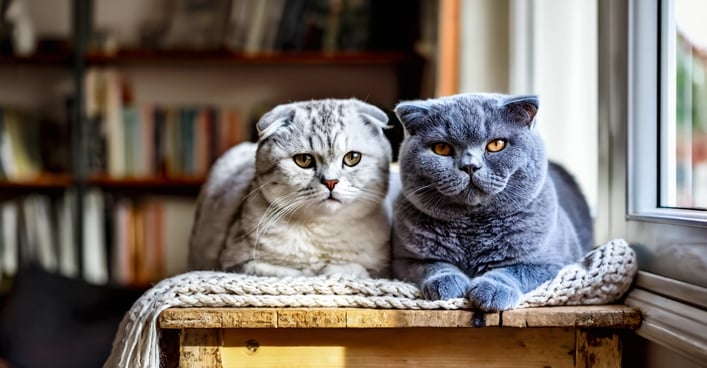
Choosing between two irresistibly round-faced breeds? The Scottish Fold and British Shorthair both captivate with their teddy-bear looks and plush coats, yet they differ dramatically in genetics, health, personality, and care needs. This comprehensive guide provides the insights you need to make an informed, ethical decision for your next feline companion.
Quick Comparison: Scottish Fold vs British Shorthair
Scottish Fold vs British Shorthair: A Complete Round-Faced Cat Comparison Guide - Articles
Feature
Scottish Fold
British Shorthair
Origin
Scotland (1961)
United Kingdom (Ancient)
Average Weight
6-13 lbs
9-17 lbs (males larger)
Typical Lifespan
11-14 years
12-17 years
Coat
Short to long, dense
Short, dense, plush
Build
Medium, rounded
Stocky, cobby, substantial
Distinctive Feature
Folded ears (forward/down)
Straight, small rounded ears
Core Personality
Sweet, playful, adaptable
Calm, reserved, dignified
Key Health Consideration
Osteochondrodysplasia (all folded-ear cats)
Generally healthy; watch for obesity & heart conditions
Origins and Breed History
The Scottish Fold: A Modern Mutation
The Scottish Fold traces its lineage to a single farm cat named Susie, discovered in Scotland in 1961. Susie possessed unique forward-folding ears caused by a spontaneous genetic mutation. When she produced kittens, two inherited the trait, catching the eye of breeder William Ross.
Early breeding efforts revealed a critical issue: mating two folded-ear cats resulted in severe skeletal deformities. Responsible breeders now outcross Scottish Folds with straight-eared breeds like the British Shorthair. This practice produces litters where roughly 50% of kittens have the signature fold, while the others (Scottish Straights) have normal ears.
The British Shorthair: An Ancient Lineage
One of England's oldest breeds, the British Shorthair descended from cats brought by Roman invaders over 2,000 years ago. These robust cats served as working mousers, eventually mingling with native European wildcats.
The breed faced near extinction during both World Wars. Dedicated breeders revived it by carefully introducing Persian bloodlines, which helped solidify its round, plush appearance. The British Shorthair gained formal recognition in the 1970s and remains beloved for its undemanding nature and classic look.
Physical Appearance & Characteristics
Recognizing the Scottish Fold
Scottish Folds are defined by their unique structure:
Ears: Fold forward and down (varying from a single to a tight triple fold).
Head & Face: Notably round with full cheeks and large, circular eyes that create a perpetually sweet expression.
Body: Medium-sized with a rounded, well-padded silhouette.
Coat: Dense and soft; comes in both short and long-haired (Highland Fold) varieties.
Posture: Famously sit in a "Buddha-like" position with paws tucked on their belly.
Note: Not all kittens in a litter will have folded ears. Those with straight ears are called Scottish Shorthairs or Scottish Straights.
Recognizing the British Shorthair
The British Shorthair is the quintessential "teddy bear" cat:
Head & Face: Large, round skull with prominent cheeks and a sweet, dignified expression.
Eyes: Large, round, and typically copper or gold in most color varieties.
Body: Powerful, cobby (stocky) build with substantial bone structure.
Coat: Short, dense, and crisp to the touch with an incredibly plush feel.
Overall Impression: A solid, well-balanced cat of medium to large size.
The Critical Health Distinction
Scottish Fold Health: A Serious Consideration
The gene responsible for the folded ear cartilage causes osteochondrodysplasia, a developmental disorder affecting cartilage and bone growth throughout the body.
All Scottish Folds with folded ears will develop some degree of this condition. It is not a matter of if, but when and how severe.
Potential Issues Include:
Progressive, painful arthritis, especially in the tail, ankles, and knees.
Joint stiffness and reduced mobility.
Chronic pain requiring lifelong management.
Potential for severe skeletal deformities if bred irresponsibly.
Due to these guaranteed welfare concerns, major veterinary associations, including the British Veterinary Association, oppose the breeding of Scottish Folds.
British Shorthair Health: Generally Robust
This is a fundamentally healthy breed with a long lifespan. Key considerations include:
Hypertrophic Cardiomyopathy (HCM): A heart condition; reputable breeders screen for this.
Obesity: Prone to weight gain; require portion control and play.
Dental Issues: Benefit from regular dental care.
Hemophilia B: A bleeding disorder present in some lines (testable).
Overall, the British Shorthair does not carry the same profound, breed-defining health burden as the Scottish Fold.
Personality & Temperament
The Scottish Fold: Sweet-Tempered Companions
Gentle & Affectionate: Known for their soft-spoken, sweet nature.
Adaptable: Adjust well to different living situations and families.
Playful: Enjoy interactive games but are not overly hyperactive.
Social: Tend to bond closely with their families and are typically good with gentle children and other pets.
Quiet: Not a vocal breed; they communicate with soft chirps and purrs.
Their delightful personality makes the associated health challenges particularly difficult for caring owners.
The British Shorthair: Dignified Independents
Calm & Undemanding: Low-energy cats content with lounging and observing.
Independent: More self-sufficient; happy to entertain themselves.
Reserved with Strangers: Take time to warm up to new people but are deeply loyal to their family.
Quiet Observers: Prefer watching the action to being in the middle of it.
Dignified Demeanor: Carry themselves with a composed, almost regal, air.
Ideal for those who want a loving but not clingy companion.
Grooming & Care Requirements
Task
Scottish Fold
British Shorthair
Brushing Frequency
Short-haired: Weekly. Long-haired: 2-3 times weekly.
Weekly; increase to 2-3 times weekly during seasonal sheds.
Shedding Level
Moderate
Moderate to heavy during seasonal changes
Coat Texture
Soft and dense
Crisp, dense, and plush ("crispy plush")
Other Care
Regular ear checks due to folded structure.
Monitor weight closely; dental care recommended.
Weekly Time Commitment
15-30 minutes
15-20 minutes
Both breeds are relatively low-maintenance in the grooming department.
Cost Analysis: Initial & Ongoing
Initial Investment
Expense
Scottish Fold
British Shorthair
Kitten from Breeder
$1,000 - $3,000+
$800 - $2,500
Adoption Fee
Rarely available
$75 - $200
Initial Vet Visit & Vaccines
$150 - $400
$100 - $300
Starter Supplies
$200 - $500
$150 - $400
Estimated Annual Costs
Expense
Scottish Fold
British Shorthair
High-Quality Food
$300 - $600
$300 - $600
Routine Veterinary Care
$400 - $1,000+
$200 - $500
Joint/Pain Management
$300 - $800+
Not typically needed
Grooming Supplies/Professional
$50 - $150
$50 - $100
Litter
$150 - $300
$150 - $300
Pet Insurance Premium
$300 - $600 (higher due to breed risks)
$200 - $500
Crucial Note: Scottish Fold ownership often incurs significant, unpredictable veterinary costs for managing progressive joint disease and chronic pain.
Ethical Considerations for Prospective Owners
The Scottish Fold Dilemma
Breeding cats for a physical trait (folded ears) that is directly linked to a painful genetic disorder raises serious ethical questions:
Guaranteed Condition: All folded-ear individuals develop osteochondrodysplasia.
Veterinary Stance: Many veterinary bodies globally discourage or condemn the breeding of these cats.
Welfare Impact: Chronic pain and mobility issues affect quality of life.
Legal Status: Breeding or showing Scottish Folds is banned or restricted in several countries.
Ethical Alternative: The Scottish Straight (a straight-eared cat from Fold parents) offers the same wonderful personality without the debilitating health defect.
British Shorthair Ethics
This breed presents minimal ethical concerns:
A naturally developed breed without man-made deformities.
Generally sound health and good longevity.
Responsible breeders focus on health screening (e.g., for HCM).
Which Breed Is the Right Fit for Your Home?
Consider a Scottish Fold Only If:
(With full awareness of the ethical and health implications)
You are financially and emotionally prepared for a pet with chronic, progressive health issues.
You can commit to potentially frequent veterinary visits, pain management, and environmental modifications (ramps, low perches).
You have thoroughly researched and accept the ethical controversy surrounding the breed.
Strong Suggestion: If you love the Fold temperament, seek a Scottish Straight from a reputable breeder.
A British Shorthair Is Likely Ideal If:
You desire a healthy, round-faced companion with a long lifespan.
You appreciate a calm, independent, and dignified personality.
You want relatively low grooming needs.
You seek the classic "teddy bear" cat appearance without associated health compromises.
Your household is calm and stable.
Ideal Living Environments
Best for a Scottish Fold:
Indoor-only living for safety.
Homes prepared for potential special needs (soft bedding, easy litter box access).
Families who practice gentle handling due to potential joint pain.
Environments where cats can be prevented from jumping from high places.
Best for a British Shorthair:
Indoor-only or secure outdoor access (catio).
Quiet, calm households (excellent for apartments).
Homes with people who work regular hours (they are fine alone).
Any family type, from singles to retirees, provided they respect the cat's independent nature.
Frequently Asked Questions
1. Do all Scottish Folds have health problems?
Yes. All cats with the folded ear gene have osteochondrodysplasia. Severity varies, but some level of joint abnormality and associated discomfort is universal.
2. Are British Shorthairs just Scottish Folds with straight ears?
No. They are distinct breeds with separate histories. While British Shorthairs are sometimes used in Scottish Fold breeding programs for genetic health, they are their own unique breed.
3. Can Scottish Folds live happy lives?
Many can, but their lives often require proactive management: veterinary-prescribed pain relief, joint supplements, weight control, and a home modified to limit jumping. Their mobility will likely decline with age.
4. Are Scottish Straights healthier than Scottish Folds?
Yes, significantly. Scottish Straights inherit the breed's lovely temperament but not the cartilage defect, making them a much healthier choice.
Final Verdict & Recommendation
Both the Scottish Fold and British Shorthair possess undeniable charm, but the comparison reveals a stark contrast in welfare and ownership experience.
The British Shorthair stands out as a robust, healthy, and long-lived companion. It delivers the quintessential round-faced, plush-coated aesthetic with a wonderfully easygoing personality and minimal ethical baggage.
The Scottish Fold, while endearing, carries a lifetime guarantee of a painful genetic disorder. The adorable folded ears are inextricably linked to this suffering, raising profound ethical questions for any potential owner.
Our Clear Recommendation: For those seeking a round-faced, affectionate cat, the British Shorthair is the superior choice. It offers everything one could want in a feline companion—beauty, personality, and health—without compromise. If you are drawn specifically to the Scottish Fold lineage, we urge you to choose a Scottish Straight and enjoy the wonderful temperament in a healthy body.
The well-being of your future pet should be the foremost priority. In this comparison, the British Shorthair wins decisively on welfare, ethics, and long-term quality of life.
Get expert advice about cat care, behavior, nutrition, grooming, and training. Ask our AI cat care expert anything about your cat and receive professional guidance.