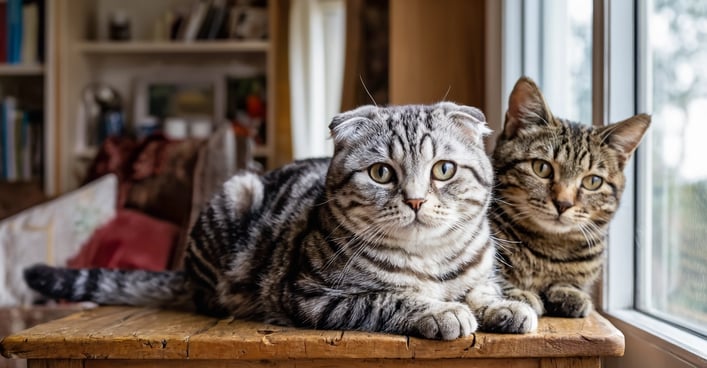
Scottish Fold vs American Shorthair: The 2026 Breed Comparison Guide
Choosing between a Scottish Fold and an American Shorthair? Our complete guide compares temperament, health, cost, and care to help you find your perfect feline companion.
Share this page
Scottish Fold vs American Shorthair: The 2026 Breed Comparison Guide
Choosing between two beloved domestic breeds like the Scottish Fold and the American Shorthair presents a delightful challenge for prospective cat owners. Both offer charming personalities, strong adaptability, and make wonderful family companions, yet they differ significantly in appearance, health considerations, and temperament. This comprehensive 2026 guide will help you determine which breed aligns best with your lifestyle and expectations.
Breed Overview
Scottish Fold Cats
Origin and History
The Scottish Fold traces its origins to a white barn cat named Susie, discovered in 1961 on a farm in Perthshire, Scotland. Susie's distinctive folded ears resulted from a spontaneous genetic mutation. When she had kittens, two inherited the trait, leading to the development of the breed through selective breeding.
Initial registration faced hurdles due to unfounded concerns about ear mites and deafness. The breed gained full recognition in the 1970s and is now cherished worldwide for its unique "owl-like" appearance and exceptionally sweet disposition.
Scottish Fold vs American Shorthair: The 2026 Breed Comparison Guide - Articles
Physical Characteristics
Weight: 6-13 pounds (2.7-5.9 kg)
Length: 14-18 inches (36-46 cm)
Coat: Short to medium length, dense, and plush
Colors & Patterns: All are recognized
Eyes: Large, round, and expressive
Distinctive Feature: Folded ears (single, double, or triple fold)
Lifespan: 11-14 years
Body Type: Medium, rounded, and well-padded
American Shorthair Cats
Origin and History
The American Shorthair is a true native breed, descending from working cats that arrived with early European settlers to protect ships' stores from rodents. These hardy cats continued their pest control duties in the New World.
Originally called the Domestic Shorthair, the breed was selectively refined in the early 20th century to preserve its robust health and hunting prowess while enhancing its appearance. The name was officially changed to American Shorthair in 1966 to distinguish the pedigreed breed from random-bred domestic cats.
Physical Characteristics
Weight: 10-15 pounds (4.5-6.8 kg) for males, 6-12 pounds (2.7-5.4 kg) for females
Length: 12-15 inches (30-38 cm)
Coat: Short, dense, hard, and glossy
Colors & Patterns: Over 80 varieties; the silver tabby is iconic
Eyes: Large, wide-set, and alert
Distinctive Feature: Powerful, athletic, and muscular build
Lifespan: 15-20 years
Body Type: Medium to large, well-balanced, and strong
Temperament and Personality Comparison
Scottish Fold Personality
Sweet and Easygoing: Renowned for a docile, gentle nature that adapts seamlessly to new environments.
Companion-Oriented: Forms strong family bonds and prefers not to be left alone for long periods. Often follows owners from room to room.
Playful but Gentle: Maintains a kitten-like playfulness expressed through gentle interaction, not high-energy antics.
Quiet Communicators: Not particularly vocal; uses soft chirps and trills rather than loud meows.
Unique Behaviors: Famous for sitting in the "Buddha position" (upright with paws on belly) and lying flat on their backs.
Social Compatibility: Generally excellent with children, other pets, and respectful strangers due to a patient disposition.
American Shorthair Personality
Independent yet Affectionate: Enjoys family time but doesn't demand constant attention, content with its own company.
Adaptable and Versatile: Thrives in various living situations, from apartments to houses, with singles or families.
Moderately Active: Retains a working cat's spirit—enjoys interactive play and climbing but is also a champion lounger.
Intelligent and Trainable: A smart breed capable of learning tricks, using puzzle feeders, and even playing fetch.
Social but Not Needy: Friendly and engaging but maintains a healthy independence, showing affection on its own terms.
Natural Hunters: Strong prey drive makes them excellent pest controllers; supervise around small pets.
Easygoing and Quiet: Communicates primarily through body language with occasional soft meows.
Temperament Summary
Trait
Scottish Fold
American Shorthair
Energy Level
Low to Moderate
Moderate
Independence
Low to Moderate
Moderate to High
Affection Level
High
Moderate to High
Playfulness
Moderate
Moderate to High
Vocalization
Low
Low
Adaptability
Very High
Very High
Intelligence
Moderate
High
Good with Children
Excellent
Excellent
Good with Other Pets
Excellent
Good
Hunting Instinct
Low
High
Physical Health Comparison
Scottish Fold Health Concerns
The breed's most significant concern is Osteochondrodysplasia, a genetic skeletal disorder linked to the folded ear gene. It affects cartilage and bone development, potentially causing painful arthritis in the tail, legs, and spine. Severity varies widely.
Other Considerations:
Polycystic Kidney Disease (PKD): Genetic test available.
Ear Care: Folded ears require weekly cleaning to prevent infections due to reduced air circulation.
Management: Requires regular veterinary monitoring, potential pain management, strict weight control, and an understanding of the associated ethical breeding controversies.
American Shorthair Health
This breed is considered one of the healthiest, benefiting from a large gene pool and natural selection.
Common Considerations:
Hypertrophic Cardiomyopathy (HCM): Can occur; screening is recommended.
Obesity: Prone to weight gain; monitor diet and ensure exercise.
Dental Disease: As with all cats, regular dental care is crucial.
Kidney Disease: A concern for seniors; regular blood work is advised.
Health Comparison Summary
Health Factor
Scottish Fold
American Shorthair
Overall Health
Fair to Good
Excellent
Major Breed Concerns
Osteochondrodysplasia
Few to none
Genetic Testing Needed
Highly Recommended
Not typically required
Average Lifespan
11-14 years
15-20 years
Expected Veterinary Costs
Higher
Lower
Special Care Requirements
Yes (joint/ear monitoring)
Minimal
Grooming and Care Requirements
Scottish Fold Grooming
Coat Care: Weekly brushing with a soft bristle or rubber brush manages moderate shedding.
Ear Care:Essential. Clean folds weekly with a vet-approved solution to prevent infection.
General: Routine nail trims and dental care are required.
American Shorthair Grooming
Coat Care: Easy maintenance. Weekly brushing with a rubber mitt controls shedding and maintains gloss.
General: Efficient self-groomers. Require standard nail trims and dental care.
Grooming Comparison
Aspect
Scottish Fold
American Shorthair
Brushing Frequency
Weekly
Weekly
Shedding Level
Moderate
Moderate
Special Grooming Needs
Yes (Ear Cleaning)
Minimal
Overall Maintenance
Low to Moderate
Low
Exercise and Activity Needs
Scottish Fold Exercise
Activity Level: Low to moderate. Enjoy short (10-15 min), gentle play sessions and puzzle toys.
Special Considerations: Due to potential joint issues, avoid encouraging high jumps. Provide ramps and maintain a healthy weight.
American Shorthair Exercise
Activity Level: Moderate. Benefit from daily play (15-20 min) with wand toys, climbing trees, and puzzle feeders to satisfy hunting instincts and prevent obesity.
Enrichment: Need mental stimulation via window perches, rotating toys, and scratching posts.
Exercise Comparison
Aspect
Scottish Fold
American Shorthair
Daily Play Needed
10-15 minutes
15-20 minutes
Exercise Intensity
Gentle
Moderate to Active
Key Motivation
Bonding / Mental Stimulation
Hunting Instinct / Activity
Obesity Risk
Moderate (if inactive)
Moderate (if under-stimulated)
Living Environment & Cost Comparison
Living Environment
Scottish Fold:Must be indoor-only. Adapts well to apartments and small spaces. An ideal, gentle companion for quiet households, families, and multi-pet homes.
American Shorthair:Indoor living is strongly recommended. Adaptable to any home size but appreciates vertical space and window perches. A great fit for active families and multi-pet households.
Cost Comparison (2026 Estimates)
Initial Costs
Expense
Scottish Fold
American Shorthair
Kitten Price
$1,000 - $3,000+
$600 - $1,200
Initial Vet & Supplies
$600 - $1,300
$600 - $1,300
Total Initial
$1,600 - $4,300+
$1,200 - $2,500
Annual Ongoing Costs
Expense
Scottish Fold
American Shorthair
Food, Litter, Basics
$650 - $1,300
$650 - $1,300
Veterinary Care
$400 - $800*
$300 - $500
Insurance/Supplies
$450 - $900
$450 - $900
Total Annual
$1,500 - $3,000
$1,400 - $2,700
*Higher due to potential health monitoring.
Which Breed Is Right for You?
Choose a Scottish Fold If You:
Desire an exceptionally sweet, docile, and affectionate shadow.
Prefer a low-energy cat suited for a calm, relaxed home.
Are home often and can provide consistent companionship.
Are prepared for potential health issues and associated costs.
Understand and have researched the ethical breeding concerns.
Want a unique-looking cat that gets along with everyone.
Choose an American Shorthair If You:
Want a robust, healthy, and generally low-maintenance companion.
Prefer a cat with a moderate, adaptable activity level.
Have a busier schedule or an active household.
Value longevity, with a potential lifespan of 15-20 years.
Appreciate a classic, athletic feline with strong hunting instincts.
Are a first-time cat owner or want predictable veterinary costs.
Important Final Considerations
Scottish Fold Ethical Note
The folded ear gene is directly linked to osteochondrodysplasia. This has led to breeding restrictions or bans in several countries (e.g., the UK's GCCF). If you choose a Fold:
Commit only to ethical breeders who health-test parents and breed responsibly.
Consider adopting a straight-eared variant (Scottish Straight).
Be fully prepared for potential lifelong joint care and expenses.
American Shorthair Clarification
"American Shorthair" refers to the pedigreed breed. "Domestic Shorthair" describes mixed-breed cats. Ensure you are getting documentation from a reputable breeder if seeking the purebred lineage.
Conclusion
Both the Scottish Fold and American Shorthair offer rewarding companionship but cater to different preferences. The Scottish Fold captivates with unique charm and profound sweetness but requires a committed owner prepared for its health and ethical landscape. The American Shorthair delivers an ideal blend of health, longevity, and easygoing versatility, making it a superb choice for a wide range of cat lovers.
Your decision should balance your lifestyle, budget, ethical perspective, and the type of feline relationship you desire. Whichever breed you welcome, you'll gain a loyal friend for years to come.
Disclaimer: Individual cats may vary. Always meet kittens and their parents when possible. Source your companion from reputable breeders who prioritize health testing and ethical practices, or consider adoption from a breed-specific rescue.
Get expert advice about cat care, behavior, nutrition, grooming, and training. Ask our AI cat care expert anything about your cat and receive professional guidance.