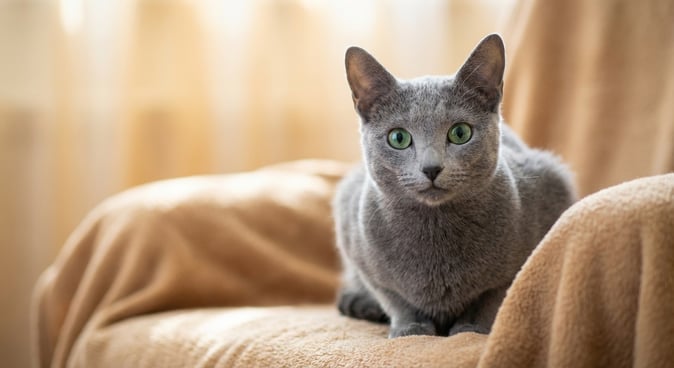
From the icy docks of northern Russia to the velvet-cushioned laps of Victorian aristocracy, the Russian Blue’s shimmering silver coat has traveled centuries of legend and luxury. Discover how this enigmatic Archangel Cat sailed from maritime mystery to become one of the world’s most coveted quiet companions.
With shimmering silver-tipped fur and emerald-green eyes, the Russian Blue has captivated cat lovers for centuries. This naturally occurring Russian treasure combines striking beauty with a gentle, loyal temperament that forms deep bonds with its chosen humans. Known for their quiet voices and reserved elegance, these cats bring a serene presence to any home while offering surprising playfulness and intelligence.
The Russian Blue’s story begins in the port city of Arkhangelsk, nestled along Russia’s northern coast, where sailors first noticed these striking blue-gray cats prowling the docks as early as the 1860s. Known affectionately as the Archangel Cat, they journeyed from Russia to England and beyond aboard merchant ships, their dense coats perfectly suited to harsh maritime climates. By 1875, the breed made its debut at London’s Crystal Palace cat show, immediately turning heads with its unusual coloration and regal bearing. While World Wars nearly decimated European populations, dedicated breeders in Scandinavia and Britain preserved the bloodlines, eventually establishing the sophisticated companion we cherish today.
A living sculpture of refined elegance, the Russian Blue carries itself with poised grace. Males typically weigh 3.5–5.5 kg, while females remain daintier at 3–4 kg, their muscular bodies stretching 35–45 cm from nose to tail base. The breed’s crowning glory is its plush double coat—each hair dipped in slate blue with a shimmering silver tip that catches light like moonbeams on water. This unique structure causes the fur to stand away from the body, creating a soft, haloed silhouette that invites touch. Completing the portrait are wide-set emerald eyes that deepen in hue from kittenhood’s yellow-green to the vivid jewel tone of adulthood, set within a delicately smiling face framed by large, widely spaced ears.
The Russian Blue offers a rare blend of ethereal beauty and grounded companionship. These silver-tipped sophisticates bring calm elegance to daily life while rewarding patient owners with unwavering loyalty and subtle affection. For those who appreciate quiet conversations and gentle souls, sharing your world with a Russian Blue means gaining a regal friend who’ll grace your home—and heart—for decades.
Beneath that aristocratic exterior beats a heart of pure devotion. Russian Blues bond intensely with their families, often selecting one special person as their soulmate while remaining politely affectionate toward others. Their gentle nature manifests in soft, melodic voices rarely raised above a whisper—perfect for apartment living. Initially shy with visitors, these cats observe from safe distances before granting trust, making their eventual purring approval feel like winning lottery tickets. Despite their reserved reputation, they possess a playful streak that emerges during daily “zoomies” or spirited games of fetch with crinkly toys. Intelligence shines through quick learning of household routines and puzzle toys, while their moderate energy level balances active play with long, contemplative naps in sunbeams.
Fortunately for busy owners, the Russian Blue’s dense coat requires minimal upkeep—weekly brushing with a soft slicker removes loose hair while distributing skin oils for maximum shimmer. Their low 2/5 shedding level means fewer hairballs and less furniture fur than many breeds. Provide sturdy scratching posts to help them shed old claw sheaths, and trim nails monthly. These cats thrive on interactive play sessions using feather wands or laser pointers to satisfy their 3/5 exercise needs, preventing the obesity that can plague this food-loving breed. Mental stimulation proves equally important: rotate puzzle feeders and window perches to engage their brilliant minds. While not hypoallergenic, some allergy sufferers react less severely to their lower-than-average Fel d 1 protein levels.
Blessed with robust genetics, Russian Blues typically enjoy 15–20 years of companionship—one of the feline world’s longer lifespans. Their primary health concern centers on urinary tract health; feed high-quality, moisture-rich diets to prevent bladder stone formation. Portion control becomes crucial as they mature—these cats love their food and can pack on pounds that strain joints. Schedule annual vet checkups including urinalysis, and encourage water intake through fountains or wet food. Responsible breeders screen for hypertrophic cardiomyopathy, though incidence remains low. Their dense coat provides natural cold protection, but they prefer cozy indoor temperatures between 18–24°C, making them ideal apartment dwellers.
The Russian Blue suits quiet households seeking a devoted, low-maintenance companion. They flourish with singles, couples, or families with respectful children who understand gentle handling. Their patient nature tolerates cat-friendly dogs and other felines when properly introduced, making them excellent additions to multi-pet homes. However, frequent party hosts or those wanting a social butterfly may find their initial reserve frustrating. These cats crave routine and dislike sudden changes—perfect for predictable lifestyles. If you desire a loyal confidant who greets you with slow blinks and quiet chirps, who’ll shadow your movements with quiet dignity while entertaining you with sudden playful antics, the Russian Blue may be your perfect match.
Get AI-powered advice about your cat's health and care. Enter your cat's information and start a conversation with our veterinary assistant.
Start Chat with AIGet expert advice about cat care, behavior, nutrition, grooming, and training. Ask our AI cat care expert anything about your cat and receive professional guidance.
Start Chat with Expert