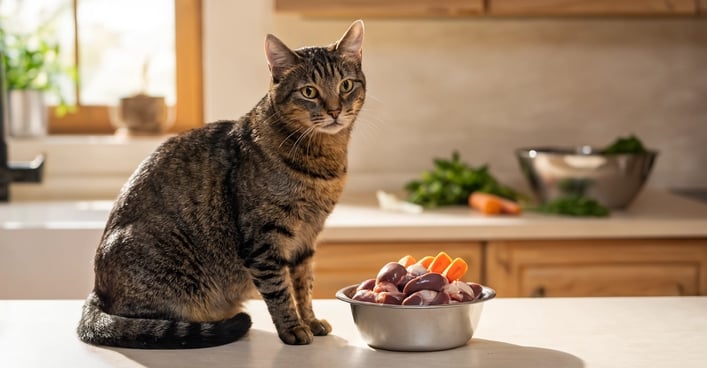
Raw Food Diet for Cats: A Complete Guide to Nutrition and Safety in 2026
Explore the benefits, risks, and practical steps for feeding your cat a raw diet. Learn about commercial options, safe preparation, and veterinary insights for optimal feline health.
Share this page
Raw Food Diet for Cats: A Complete Guide to Nutrition and Safety in 2026
The raw food diet for cats has surged in popularity among pet owners seeking to align their cat's nutrition with a more ancestral, species-appropriate diet. Advocates report benefits like shinier coats, improved digestion, and better dental health, while critics highlight significant concerns regarding bacterial contamination and nutritional imbalances. Navigating this complex topic requires a balanced understanding of both perspectives.
This definitive guide provides a comprehensive overview of raw feeding for cats. We'll explore the underlying philosophy, weigh the potential benefits against the risks, examine different feeding models, and provide actionable steps for safe implementation should you choose this path for your feline companion.
Understanding the Raw Food Philosophy
Evolutionary Perspective
Cats as Obligate Carnivores: Unlike dogs, cats are obligate carnivores, meaning their biological systems are designed to thrive on a diet primarily composed of animal tissue. They require specific nutrients, like taurine and arachidonic acid, that are only found in meat.
Raw Food Diet for Cats: A Complete Guide to Nutrition and Safety in 2026 - Articles
The Ancestral Diet: In the wild, felines consume whole prey—including muscle meat, organs, bones, and the partially digested vegetation from their prey's stomach. This provides:
Highly bioavailable protein
Essential fatty acids
Vitamins and minerals in their natural forms
High moisture content (approximately 65-75%)
Minimal carbohydrates
Critique of Commercial Foods: Modern processed cat foods were developed for owner convenience and shelf stability. Critics argue that high-heat processing can degrade nutrients and that the high carbohydrate content in many kibbles is ill-suited for a carnivore's metabolism.
Primary Raw Feeding Models
Prey Model Raw (PMR):
Aims to replicate the composition of whole prey.
Ratio: 80% muscle meat, 10% edible bone, 5% liver, 5% other secreting organs (like kidney or spleen).
Excludes fruits, vegetables, and grains.
Emphasizes variety across protein sources (e.g., poultry, rabbit, beef).
Primal Freeze-Dried Nuggets: Includes organic produce, easy to portion.
Ziwi Peak Air-Dried: Gently air-dried (not technically raw), 96% meat content, sourced from New Zealand.
Pros:
No freezer required; convenient for travel
Lower bacterial risk than frozen raw
Maintains high nutrient density
Cons:
Can be very expensive per feeding
Some cats dislike the rehydrated texture
Lower inherent moisture content than frozen raw or canned food
Preparing a Homemade Raw Diet
Essential Equipment & Workspace
Must-Haves:
Dedicated freezer space
Sharp knives and separate, non-porous cutting boards for raw meat
A reliable kitchen scale (grams/ounces)
A meat grinder capable of grinding bone OR a source of finely ground bone meal
Storage containers or freezer bags
Disposable gloves
Recommended Upgrades:
Vacuum sealer for long-term storage
Dedicated prep area (e.g., a specific countertop)
Stainless steel bowls and utensils
Sourcing Quality Ingredients
Where to Buy:
Local butcher shops (often offer bulk discounts)
Raw feeding co-ops or buying clubs
Reputable online raw pet food suppliers
Grocery stores (ensure meat is intended for human consumption)
Ingredient Quality Guidelines:
Prioritize human-grade meats
Opt for grass-fed/grass-finished and organic options when possible
Avoid "enhanced" or "flavor-soaked" meats with added sodium or phosphates
Source organs from the same animal type as the muscle meat when possible
Creating a Balanced Recipe
Prey Model Ratio (Daily Basis):
80% Muscle Meat: Chicken thigh, beef, turkey, rabbit, etc.
10% Edible Bone: Ground chicken necks or wings, or equivalent bone meal.
5% Liver: A necessary source of Vitamin A.
5% Other Secreting Organs: Kidney, spleen, pancreas, etc. (Heart is considered muscle meat).
Sample Daily Recipe for a 10 lb Cat:
3.2 oz (91g) Ground Chicken Thigh
0.4 oz (11g) Ground Chicken Necks (with bone)
0.2 oz (6g) Chicken Liver
0.2 oz (6g) Beef Kidney
Essential Supplements (Consult a Vet/Nutritionist):
Omega-3 Fatty Acids: Fish oil (e.g., salmon oil) for EPA/DHA.
Vitamin E: Acts as an antioxidant and preserves fatty acids.
Taurine: Critical supplement if heart meat is not used regularly.
B-Complex Vitamins: Especially important for homemade diets.
Step-by-Step Preparation & Safety
Prep & Sanitize: Wash hands, sanitize all surfaces and equipment with a pet-safe disinfectant.
Grind Ingredients: Partially freeze meat for easier grinding. Grind muscle meat, bone, and organs separately or together, depending on your grinder.
Weigh & Mix: Precisely weigh each component according to your recipe. Mix thoroughly in a large, cold bowl. Add any supplements and mix again.
Portion & Package: Divide the mixture into daily meal portions. Flatten in bags for quick thawing. Label with content and date.
Freeze Immediately: Store at 0°F (-18°C) or below for up to 6 months.
Thaw Safely: Always thaw in the refrigerator 12-24 hours before feeding. Never thaw at room temperature. Discard any uneaten food after 30-60 minutes.
Non-Negotiable Food Safety Rules
Hygiene: Wear gloves, wash hands for 20 seconds after handling.
Containment: Clean and disinfect every surface the raw food touches.
Separation: Use separate utensils and bowls for raw pet food.
High-Risk Households: Reconsider raw feeding if household members are immunocompromised, very young, or elderly.
Cost Analysis: Raw vs. Other Diets
Cost Comparison Table (Monthly Estimates)
Diet Type
Cost Range (Monthly)
Key Considerations
Budget Dry Kibble
$15 - $30
Lowest cost; often higher carbs, lower moisture.
Premium Dry Kibble
$30 - $60
Better ingredients; still low moisture.
Premium Canned Food
$70 - $120
High moisture, good protein; convenient.
Commercial Raw (Frozen)
$90 - $180
Highest convenience for raw; balanced nutrition.
Homemade Raw (Chicken-based)
$30 - $75
Most control; requires time, knowledge, and safe handling.
Smart Cost-Saving Strategies
For Commercial Raw:
Buy in bulk during sales.
Subscribe to auto-ship programs for discounts.
Compare prices between local stores and online retailers.
For Homemade Raw:
Join a raw feeding co-op for bulk purchasing power.
Source directly from local farmers or hunters (ensure parasite control).
Use chicken and turkey as affordable primary proteins, rotating in others for variety.
Invest in a quality grinder to process cheaper cuts and whole prey.
Transitioning Your Cat to Raw
Recommended Gradual Transition (Over 4-8 Weeks)
Week
Old Diet
New Raw Diet
Action
1-2
75%
25%
Mix a small amount of raw into familiar food.
3-4
50%
50%
Slowly increase the raw proportion.
5-6
25%
75%
Observe stool consistency and appetite.
7+
0%
100%
Fully transitioned to raw.
Appetite Encouragement Tips:
Slightly warm the food by placing the sealed container in warm water (do not microwave or cook).
Top with a "topper" like a sprinkle of freeze-dried chicken, nutritional yeast, or a teaspoon of low-sodium bone broth.
Try different protein sources (e.g., duck, rabbit) if chicken is refused.
Be patient—some cats need weeks to adjust.
Troubleshooting Common Issues
Refusal to Eat: Ensure the food isn't too cold. Try hand-feeding or a different texture (ground vs. chunks).
Diarrhea: The transition may be too fast, the bone content too low, or the organ meat content too high. Slow down and reassess ratios.
Constipation: Usually indicates the bone content is too high. Temporarily reduce bone and ensure adequate hydration.
Vomiting: Could be from eating too fast, a protein intolerance, or an imbalance. Offer smaller, more frequent meals and review your recipe.
Consult your veterinarian if any digestive upset persists for more than a few days.
Special Feline Considerations
Kittens
Can they eat raw? Yes, but with extreme caution. Their growth demands precise nutrition.
Requirements: Must be a complete and balanced formula designed for growth. Higher calorie and calcium needs.
Frequency: Require 4-6 small meals per day.
Mandatory: Supervision by a veterinarian or board-certified veterinary nutritionist.
Senior Cats
May prefer softer, ground textures if dental health is poor.
Protein quality is crucial; older cats need highly digestible protein to maintain muscle mass.
Transition very slowly and monitor kidney values through regular vet checkups.
Cats with Medical Conditions
Contraindications (Avoid Raw):
Cats that are immunocompromised (e.g., on chemotherapy, with FIV/FeLV complications).
Cats in households with immunocompromised people.
Require Veterinary Guidance:
Chronic Kidney Disease (CKD): Protein quality and phosphorus balance are critical.
Inflammatory Bowel Disease (IBD): A novel protein or hydrolyzed diet may be recommended instead.
Pancreatitis or Diabetes: Fat content and consistency must be carefully managed.
The Veterinary Perspective and Safe Practices
Finding a Supportive Veterinary Partner
Professional opinions vary. The AVMA discourages raw diets due to public health risks, but many veterinarians take a pragmatic approach if owners are committed to safety.
How to Find the Right Vet:
Seek out holistic, integrative, or feline-only practices.
Ask directly: "Do you have experience monitoring cats on raw diets?"
Consider a consultation with a Board-Certified Veterinary Nutritionist (acvn.org) for homemade recipes—this is the gold standard.
Essential Health Monitoring
Bi-Annual Exams: At minimum, for cats on any diet.
Annual Bloodwork & Urinalysis: Crucial for detecting early signs of nutritional imbalance or organ stress.
Regular Weight Checks: Ensure your cat is maintaining a healthy body condition score.
Hybrid and Alternative Approaches
Not ready for 100% raw? These methods can offer a middle ground.
Raw as a Topper: Add a spoonful of commercial raw or freeze-dried to a high-quality canned food. Boosts nutrition and palatability.
Partial Raw Feeding: Feed one raw meal per day and one canned meal. Provides benefits while managing cost and risk.
High-Quality Canned Diet: An excellent alternative. Choose grain-free, high-protein, high-moisture (>78%) cans. Offers many benefits of raw (hydration, low carbs) without the handling risks.
Final Conclusion and Key Takeaways
A raw food diet can be a viable, species-appropriate option for some cats, potentially yielding noticeable benefits in coat, digestion, and energy. However, it is not a decision to be made lightly. It demands a significant commitment to education, safe handling, and nutritional precision.
For most owners, commercial raw diets from reputable brands offer the safest entry point, providing balanced nutrition with mitigated risks. If you embark on a homemade journey, partnering with a veterinary nutritionist is non-negotiable to prevent serious health consequences from imbalance.
Ultimately, the best diet for your cat is:
Nutritionally Complete and Balanced for their life stage.
Safe for both your cat and your household.
Accepted and Thrived On by your individual cat.
Supported by regular veterinary care and monitoring.
Raw feeding is one point on the spectrum of feline nutrition. Make your choice based on informed research, honest assessment of your capabilities, and in partnership with a veterinary professional you trust.
Get expert advice about cat care, behavior, nutrition, grooming, and training. Ask our AI cat care expert anything about your cat and receive professional guidance.