Ragdoll vs Norwegian Forest Cat: 2026 Breed Comparison Guide
Choosing between a Ragdoll and a Norwegian Forest Cat? Our detailed guide compares their history, personality, health, and care needs to help you find your perfect feline companion.
Share this page
Ragdoll vs Norwegian Forest Cat: 2026 Breed Comparison Guide
Choosing between a Ragdoll and a Norwegian Forest Cat is a delightful dilemma for cat lovers. Both are majestic, large breeds with luxurious coats and gentle hearts, yet they offer profoundly different companionship experiences. This comprehensive guide for 2026 compares every critical aspect—from personality and health to grooming and cost—to help you make the perfect choice for your home.
Historical Origins and Development
Ragdoll Cat History
California Origins (1960s)
The Ragdoll is a modern American creation. Breeder Ann Baker developed the breed in Riverside, California, during the early 1960s, starting with a foundation cat named Josephine. Selective breeding focused on creating a cat with:
A large, semi-cobby body
A silky, semi-long coat
Distinctive colorpoint patterns
An exceptionally docile, "floppy" temperament when held
Ann Baker's trademarking of the "Ragdoll" name and restrictive breeding practices initially created controversy. However, dedicated breeders eventually established the breed within major cat registries, leading to its current global popularity.
Gained TICA recognition in 1979 and CFA recognition in 1993.
The name "Ragdoll" perfectly describes their tendency to go completely limp and relaxed when picked up.
Norwegian Forest Cat History
Ancient Nordic Heritage
The Norwegian Forest Cat (or Norsk Skogkatt) is a natural breed with a storied history intertwined with Norse mythology and Viking lore. These cats evolved over centuries in Scandinavia's harsh forests, developing a thick, water-resistant coat and formidable climbing skills without human intervention.
Preservation and National Treasure
Faced near extinction during and after World War II.
A dedicated breeding program launched in the 1970s saved the breed.
Received FIFe recognition in 1977 and CFA recognition in 1984.
Officially designated as Norway's national cat by King Olav V, symbolizing the country's heritage.
Physical Characteristics: A Side-by-Side Look
Size and Structure
Feature
Ragdoll
Norwegian Forest Cat
Weight (Females)
10-15 lbs (4.5-6.8 kg)
8-12 lbs (3.6-5.4 kg)
Weight (Males)
15-20 lbs (6.8-9 kg)
12-16 lbs (5.4-7.3 kg)
Body Type
Heavy, muscular, semi-cobby
Long, sturdy, and athletic
Legs
Medium length, substantial
Hind legs longer than front (for climbing)
Maturation
Slow; reaches full size around 4 years
Reaches full size by 5 years
Note: Both breeds are among the largest domestic cats, with some males exceeding 20 pounds (9 kg).
Coat and Grooming
Aspect
Ragdoll
Norwegian Forest Cat
Coat Type
Semi-long, silky, flowing
Long, double-layered, water-resistant
Texture
Soft, plush, minimal undercoat
Coarse outer guard hairs with a dense, woolly undercoat
Britches, armpits, behind ears, and magnificent tail
Matting Risk
Low
Moderate; requires consistent combing
Colors, Patterns, and Distinctive Features
Ragdoll:
Patterns: Colorpoint, Mitted, Bicolor, plus Lynx and Tortie variations.
Colors: Seal, blue, chocolate, lilac, red, cream.
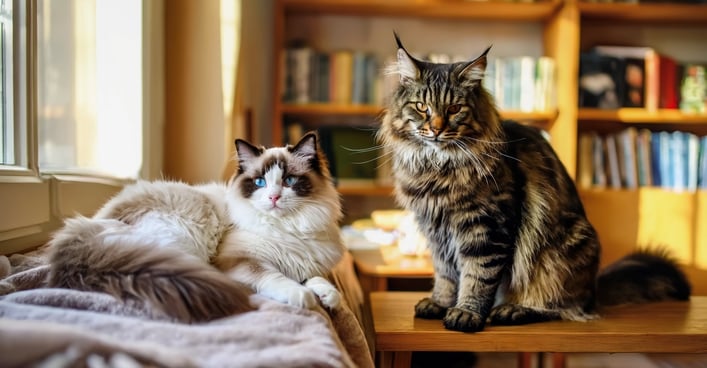
Hallmark Trait: Striking, deep blue eyes in all individuals.
Norwegian Forest Cat:
Patterns: Almost all, with tabby (especially classic) being most common. Pointed patterns (like Siamese) are not accepted.
Colors: All colors except pointed. Famous for brown tabby and white.
Hallmark Traits: Ear tufts (lynx tips), a long bushy tail, a lush winter mane, and "snowshoe" paws.
Temperament and Personality: Heart of the Choice
This is where the two breeds diverge most significantly. Your lifestyle will determine the best fit.
Ragdoll: The Devoted Companion
Ragdolls are the quintessential "velcro cats" and gentle giants.
Personality: Exceptionally docile, affectionate, and people-oriented. They are famously relaxed and go limp when held.
Activity Level: Low to moderate. They enjoy gentle play but are equally content to lounge.
Social Style: Dog-like in loyalty; they follow owners, greet at the door, and crave constant companionship. Excellent with gentle children, other pets, and visitors.
Vocalization: Very quiet, with a soft, chirping voice.
Best For: Owners seeking a constant, affectionate, lap-loving companion who thrives on quiet, indoor living.
Norwegian Forest Cat: The Gentle Adventurer
Norwegian Forest Cats are confident, intelligent, and independent-minded.
Personality: Affectionate but on their own terms. They are curious, playful, and retain a gentle, confident demeanor.
Activity Level: Moderate to high. They are natural climbers and need vertical space and interactive play.
Social Style: Bond closely with their family but can be reserved with strangers. They are not typically "lap cats" but enjoy being nearby. Good with respectful children and pets.
Vocalization: Generally quiet, communicating with charming chirps and trills.
Best For: Active households that can provide climbing structures and mental stimulation for an intelligent, athletic cat.
Temperament Comparison at a Glance
Trait
Ragdoll
Norwegian Forest Cat
Affection Level
Very High
Moderate-High (on their terms)
Independence
Low
Moderate-High
Playfulness
Moderate
High
Lap Cat
Very High
Low-Moderate
Child-Friendly
Excellent (with gentle kids)
Good (with respectful kids)
Stranger-Friendly
Very High
Moderate (may be shy)
Intelligence
Moderate
High (problem-solvers)
Hunting/Climbing Instinct
Low
Very High
Health, Lifespan, and Care Considerations
Health Profiles
Ragdoll Health (Average Lifespan: 12-17 years)
Primary Concern: Hypertrophic Cardiomyopathy (HCM). A genetic heart condition; responsible breeders screen for it.
Other Concerns: Polycystic Kidney Disease (PKD, testable), bladder stones, and a tendency toward obesity due to lower activity.
Care: Regular veterinary check-ups, including cardiac screening, are essential.
Norwegian Forest Cat Health (Average Lifespan: 14-16 years)
Generally Robust: As a natural breed, they have fewer genetic issues than many purebreds.
Primary Concerns: Hypertrophic Cardiomyopathy (HCM) and a rare metabolic disorder called Glycogen Storage Disease Type IV (GSD IV, testable).
Care: Maintain a healthy weight and provide dental care. They are a hardy breed.
Cost of Ownership (2026 Estimates)
Cost Category
Ragdoll
Norwegian Forest Cat
Initial Purchase (Pet Quality)
$1,000 - $3,000
$900 - $2,500
Annual Food & Litter
$700 - $1,300
$700 - $1,300
Annual Veterinary (Routine)
$300 - $600
$250 - $500
Annual Grooming/Supplies
$150 - $300
$200 - $400
Pet Insurance
$350 - $650/year
$300 - $600/year
Estimated Annual Total
$1,500 - $2,850
$1,450 - $2,800
Lifetime Cost (15 years): Approximately $24,000 - $45,000 for either breed, depending on health and care level.
Making Your Decision: Which Breed is Right for You?
Choose a Ragdoll if you want:
A shadow-like companion who follows you everywhere.
A cat that enjoys being carried, cuddled, and handled.
A calm, quiet presence perfect for apartment or relaxed home living.
A pet with minimal territorial instincts, excellent for multi-pet homes.
An indoor-only cat that requires no outdoor access.
Choose a Norwegian Forest Cat if you want:
An intelligent, interactive cat that enjoys problem-solving games.
A playful, athletic companion who will appreciate cat trees and high perches.
A cat with a more independent streak but a deep bond with its family.
A hardy, adaptable breed that can entertain itself when you're busy.
A majestic cat with a wild appearance but a gentle heart.
Neither breed may be suitable if:
You have severe cat allergies.
You cannot commit to regular grooming, especially for the Norwegian Forest Cat's seasonal shedding.
You want a cat to roam outdoors unsupervised.
You are away from home very frequently (especially relevant for Ragdolls).
You have a very limited budget for potential health care.
Final Verdict
Both the Ragdoll and the Norwegian Forest Cat are magnificent breeds that reward their owners with years of love. The choice is not about which is "better," but which is better for you.
The Ragdoll is the ultimate companion animal, offering unwavering devotion and serene affection. It's the perfect choice for a comforting, constant feline presence.
The Norwegian Forest Cat is the gentle adventurer, combining intelligence, beauty, and playful independence. It's ideal for an active home that can engage its body and mind.
Whichever you choose, ensure you source your kitten from a responsible, ethical breeder who performs health screenings, or consider adopting an adult from a breed-specific rescue. With proper care, love, and commitment, either of these gentle giants will become a cherished member of your family for over a decade.
Last Updated: 2026 | Remember, individual personality varies. Spend time with adults or kittens of the breed before making your final decision.
Get expert advice about cat care, behavior, nutrition, grooming, and training. Ask our AI cat care expert anything about your cat and receive professional guidance.