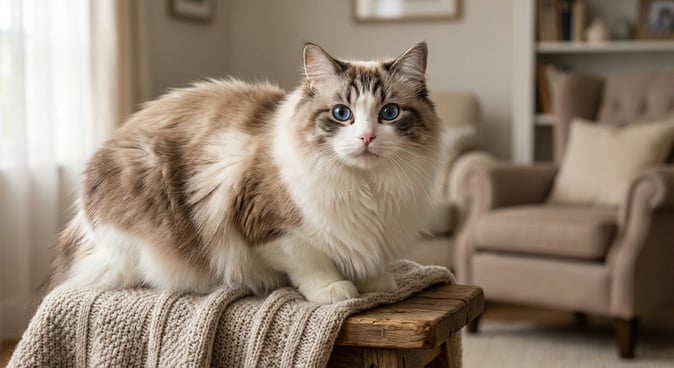
Born from a split with the Ragdoll in the 1990s, Ragamuffin cats blend Persian-like plushness with Ragdoll-level tenderness, creating a “gentle giant” whose calm, people-loving heart is as oversized as its famously flop-ready body.
If you’ve ever dreamed of a cat that behaves more like a cuddly teddy bear, the Ragamuffin is your wish come true. These large, luxuriously coated felines are famous for going limp with contentment the moment they’re scooped into loving arms. Developed in the United States and recognized as a distinct breed in 1994, Ragamuffins combine impressive size with an exceptionally sweet, patient temperament that makes them ideal companions for households of all kinds.
The Ragamuffin’s story begins with the better-known Ragdoll. In the 1960s, Ann Baker developed the Ragdoll from a foundation of gentle, long-haired street cats in California. Over time, some breeders wanted to expand coat colors, patterns, and body type while preserving the Ragdoll’s trademark docility. By crossing Ragdolls with Persians, Himalayans, and other long-haired breeds, they created a broader gene pool and a new look. In 1994, these cats were christened “Ragamuffins” to distinguish them from the original Ragdoll lines, and the CFA granted championship status in 2011. Today, Ragamuffins remain an all-American breed prized for their plush coats and puppy-like personalities.
Ragamuffins are substantial, well-muscled cats; males typically weigh 6.8–9.1 kg (15–20 lb), while females range 4.5–6.8 kg (10–15 lb). Their bodies are rectangular and broad-chested, often not reaching full maturity until four years of age. The coat is long, silky, and dense—resistant to matting thanks to a soft, textured undercoat. Unlike some long-haired breeds, Ragamuffins exhibit every possible color and pattern, from solid white to shaded silver, tortoiseshell to color-point. Large, walnut-shaped eyes sparkle in shades of gold, green, blue, or odd-eyed combinations, giving each cat an endearing, almost surprised expression. A medium-length neck ruff, plumed tail, and puffy britches complete the picture of fluffy magnificence.
Ragamuffins prove that bigger really can be better when it comes to affectionate feline companions. Their calm demeanor, kid-approved patience, and teddy-bear coats make everyday life feel a little softer and a lot more loving. Provide proper grooming, heart-health screening, and plenty of snuggles, and your gentle giant will fill your home with quiet purrs and floppy hugs for up to 16 wonderful years.
Affectionate? Absolutely. Friendly? Off the charts. Ragamuffins score a perfect 5/5 for affection, friendliness, kid-compatibility, and pet-compatibility. They greet visitors calmly, follow family members from room to room, and happily flop across laps or shoulders. Their quiet voices (vocalization 1/5) are rarely intrusive; instead, they communicate with soft chirps and expressive eyes. Playfulness is moderate (3/5), so expect bursts of kittenish antics followed by long naps in the sun. Because they are patient and non-defensive, children can safely cart them around in doll strollers, and most Ragamuffins accept other cats, dogs, and even rabbits with polite curiosity. In short, they are feline diplomats who believe the world is their friend.
Despite the glamorous coat, grooming is surprisingly manageable. A thorough comb-through twice a week prevents tangles and keeps shedding (3/5) under control. Use a stainless-steel comb to reach the dense undercoat, paying extra attention to the ruff and britches. Bathing is rarely necessary, though many Ragamuffins enjoy a warm rinse if introduced early. Routine nail trims, ear checks, and dental care complete basic maintenance. Provide sturdy scratching posts—these are big cats who love a full-body stretch—and moderate exercise (3/5) with wand toys or puzzle feeders to prevent obesity. Because Ragamuffins adapt well to indoor living, a window perch and daily interactive play sessions satisfy their activity needs.
Ragamuffins are generally healthy with a 12–16 year lifespan, but responsible owners should be aware of two primary concerns. Hypertrophic cardiomyopathy (HCM), the most common feline heart disease, can appear in middle age. Reputable breeders screen breeding cats annually via echocardiogram; ask for proof of testing before purchasing a kitten. Secondly, their easy-going nature can lead to weight gain. Measure meals, limit treats to 10% of daily calories, and encourage movement with feather wands or treat balls. Regular veterinary checkups, including cardiac auscultation and weight assessment, will catch problems early and keep your gentle giant comfortable for years.
Choose a Ragamuffin if you want a devoted, low-drama companion who thrives on human interaction. They’re ideal for families with respectful children, multi-pet households, or seniors seeking a calm, affectionate friend. First-time cat owners appreciate their forgiving temperament and moderate grooming demands. However, frequent travelers should consider a second pet or daily sitter—Ragamuffins dislike prolonged solitude. Budget for quality food, routine vet care, and possible cardiac screening. If you can offer love, stability, and a cozy lap, the Ragamuffin will reward you with unwavering loyalty and the softest, most therapeutic hugs in the cat kingdom.
Get AI-powered advice about your cat's health and care. Enter your cat's information and start a conversation with our veterinary assistant.
Start Chat with AIGet expert advice about cat care, behavior, nutrition, grooming, and training. Ask our AI cat care expert anything about your cat and receive professional guidance.
Start Chat with Expert