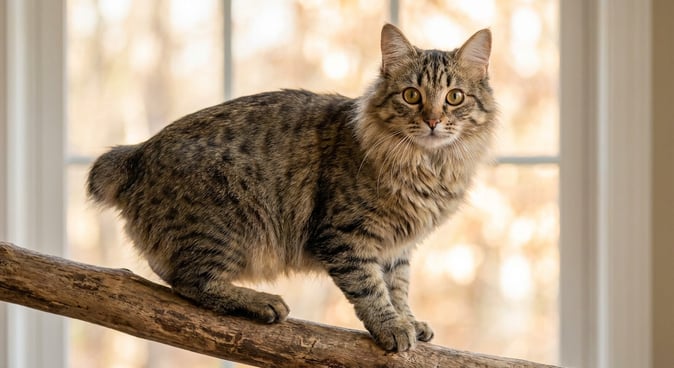
Pixie-Bob: The Dog-Like Wildcat That Stole American Hearts
Meet the Pixie-Bob: a towering, polydactyl “wildcat” that wags its tail, walks on a leash, and claims legendary bobcat blood. Discover how a single kitten named Pixie sparked America’s love affair with this dog-devoted breed.
With tufted ears, a naturally bobbed tail, and a rugged spotted coat, the Pixie-Bob looks like it just stepped out of the forest—yet this all-American breed is 100% domestic and 200% devoted. Renowned for canine-level loyalty, remarkable intelligence, and a laid-back love of family life, the Pixie-Bob has quietly become one of the most captivating companions in the United States.
History & Origin
The Pixie-Bob’s origin story is as colorful as its coat. Legend begins in 1985 on a Washington State farm, where breeder Carol Ann Brewer acquired a rescued male cat with a short tail, polydactyl paws, and an impressive 17-pound frame. Brewer reportedly believed the cat descended from naturally occurring bobcat–domestic pairings indigenous to the Cascade Mountains. When her female cat gave birth to a litter sired by this mysterious tom, one female kitten—named “Pixie”—became the foundation of the new breed.
Early breeders selected for the wild appearance, sturdy body, and dog-like disposition, while DNA testing later confirmed no bobcat markers remain. The International Cat Association (TICA) granted the Pixie-Bob championship status in 1998, firmly cementing the breed as wholly domestic and fully show-worthy.
Physical Characteristics
Pixie-Bobs are medium-to-large cats, with males commonly reaching 6–8 kg (13–18 lb) and females averaging 4–6 kg (9–13 lb). Their muscular, long bodies measure 25–40 cm from shoulder to base of the abbreviated tail—which can be as short as 2 cm or as long as 15 cm but is always kinked or curved.
The Pixie-Bob delivers the mystique of a wild bobcat wrapped in the affectionate soul of a golden retriever. From its stubby tail and tufted ears to its unwavering loyalty, this all-American breed enriches every household lucky enough to share life with one. If you crave a playful, intelligent, and loving feline who will doggedly follow your every step, the Pixie-Bob might just be your perfect pint-sized predator.
Tags
Pixie-BobPixie Bob catdog-like catpolydactylspotted tabbyfamily cat
Pixie-Bob: The Dog-Like Wildcat That Stole American Hearts - Articles
The double coat may be short or long, both displaying a brown-spotted tabby pattern that resembles wild bobcats. Dense, woolly underfur provides water resistance, while the outer coat is soft to the touch. Eyes range from shimmering gold to gooseberry green and are hooded by heavy brows, giving an endearingly serious expression. Many individuals are polydactyl, sporting up to seven toes per paw that enhance their “big-foot” look and act like snowshoes.
Temperament & Personality
If cats earned report cards, Pixie-Bobs would score straight A’s in family dynamics. They crave human interaction, greeting visitors without shyness and shadowing their people from room to room. Their affection level, friendliness, kid-friendliness, and pet-friendliness all top out at a perfect 5/5.
Owners regularly report behaviors more typical of dogs: learning to walk on a leash, playing fetch for hours, and coming when called by name. They are moderately vocal—rating only 2/5—communicating with soft chirps and trills rather than insistent meows. Despite high intelligence (5/5), they are refreshingly easy-going, adapting to new environments with confidence rather than anxiety. Expect a Pixie-Bob to nap in your lap as readily as it will tag along on outdoor adventures.
Care Requirements
Grooming is refreshingly simple for such a luxurious-looking cat. Weekly brushing keeps the short coat sleek, while long-haired individuals benefit from twice-weekly sessions to prevent tangles. Shedding is moderate to heavy (4/5), so a quality comb helps distribute skin oils and collect loose hair before it decorates furniture.
Because these active cats rate 4/5 for exercise needs, interactive play sessions morning and evening are essential. Puzzle feeders, feather wands, and even canine agility mini-equipment keep their agile minds engaged. Routine nail trimming is especially important for polydactyl Pixie-Bobs whose extra claws can grow inward if neglected. Provide sturdy scratching posts and horizontal scratchers to help them maintain healthy paws.
A balanced high-protein diet supports muscular bodies and energetic lifestyles; measure meals to prevent obesity, particularly after sterilization. Fresh water fountains appeal to their playful nature while encouraging hydration.
Health Considerations
Pixie-Bobs are generally robust, with a life expectancy of 13–16 years. The most common concern is hypertrophic cardiomyopathy (HCM), a serious heart condition seen in several breeds. Reputable breeders screen breeding cats annually via echocardiogram.
Cryptorchidism (undescended testicles) appears occasionally; pet males left intact should be examined by a veterinarian. Polydactyl cats need extra nail care to avoid embedded claws, but the trait itself is harmless. Routine dental cleanings, vaccinations, and parasite prevention complete a proactive health plan.
Because they mature slowly—reaching full size around age four—kittens should remain on growth-formulated food for at least the first year to support steady development.
Is This Breed Right For You?
Choose a Pixie-Bob if you want a devoted, trainable companion who thrives on family interaction and moderate activity. They excel in households with children, other cats, and respectful dogs, making them one of the most versatile breeds for multi-pet homes. Apartment living is acceptable provided you supply climbing trees, window perches, and daily interactive play.
Avoid this breed if you are away for long hours with no pet-sitter or enrichment; their social nature can lead to loneliness-induced behaviors. Likewise, neat freaks may object to seasonal shedding “tumbleweeds.” Budget for high-quality food, sturdy toys, and possible cardiac screening to ensure a long, healthy life.
When purchasing, seek TICA-registered breeders who offer HCM clearances and a genetic health guarantee. Adoption is also possible—check breed-specific rescues for adults who need second chances.
Fun Facts
Pixie-Bobs hold the Guinness record for most toes: one polydactyl male had 28!
They can learn to open doors, turn on faucets, and even respond to verbal “sit” commands.
Their facial hair growth pattern often forms a lynx-like ruff, enhancing the wild illusion.
American cat breed
bobtail cat
intelligent cat
active cat
Cat's Doctor
Get AI-powered advice about your cat's health and care. Enter your cat's information and start a conversation with our veterinary assistant.
Get expert advice about cat care, behavior, nutrition, grooming, and training. Ask our AI cat care expert anything about your cat and receive professional guidance.