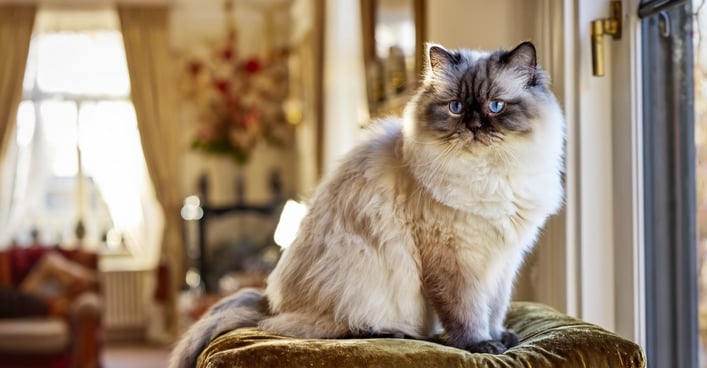
Persian vs. Himalayan Cat: A Complete 2026 Breed Comparison
Discover the key differences between Persian and Himalayan cats, from grooming needs to temperament. Find out which elegant, flat-faced breed is the perfect match for your home.
Share this page
Persian vs. Himalayan Cat: A Complete 2026 Breed Comparison
With their luxurious coats and distinctive faces, Persian and Himalayan cats are the epitome of feline elegance. While they share a common ancestry and many traits, understanding their unique differences is crucial for any prospective owner. This definitive guide compares every aspect to help you make an informed decision about welcoming one of these aristocratic companions into your life.
Origins and Breed Development
Persian Cat History
Origins: Persia (modern-day Iran) and Afghanistan
As one of the world's oldest cat breeds, Persians were introduced to Europe in the 1600s via Middle Eastern trade routes. Their exquisite, silky coats and unique appearance quickly made them favorites among nobility and cat fanciers.
Key Development Milestones:
1871: Featured in the world's first organized cat show at London's Crystal Palace.
Persian vs. Himalayan Cat: A Complete 2026 Breed Comparison - Articles
Early 1900s: Selective breeding began emphasizing the flat-faced "peke-face" appearance.
1950s: Extreme facial flattening became the official breed standard for show cats.
Modern Era: Two distinct varieties are recognized: the Traditional ("doll-face") and the Show ("peke-face").
Himalayan Cat History
Origins: United States (a deliberate hybrid creation)
The Himalayan, sometimes called the Colorpoint Persian, was developed by crossing Persians with Siamese cats. The goal was to combine the Persian's luxurious coat with the Siamese's striking colorpoint pattern.
Key Development Milestones:
1930s: Breeding programs initiated by Virginia Cobb and Dr. Clyde Keeler.
1950s: Breeder Marguerita Goforth successfully established the breed in the United States.
1957: The Cat Fanciers' Association (CFA) recognized Himalayans as a separate breed.
1984: The CFA reclassified them as a color variety of the Persian breed.
Today: Some registries still consider them a distinct breed, while others categorize them under Persian.
Naming: The breed is named after Himalayan rabbits, which share similar dark-pointed coloration.
Physical Characteristics
Facial Structure: A Critical Difference
Show/Peke-Face Persian:
Extremely flat, brachycephalic face.
Nose is set between or below the eyes.
Large, round, wide-set eyes.
Very small, snub nose.
Pronounced "pushed-in" appearance.
Associated with significant health implications.
Traditional/Doll-Face Persian:
Moderately flat facial structure.
Nose set at or slightly below eye level.
A more natural, less extreme feline profile.
Experiences fewer breathing difficulties.
Not accepted in most show rings but favored by many pet owners.
Himalayan:
Always features a traditional/doll-face structure (never the extreme peke-face).
Moderately flat face.
Nose leather matches the color of its points.
Brilliant blue eyes are required by the breed standard.
Generally has fewer breathing issues than show-quality Persians.
Body Structure Comparison
Feature
Persian
Himalayan
Body Type
Cobby (stocky, compact)
Cobby, often slightly larger
Weight (Male)
9-14 lbs (4-6.5 kg)
9-14 lbs (4-6.5 kg)
Weight (Female)
7-11 lbs (3-5 kg)
7-11 lbs (3-5 kg)
Legs
Short, thick, sturdy
Short, thick, sturdy
Paws
Large, round
Large, round
Tail
Short, very bushy
Short, very bushy
Coat and Color Characteristics
Persian Coat:
Exceptionally long, fine, and silky.
Features a magnificent neck ruff and ear tufts.
Requires extensive, daily maintenance to prevent mats.
Accepted Colors: All colors and patterns are accepted, including solids, silvers, tabbies, particolors, and colorpoints.
Himalayan Coat:
Identical in texture and length to the Persian coat.
Colorpoint Pattern is Mandatory: A light-colored body (cream/white) with darker "points" on the face, ears, legs, and tail.
Mandatory Blue Eyes.
Point Colors Include: Seal, blue, chocolate, lilac, flame, cream, tortie, and lynx (tabby) points.
Temperament and Personality
Persian Personality
Core Traits:
Sweet and Gentle: Often described as "furniture with fur" due to their calm nature.
Quiet and Calm: Very low activity level; masters of relaxation.
Affectionate but Selective: Forms deep, loyal bonds with family members.
Patient and Dignified: Excellent with gentle, respectful children.
Reserved with Strangers: Takes time to warm up to new people.
Himalayan Personality
Core Traits:
Sweet and Affectionate: Shares the Persian's loving nature.
Slightly More Playful: Exhibits a touch of Siamese curiosity and energy.
Intelligent and Engaging: May enjoy puzzle toys and interactive games.
Softly Vocal: More communicative than Persians, but not overly loud.
Loyal and Sensitive: Highly attuned to their owner's emotions.
Temperament Comparison
Trait
Persian
Himalayan
Activity Level
Very Low
Low to Moderate
Playfulness
Minimal
Moderate
Vocalization
Very Quiet
Soft, Occasional Chatter
Intelligence
Average
Above Average
Affection Level
High
Very High
Independence
High
Moderate
Child Friendly
Good with Gentle Kids
Good with Gentle Kids
Adaptability
Prefers Routine
Adapts Reasonably Well
Grooming Requirements: A Major Commitment
Both breeds demand identical, intensive grooming due to their long, dense coats.
Essential Daily & Weekly Routine
Daily Tasks (10-15 minutes):
Face Cleaning: Gently wipe eyes and facial folds to prevent tear staining and infection.
Combing: Use a wide-tooth metal comb followed by a fine-tooth comb to prevent tangles and mats.
Weekly/Periodic Tasks:
Bathing: Every 4-6 weeks with cat-specific shampoo to keep the coat clean and healthy.
Full Grooming Session: 30-45 minutes for a thorough comb-through, mat check, ear cleaning, and nail trimming.
Professional Grooming Options
Many owners opt for professional help:
Lion Cut: A full-body clip ($60-$100) for easier maintenance.
Professional Bath & Blow-Dry: $50-$80.
Frequency: Every 6-8 weeks is common for busy owners.
Health Considerations
Brachycephalic Syndrome
Both breeds face challenges due to their flat faces, though it's often more severe in show Persians.
Polycystic Kidney Disease (PKD): A genetic condition affecting a significant percentage of Persians. A DNA test (PKD1) is available and essential for responsible breeding.
Other Concerns: Progressive Retinal Atrophy (PRA), Hypertrophic Cardiomyopathy (HCM). Himalayans share all Persian health concerns but may have a slightly lower incidence of PKD in some lines.
Life Expectancy:
Persian: 10-15 years (often shorter for extreme peke-face types).
Himalayan: 12-16 years.
Cost of Ownership
Initial Costs
Persian (Pet Quality): $800 - $2,500
Himalayan (Pet Quality): $800 - $2,500
Adoption from Rescue: $75 - $200 (less common for purebreds)
Estimated Monthly Costs
Expense
Estimated Cost
Premium Food
$40 - $60
Litter
$20 - $30
Grooming Supplies
$20 - $40
Professional Grooming
$50 - $100
Pet Insurance
$30 - $50
Total Monthly
$160 - $280
Note: Annual veterinary care, including potential dental work ($400-$800), can add $1,000+ per year.
Making Your Choice: Persian or Himalayan?
Choose a Persian If You:
Desire an exceptionally calm, low-energy lap cat.
Want the widest possible variety of coat colors and patterns.
Are prepared for the most intensive grooming regimen, especially for show-types.
Appreciate a cat that is content being a serene, observing companion.
Choose a Himalayan If You:
Love the Persian's elegance but want a slightly more interactive personality.
Are captivated by the striking colorpoint pattern and brilliant blue eyes.
Prefer a cat with a moderately flat face, which may have fewer health complications.
Enjoy a gentle, affectionate cat with a hint of Siamese-like curiosity.
Final Verdict
Persians and Himalayans are not low-maintenance pets. They are commitments to daily grooming, potential health management, and a strictly indoor lifestyle. However, for the right owner, they offer unparalleled beauty, gentle affection, and dignified companionship.
The Persian is the ultimate symbol of quiet luxury, while the Himalayan offers that same grace with a dash more personality. Your choice ultimately depends on your preference for activity level, facial structure, and color pattern. Whichever you choose, you will gain a devoted, stunning companion that will enrich your home for years to come.
Related Reading:
The Complete Guide to Grooming Long-Haired Cats
Understanding and Caring for Brachycephalic Cat Breeds
Persian Cat Health: A Guide to PKD and Common Issues
Creating the Perfect Indoor Environment for Your Cat
Get expert advice about cat care, behavior, nutrition, grooming, and training. Ask our AI cat care expert anything about your cat and receive professional guidance.