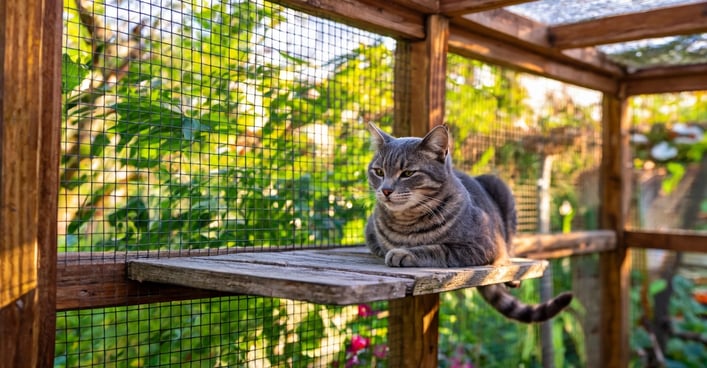
Outdoor Cat Enclosures: The 2026 Guide to Catios and Safe Outdoor Access
Discover how to build or buy the perfect catio. Our guide covers designs, safety, and costs to give your indoor cat safe, enriching outdoor time.
Share this page
Outdoor Cat Enclosures: The 2026 Guide to Catios and Safe Outdoor Access
Indoor cats enjoy longer, safer lives, but they often miss the sensory stimulation of the outdoors. An outdoor cat enclosure, or "catio," provides the perfect solution: fresh air, sunshine, and enrichment without the risks of free roaming.
This definitive guide covers everything from simple window boxes to elaborate backyard structures, empowering you to create a secure outdoor haven for your feline friend.
Why Catios Are Essential for Modern Cat Care
Key Benefits of Outdoor Enclosures
Physical Health:
Promotes increased exercise and activity
Provides natural sunlight for Vitamin D synthesis
Ensures fresh air circulation
Offers space for essential climbing and jumping behaviors
Aids in healthy weight maintenance
Mental Wellbeing:
Delivers visual stimulation (birds, insects)
Provides sensory enrichment (sounds, smells)
Significantly reduces boredom and associated stress
Outdoor Cat Enclosures: The 2026 Guide to Catios and Safe Outdoor Access - Articles
Enhances overall quality of life
Unmatched Safety vs. Free Roaming:
Eliminates traffic danger
Removes risk from predators (coyotes, dogs, birds of prey)
Prevents fight-related injuries
Avoids exposure to contagious diseases (FIV, FeLV, rabies)
Protects against poisoning from toxins (antifreeze, pesticides)
Eliminates the risk of theft or loss
Supporting Statistics
Lifespan Comparison:
Indoor cats: 12-20 years average lifespan
Outdoor cats: 2-5 years average lifespan
Catio cats: Enjoy the best of both—enrichment with safety, bridging the lifespan gap.
Common Outdoor Dangers Prevented by Catios:
Vehicles: The leading cause of death for outdoor cats.
Predators: Including coyotes, loose dogs, and raptors.
Diseases: Such as Feline Immunodeficiency Virus (FIV) and Feline Leukemia (FeLV).
Parasites: Fleas, ticks, and intestinal worms.
Toxins: Antifreeze, rodenticides, and pesticides.
Human Cruelty: An unfortunate risk for unsupervised cats.
Types of Catios: Finding Your Perfect Fit
1. Window Box Catios
Description:
A compact enclosure that attaches directly to a window frame, extending outward from the house.
Best For:
Apartment dwellers and renters
Those with limited budgets or space
Single-cat households
First-time DIY projects
Cost Range:
DIY: $100 - $300
Pre-made Kit: $300 - $800
Custom Built: $500 - $1,500
Pros
Cons
Doesn't require yard space
Limited space for movement
Relatively simple installation
Can partially block the window
Most affordable option
Full exposure to weather elements
Ideal for small spaces
Typically only one entry/exit point
2. Balcony Catios
Description:
Utilizes an existing balcony by adding secure mesh or screening to the railings, often with a roof.
Best For:
Apartment/condo residents with balcony access
Households with multiple cats
Those with a moderate budget
Cost Range:
DIY: $200 - $600
Pre-made Kit: $500 - $1,500
Professional Installation: $1,000 - $3,000
Pros
Cons
Makes excellent use of existing space
Requires explicit landlord approval
More spacious than window boxes
Must consider balcony weight limits & structure
Room for shelves and perches
Can be fully exposed to sun, wind, and rain
Often provides excellent views
Difficult to expand beyond balcony footprint
3. Porch or Patio Conversions
Description:
Fully encloses an existing covered porch or patio with durable screening or mesh.
Best For:
Homeowners with an existing covered structure
Multi-cat households
Families who want to share the space with their cats
Cost Range:
DIY: $500 - $2,000
Professional: $2,000 - $8,000
Pros
Cons
Provides a large, usable area
Requires a solid existing structure
Built-in protection from rain and sun
Higher upfront cost
Allows for human furniture and shared time
May affect home's curb appeal
Easily accommodates many enrichment features
Often requires a building permit
4. Freestanding Yard Catios
Description:
A standalone structure placed anywhere in your yard, connected to the house via a tunnel or walkway.
Best For:
Homeowners with available yard space
Those wanting maximum customization
Permanent, feature-rich installations
Cost Range:
DIY: $300 - $2,000
Kit: $500 - $3,000
Custom Professional: $2,000 - $10,000+
Pros
Cons
Virtually unlimited size potential
Requires dedicated yard space
Complete design and feature customization
Needs a tunnel or connection to the house
Can include catwalks, trees, and ponds
Higher cost for larger sizes
Does not alter the home's structure
Must plan for weather exposure (snow load, wind)
5. Tunnel Connection Systems
Description:
Secure, enclosed tunnels that link the house to a catio or connect multiple enclosures.
Best For:
Creating "cat highways" to distant enclosures
Adding flexible access points
Enhancing an existing setup
Cost Range:
DIY per section: $50 - $200
Pre-made per section: $100 - $400
Pros
Cons
Allows highly flexible routing
Length limited by available space
Dramatically expands territory
Must be impeccably secured to prevent predator access
Provides mental stimulation and exercise
Can be challenging to clean
Can be added to any setup at any time
May require creative support structures
Critical Design Considerations
Space & Size Guidelines
Minimum Floor Space:
One cat: 3' x 4' (12 sq ft) minimum
Two cats: 4' x 6' (24 sq ft) minimum
Each additional cat: Add +20 sq ft
Height: A minimum of 6 feet is essential; 8+ feet is preferred to allow for full vertical climbing.
Multi-Level Design: Incorporating shelves, ramps, and perches at different heights effectively doubles the usable space and is crucial for feline happiness.
Essential Safety & Comfort Features
Secure Enclosure Material: Use 1/2" x 1/2" galvanized wire mesh (16-19 gauge) or heavy-duty pet screen. Ensure no gaps exceed 1 inch.
Sturdy Roof: A must for protection from predators (raccoons, birds of prey) and weather. Options include mesh, polycarbonate panels, or solid roofing.
Multiple Access Points: Include a secure, double-door entry system or self-closing gate to prevent escapes.
Weather Protection: Design must include shaded areas, rain cover, and optionally, an insulated shelter for temperature extremes.
For Cats: Mounted toys, a view of outdoor bird feeders, cat grass, or a shallow water feature.
For Humans: Seating, lighting, storage, ceiling fans, or safe outdoor heaters for year-round enjoyment together.
Material Selection Guide
Frame Materials
Material
Pros
Cons
Approx. Cost
Cedar/Redwood
Naturally rot-resistant, attractive
Requires periodic sealing
$2 - $8 / linear ft
Pressure-Treated Lumber
Rot and insect resistant, affordable
Contains chemicals; seal before use
$3 - $7 / linear ft
Aluminum
Lightweight, rust-proof, low maintenance
Higher initial cost, less DIY-friendly
$5 - $12 / linear ft
PVC
Lightweight, easy to cut/assemble, affordable
Can become brittle in UV/sun over time
$1 - $3 / linear ft
Mesh & Screening Options
Type
Best For
Durability
Approx. Cost
Galvanized Wire Mesh (1/2")
Maximum security; predator-proof
Excellent (10-15+ years)
$0.50 - $1.50 / sq ft
Stainless Steel Mesh
Ultimate durability; coastal climates
Superior (20+ years)
$2 - $4 / sq ft
Heavy-Duty Pet Screen
Better visibility, good for porches
Good (5-10 years)
$1 - $2 / sq ft
Chicken Wire (Not Recommended)
-
Poor; rusts quickly, easily breached
$0.20 - $0.50 / sq ft
Flooring Options
Concrete/Patio Stones: Durable and easy to clean. Add outdoor rugs or pads for comfort.
Wood/Composite Decking: Provides good drainage and a paw-friendly surface.
Artificial Turf: Soft, low-maintenance, and provides a grass-like feel.
Natural Grass/Soil: Cats love it but requires drainage and can become muddy.
DIY Catio Building: Getting Started
Simple Window Box Catio Project
Materials List:
2x2 lumber (cedar or pressure-treated)
1/2" galvanized wire mesh
Exterior wood screws & L-brackets
Hinges and a secure latch for the access door
Exterior-grade wood stain or sealer
Basic Construction Steps:
Precisely measure your window and sketch a design.
Cut lumber to build a rectangular floor frame.
Assemble wall frames and attach them to the floor frame.
Staple or screw wire mesh securely to all exterior sides.
Build and attach a framed roof (mesh or solid).
Construct and hang an access door with secure latches.
Mount the entire box securely to the house using lag bolts.
Add interior shelves or perches.
Project Snapshot:
Time: 1-2 days
Skill Level: Beginner to Intermediate
Estimated Cost: $150 - $400
Pre-Made Kits & Professional Services
Top-Rated Catio Solutions for 2026
Catio Spaces DIY Plans: Offers detailed, purchasable plans for various styles. You buy the materials locally.
Habitat Haven: Known for modular, expandable kits made with high-quality materials.
Kritter Kondo: Provides more portable and easy-to-assemble options, great for beginners.
Custom Catio Companies: Local or national specialists who handle design, permits, and installation.
Choosing a Quality Product
Look For:
Heavy-duty, small-gauge mesh (1/2" or smaller)
Sturdy frame construction (wood or metal)
Weather-resistant finishes and materials
Secure, locking latches on all doors
Positive customer reviews and warranties
Avoid:
Flimsy, lightweight framing
Large mesh gaps (over 1")
Plastic "netting" that can tear
Poorly reviewed or unproven kits
Non-Negotiable Safety Features
Predator & Escape Proofing
Bury Mesh: Extend wire mesh 12-18 inches underground around the perimeter to prevent digging.
Secure Roof: The roof must be as secure as the walls. Predators can climb and raccoons can open simple latches.
Door Security: Use locking carabiner-style clips or barrel bolts in addition to standard latches. A double-door "airlock" system is ideal.
Regular Inspections: Check weekly for any holes, loose mesh, or compromised fasteners.
Weather Safety
Heat: Provide ample shade, ventilation, and always have fresh water. Never leave a cat in a catio during extreme heat advisories.
Cold: Include an insulated, waterproof shelter with straw or a heated bed (with a pet-safe cover). Limit time during freezing temperatures.
Rain/Snow: Ensure part of the catio has a solid roof and that the floor has proper drainage.
Cost Breakdown & Budgeting
DIY Cost Estimates
Example: Freestanding 6' x 8' Catio
Item
Estimated Cost
Lumber & Posts (Frame)
$200 - $400
Wire Mesh (Walls & Roof)
$100 - $200
Roofing Material (Corrugated Panels)
$150 - $300
Hardware, Hinges, Latches
$50 - $100
Flooring (Decking or Gravel)
$100 - $300
Shelves, Perches, Accessories
$100 - $200
Total Estimated Range
$700 - $1,500
Professional Installation Costs
Basic Structure: $3,000 - $6,000
Mid-Range with Features: $6,000 - $12,000
High-End Custom Design: $12,000 - $25,000+
Annual Maintenance Costs
Item
Estimated Annual Cost
Cleaning Supplies & Repairs
$50 - $150
Replacement Parts/Mesh
$50 - $200
Seasonal Add-ons (Heated pad, shade cloth)
$30 - $100
Plants/New Enrichment Items
$30 - $100
Total Annual Estimate
$160 - $550
Legal & Practical Considerations
Permits: Always check with your local building department. Many permanent structures over a certain size require a permit.
HOA/Rental Rules: Review Covenants, Conditions, and Restrictions (CC&Rs) or your lease agreement. For rentals, get written permission.
Property Lines: Build well within your property lines, respecting local setback requirements.
Neighbor Courtesy: Consider the visual impact. A well-maintained, attractive catio is less likely to cause issues.
Frequently Asked Questions (FAQ)
Q: How big does a catio really need to be?A: While a 3'x4' space is a minimum, think vertically. A 6' tall enclosure with multiple shelves provides more usable space than a large, single-level area. Bigger is always better for feline enrichment.
Q: Are catios truly escape-proof?A: Yes, if constructed correctly. The key is using 1/2" mesh securely fastened to a sturdy frame with no gaps, combined with locking door hardware. Regular maintenance checks are crucial.
Q: Will my cat use it in the winter?A: Most cats will, even in cold weather, for short periods. Providing an insulated, draft-free shelter with a warm bed is essential for winter use. Always monitor your cat and bring them in during extreme cold.
Q: How do I introduce my cat to the catio?A: Start slowly. Place their favorite blanket, treats, and toys inside. Let them explore at their own pace with the house door open. Most cats are naturally curious and will adapt quickly.
Q: Is a catio predator-proof?A: A properly built one is. It must defend against threats from all sides: strong mesh for walls, a secure roof for climbers like raccoons, and buried mesh or an apron to stop diggers like foxes.
Conclusion
Investing in a catio is one of the most impactful decisions you can make for your indoor cat's wellbeing. It fulfills their innate desire to explore and connect with nature while keeping them safe from the numerous dangers of free roaming.
Whether you start with a modest window box or dream of a custom backyard paradise, the benefits—a happier, healthier, more stimulated cat—are immediate and profound. Begin by assessing your space, budget, and your cat's personality. With planning and the right materials, you can create an outdoor sanctuary that will enrich your cat's life for years to come.
Disclaimer: Always prioritize safety. Use non-toxic materials, ensure all construction is secure before allowing cat access, and comply with all local building codes and regulations. Consult a professional for structural concerns.
Get expert advice about cat care, behavior, nutrition, grooming, and training. Ask our AI cat care expert anything about your cat and receive professional guidance.