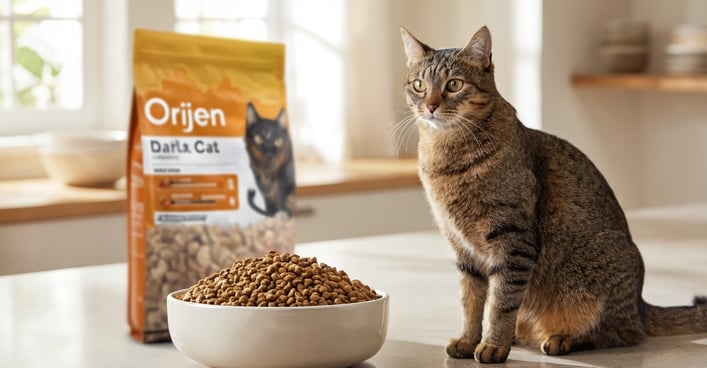
Orijen Cat Food Review 2026: In-Depth Analysis of Ingredients, Nutrition & Value
A comprehensive 2026 review of Orijen's premium cat food. We analyze ingredients, nutrition, cost, and real-world results to determine if it's worth the investment for your cat.
Share this page
Orijen Cat Food Review 2026: In-Depth Analysis of Ingredients, Nutrition & Value
Orijen stands as a pinnacle in the premium cat food market, renowned for its "Biologically Appropriate" philosophy and exceptionally high meat content. Manufactured by Champion Petfoods in state-of-the-art kitchens in Canada and Kentucky, Orijen commands a premium price. This detailed 2026 review analyzes whether the brand's promises align with its performance and value for discerning cat owners.
Brand Philosophy and History
Company Background
Founded in 1985 in Alberta, Canada, Champion Petfoods launched Orijen as its flagship brand. The core "Biologically Appropriate" philosophy is designed to mirror the natural diet of cats—emphasizing fresh, diverse meats in quantities a cat would consume in the wild.
Core Principles
Biologically Appropriate Standards:
Exceptionally rich in animal-based protein
High inclusion of fresh and raw meats
Diverse variety of meat sources (often 5+ per recipe)
WholePrey ratios (incorporating muscle meat, organs, and cartilage)
Ingredients sourced from trusted, regional suppliers
Fresh ingredients delivered daily to their kitchens
Manufacturing is never outsourced
Company-owned and operated facilities in Canada and Kentucky ensure quality control
2026 Product Line Overview
1. Orijen Original Cat
Price Range (2026): $38-$58 per 4 lb bag, $68-$98 per 12 lb bag
The flagship formula, featuring free-run chicken and turkey, wild-caught fish, and cage-free eggs.
Guaranteed Analysis:
Crude Protein (Min): 40%
Crude Fat (Min): 20%
Crude Fiber (Max): 3%
Moisture (Max): 10%
Ash (Max): 8%
Key Features:
90% quality animal ingredients
10% vegetables, fruits, and botanicals
0% grains, gluten, potato, or tapioca
Includes fresh and raw meats
Formulated with WholePrey ratios
First Five Ingredients:
Chicken
Turkey
Whole Mackerel
Turkey Giblets (Liver, Heart, Gizzard)
Flounder
Pros:
Uncompromising ingredient quality and transparency
Very high protein from named animal sources
Absolutely no filler ingredients like corn or wheat
Cats typically find it highly palatable
Cons:
Significant investment, placing it in the ultra-premium price tier
High calorie density requires careful portion control
The rich formula may initially upset sensitive stomachs
Potent aroma may be off-putting to some owners
Overall Rating: 4.6/5
2. Orijen Regional Red Cat
Price Range (2026): $40-$62 per 4 lb bag, $72-$105 per 12 lb bag
A protein-rich formula featuring ranch-raised beef, wild boar, bison, goat, and lamb.
Guaranteed Analysis:
Protein: 40% (Min)
Fat: 20% (Min)
Fiber: 3% (Max)
Moisture: 10% (Max)
Key Features:
90% quality animal ingredients
Features multiple novel red meat sources
Ideal for rotational feeding to prevent protein boredom
Extremely nutrient-dense
First Five Ingredients:
Beef
Wild Boar
Goat
Lamb
Beef Liver
Pros:
Excellent variety of novel proteins
Perfect for cats with poultry sensitivities
Maintains the brand's high meat content standard
Cons:
Priced higher than the Original formula
Can be too rich for some cats
The distinct smell is noticeable
Overall Rating: 4.5/5
3. Orijen Six Fish Cat
Price Range (2026): $40-$62 per 4 lb bag, $72-$105 per 12 lb bag
A fish-centric formula with six different wild-caught fish species.
Guaranteed Analysis:
Protein: 40% (Min)
Fat: 20% (Min)
Fiber: 3% (Max)
Moisture: 10% (Max)
Key Features:
90% quality fish ingredients
Six wild-caught fish species provide variety
Naturally high in omega-3 fatty acids
Promotes excellent skin and coat health
First Five Ingredients:
Whole Atlantic Mackerel
Whole Atlantic Herring
Whole Acadian Redfish
Whole Atlantic Flounder
Whole Monkfish
Pros:
Exceptional source of omega-3s for skin and coat
Provides novel protein options
Highly palatable for fish-loving felines
Cons:
Some veterinary concerns about fish-heavy diets long-term
Very potent fish odor
Premium price point
Not all cats enjoy fish flavors
Overall Rating: 4.4/5
4. Orijen Fit & Trim Cat
Price Range (2026): $38-$58 per 4 lb bag, $68-$98 per 12 lb bag
A lower-calorie formula scientifically designed for healthy weight management.
Guaranteed Analysis:
Protein: 44% (Min)
Fat: 15% (Min)
Fiber: 6% (Max)
Moisture: 10% (Max)
Key Features:
Higher protein, lower fat profile
Increased fiber for satiety and digestive health
Includes L-carnitine to support healthy metabolism
85% quality animal ingredients
Pros:
Effective for weight management while preserving lean muscle
Maintains high protein levels to prevent muscle loss
Increased fiber helps cats feel full
Cons:
Priced similarly to regular formulas
Increased fiber may not suit every cat's digestion
Still requires strict portion control
Overall Rating: 4.5/5
5. Orijen Kitten Formula
Price Range (2026): $38-$58 per 4 lb bag
Specially formulated to support the rapid growth and development of kittens.
Guaranteed Analysis:
Protein: 40% (Min)
Fat: 20% (Min)
Fiber: 3% (Max)
Moisture: 10% (Max)
Key Features:
Enhanced with DHA and EPA for brain and vision development
Higher calorie density to fuel growth
Small, easy-to-chew kibble size
90% quality animal ingredients
Overall Rating: 4.6/5
6. Orijen Senior Formula
Price Range (2026): $38-$58 per 4 lb bag
Nutrition tailored to the changing needs of older cats.
Guaranteed Analysis:
Protein: 40% (Min)
Fat: 15% (Min)
Fiber: 4% (Max)
Moisture: 10% (Max)
Key Features:
Controlled calorie content to maintain a healthy weight
Includes ingredients for joint support
Highly digestible formula
85% quality animal ingredients
Overall Rating: 4.4/5
Deep Dive: Ingredient Analysis
Meat Content and Quality
Fresh & Raw Meat Inclusion: Orijen prioritizes fresh (refrigerated) and raw (flash-frozen) meats, which often make up two-thirds of the animal ingredients. This method aims to preserve natural nutrients.
Meat Diversity: Formulas typically include 5+ different animal sources, offering:
A broad spectrum of amino acids
Exposure to novel proteins, which may benefit cats with sensitivities
Nutritional completeness from varied sources
Enhanced palatability
WholePrey Philosophy: Ingredients are included in ratios mimicking a cat's natural prey:
Muscle meat for protein
Organs (liver, heart, kidney) for vitamins and minerals
Cartilage and bone for natural glucosamine and chondroitin
Carbohydrate Content
Low-Carbohydrate Approach:
Contains no grains, white potatoes, or tapioca
Carbohydrates are derived from low-glycemic sources like:
Note on Raw/Homemade Diets: While Orijen is a top-tier kibble, it does not fully replicate the benefits of a properly formulated raw or high-moisture wet food diet, primarily due to processing and lower moisture content. However, it is a superior choice among dry foods.
2026 Cost Analysis & Value Assessment
Estimated Monthly Feeding Cost (10 lb Adult Cat)
Formula
Daily Amount
Estimated Monthly Cost
Orijen Original
1/3 cup
$48 - $70
Regional Red
1/3 cup
$52 - $75
Six Fish
1/3 cup
$52 - $75
Fit & Trim
1/3 cup
$48 - $70
Annual Cost Projection:
Single Cat: $575 - $900
Two Cats: $1,150 - $1,800
Three Cats: $1,725 - $2,700
What Your Money Buys:
Premium, regionally-sourced ingredients
Exceptionally high meat content with named sources
Zero filler ingredients (corn, wheat, soy)
Investment in in-house manufacturing and rigorous R&D
High nutrient density can lead to smaller feeding portions
Customer Feedback & Reviews Summary
Positive Experiences (~80%)
"My cat's coat transformed—incredibly soft and shiny within weeks."
"Noticed a significant boost in energy and playful behavior."
"Even my pickiest eater devours it."
"Stool volume decreased noticeably, a sign of high digestibility."
"Worth the investment for my cat's vibrant health."
Common Criticisms (~15%)
"The price is a barrier for my multi-cat household."
"Required a very slow transition to avoid digestive upset."
"My cat simply refused to eat it."
"The smell is very strong compared to other foods."
Advantages and Disadvantages
Key Advantages
Ingredient Integrity: Named meats, fresh/raw inclusions, no by-products, and transparent sourcing.
Nutritional Superiority: Very high protein, low carbs, and diverse nutrients from the WholePrey approach.
Manufacturing Control: Company-owned kitchens ensure consistent quality and safety.
Observed Health Benefits: Commonly reported improvements in coat quality, energy, weight management, and digestive efficiency.
Notable Disadvantages
Cost: Positioned at the highest price point for dry food, potentially prohibitive.
Availability: Primarily found online or in specialty stores, not all major retailers.
Richness: The high-fat, protein-dense formula can be too much for cats with sensitive systems.
Practicalities: Strong odor, calorie density requires precise measuring, and occasional bag dust.
Veterinary Perspective
Generally Positive Viewpoints:
Vets often commend Orijen for its high animal protein content, quality ingredients, low carbohydrate formulation, and overall transparency.
Common Cautions:
The cost may not be justifiable for every cat or budget.
A gradual transition is critical to avoid gastrointestinal issues.
The veterinary consensus still strongly favors wet food for its higher moisture content, which is crucial for urinary and kidney health.
The Bottom Line: Orijen is considered an excellent choice within the dry food category for healthy cats whose owners are committed to a kibble-based diet.
Feeding Guidelines for 2026
Essential Transition Protocol
Due to its richness, a slow transition over 3-4 weeks is non-negotiable:
Week 1: Mix 25% Orijen with 75% current food.
Week 2: Mix 50% Orijen with 50% current food.
Week 3: Mix 75% Orijen with 25% current food.
Week 4: Transition to 100% Orijen.
Portion Control Guidelines
Average Adult Cat (10 lbs): Approximately 1/3 to 1/2 cup per day, split into at least two meals. Always adjust based on your cat's individual activity level and body condition score.
Kittens: Require more frequent, calorie-dense meals—typically 2-3 times the amount of an adult cat, split into 3-4 meals daily.
Final Verdict & Recommendations
Overall Rating: 4.6 / 5 Stars
Orijen sets the benchmark for premium dry cat food in 2026. Its commitment to high-quality, biologically appropriate ingredients is evident in its formulations and the positive results many cats experience.
Best Suited For:
Cat owners who prioritize ultra-premium ingredient quality above cost.
Households with one or two cats where the budget allows.
Cats that thrive on high-protein, low-carbohydrate diets.
As a supplement to a diet that includes high-quality wet food.
May Not Be the Ideal Choice For:
Multi-cat households on a strict budget.
Cats with historically sensitive stomachs or pancreatitis.
Owners who are able and willing to feed a complete raw or high-moisture wet food diet.
Those seeking the most cost-effective premium option.
Where to Buy Orijen in 2026
Recommended Retailers:
Chewy.com: Consistently reliable stock and auto-ship discounts.
Local Independent Pet Stores: Often provide personalized service.
Purchase the largest bag size your storage allows for a lower cost per pound.
Utilize subscription services for recurring discounts.
Monitor for seasonal sales and promotions.
Frequently Asked Questions (2026)
Q: Is Orijen truly worth its high price tag?A: For owners committed to feeding dry food and who value top-tier ingredients, yes. The nutritional density and quality are exceptional. However, combining a quality wet food with a less expensive dry food can also yield excellent health outcomes at a lower cost.
Q: Can I feed Orijen as my cat's sole diet?A: While it is nutritionally complete, cats have a low thirst drive and benefit greatly from dietary moisture. For optimal health, Orijen should be supplemented with wet food or have water added to the kibble.
Q: Why is my cat's stool smaller and less odorous on Orijen?A: This is a sign of high digestibility. With more nutrients being absorbed and utilized by your cat's body, there is less waste material, resulting in smaller, firmer, and less smelly stools.
Q: Is Orijen good for cats with food allergies?A: It depends. The variety of proteins can be beneficial for some cats with sensitivities, but for a cat with a known allergy to a specific protein (e.g., chicken), a true limited-ingredient diet is a safer choice.
Q: How does Orijen compare to a raw food diet?A: Orijen is an excellent high-quality kibble, but it does not fully replicate a balanced raw diet. The extrusion process involves heat, which can degrade some nutrients, and the moisture content is far lower. Think of Orijen as the closest dry-food alternative to raw, not a direct replacement.
Review Updated: 2026 | Always consult your veterinarian before making significant changes to your cat's diet and ensure any transition is done gradually over several weeks.
Get expert advice about cat care, behavior, nutrition, grooming, and training. Ask our AI cat care expert anything about your cat and receive professional guidance.