Oriental Shorthair vs Siamese: A Complete 2026 Comparison of Sleek, Vocal Companions
Discover the key differences and striking similarities between Oriental Shorthairs and Siamese cats. Learn which elegant, talkative feline best suits your lifestyle.
Share this page
Oriental Shorthair vs Siamese: A Complete 2026 Comparison of Sleek, Vocal Companions
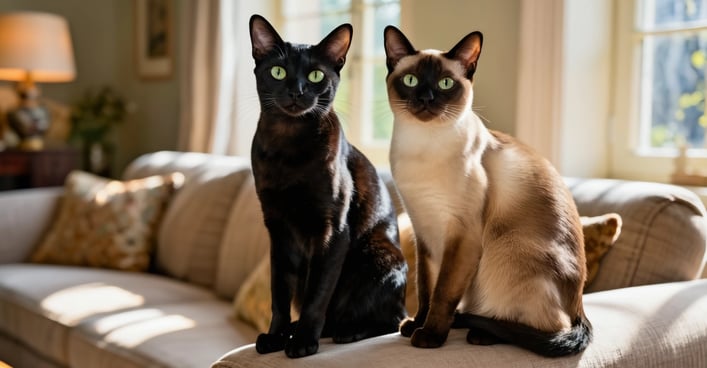
Oriental Shorthair and Siamese cats are two sides of the same elegant coin. They share a deep genetic heritage, offering the same slender physique, large ears, and famously vocal, people-oriented personalities. The primary distinction lies in their coat: Siamese cats are known for their distinctive color points, while Orientals come in a dazzling array of over 300 solid and patterned colors. This guide will help you understand their nuances to choose the perfect sleek companion for your home.
Shared Genetic Heritage
These breeds are closely related, with the Oriental Shorthair developed from the Siamese foundation to showcase non-pointed colors.
Breed Relationship at a Glance
Origin: Both originate from Thailand (formerly Siam).
Development: The Oriental Shorthair was created by breeding Siamese cats with other shorthairs to introduce new colors while retaining the Siamese body type.
Body Type: Identical—long, slender, tubular, and graceful.
Recognition: The Cat Fanciers' Association (CFA) recognized the Siamese in 1906 and the Oriental Shorthair in 1977.
Nickname: The Oriental is often called the "Siamese in designer colors."
An Oriental Shorthair is essentially a Siamese in terms of body structure and core personality—the defining difference is coat color and pattern.
Pattern: Color-pointed only (darker color on the face, ears, paws, and tail).
Common Colors: Seal, Chocolate, Blue, and Lilac points.
Body Color: Light, cream-colored body that contrasts with the darker points.
Varieties: Comes in both Traditional ("applehead") and Modern ("wedge") types.
Oriental Shorthair:
Pattern: Every color and pattern except the pointed pattern.
Colors: Over 300 color and pattern combinations.
Common Patterns: Solid, tabby, smoke, shaded, particolor, and bicolor.
Body Color: Consistent color throughout the body.
Color Comparison:
Siamese Point Colors
Oriental Solid Colors
Seal point
Ebony (black)
Chocolate point
Chestnut (chocolate)
Blue point
Blue
Lilac point
Lavender (lilac)
(Pointed only)
White
Red/Cinnamon
Fawn, Cinnamon, and 300+ more
Head and Face Comparison
Feature
Traditional Siamese
Modern Siamese
Oriental Shorthair
Head Shape
Moderate, rounded
Extreme wedge
Wedge
Nose
Medium length
Very long
Long
Profile
Slight curve
Straight
Straight
Eyes
Round, blue only
Almond-shaped, blue only
Almond-shaped, any color (green is common)
Ears
Medium
Very large
Very large
Note: Modern Siamese and Oriental Shorthairs share an extremely similar head type.
Temperament & Personality
Shared Core Personality Traits
Both breeds are renowned for being:
Extremely people-oriented and form strong bonds.
Highly intelligent and curious problem-solvers.
Demanding of attention and interaction.
Vocal communicators with a wide range of sounds.
Playful and energetic well into their senior years.
Loyal to their families.
Social and prone to loneliness without companionship.
Detailed Temperament Profile
Activity Level (9/10):
Constantly in motion and love to explore.
Often follow their owners from room to room.
Enjoy "helping" with household tasks and getting into everything.
Affection Style (10/10):
True "Velcro cats" that crave physical closeness.
Often lap cats and enjoy sleeping under the covers.
Demand to be involved in all family activities.
Vocalization (9-10/10):
Possess a loud, distinctive voice and a wide vocabulary.
Are highly conversational and will vocalize their needs and opinions.
The Siamese's talkative nature earned them the nickname "Meezer."
Intelligence (9/10):
Excellent problem-solvers; can learn tricks and open doors.
Easily bored without mental stimulation.
Use their intelligence to communicate specific desires.
Temperament Comparison Table
Trait
Siamese
Oriental Shorthair
Affection Level
10/10
10/10
Activity Level
9/10
9/10
Vocalization
10/10
9/10
Intelligence
9/10
9/10
Independence
1/10
1/10
Playfulness
9/10
9/10
Child-Friendly
8/10
8/10
Pet-Friendly
6/10
7/10
Summary: Their personalities are nearly identical, with both breeds being affectionate, active, and communicative.
Care & Maintenance
Grooming Needs
Both Breeds:
Coat: Short, fine, and close-lying.
Shedding: Minimal.
Brushing: A weekly brushing is sufficient to remove loose hair.
Bathing: Rarely needed; both breeds are fastidious self-groomers.
Exercise & Enrichment
Essential for both breeds:
Multiple interactive play sessions daily.
Puzzle feeders and treat-dispensing toys for mental stimulation.
Access to vertical space like cat trees and shelves.
Consistent human companionship and engagement.
Companionship: A Critical Need
Cannot be left alone for long hours; prone to separation anxiety.
Ideally, have another pet (often another cat of a similar breed) or a person at home during the day.
Thrive in environments where they are constant companions.
Health & Lifespan
Siamese Health Considerations
Respiratory Issues: Modern (wedge-type) Siamese can be more prone to asthma and upper respiratory sensitivity.
Dental Disease: A predisposition to gingivitis; regular dental care is crucial.
Amyloidosis: A genetic condition affecting the liver and kidneys.
Traditional Traits: Crossed eyes and kinked tails were once common in traditional types but are less frequent and generally harmless.
Average Lifespan: 12-16 years (traditional types often live longer).
Oriental Shorthair Health Considerations
Shared Risks: Due to their genetic link, Orientals share many Siamese health concerns, including amyloidosis and dental issues.
Liver Amyloidosis: May be slightly more prevalent in Orientals; genetic testing is available.
Heart Conditions: Screening for Hypertrophic Cardiomyopathy (HCM) is recommended.
Average Lifespan: 12-15 years.
Health Summary
Factor
Siamese
Oriental Shorthair
Overall Health
Good
Good
Amyloidosis Risk
Present
Slightly Higher
Respiratory Concerns
More in modern type
Less of a concern
Dental Health
Prone to issues
Prone to issues
Typical Lifespan
12-16 years
12-15 years
Cost of Ownership
Initial Costs (Kitten/Adult)
Expense
Siamese
Oriental Shorthair
Kitten (Pet Quality)
$600 - $1,200
$600 - $1,200
Kitten (Show Quality)
$1,000 - $2,000
$1,000 - $2,000
Adult Cat (Rescue/Rehome)
$300 - $800
$300 - $800
Estimated Annual Costs (For Either Breed)
Expense
Estimated Cost
High-Quality Food
$600 - $900
Routine Veterinary Care
$400 - $700
Preventative Dental Care
$100 - $300
Toys, Scratching Posts, Enrichment
$150 - $250
Annual Total
$1,250 - $2,150
Pros and Cons
Shared Advantages
✅ Intelligent & Interactive: Engaging companions that learn tricks and provide endless entertainment.
✅ Deeply Affectionate: Devoted "Velcro" pets that love to cuddle and be involved in your life.
✅ Strikingly Elegant: Possess a sleek, graceful body type with large ears and expressive eyes.
✅ Lifelong Playfulness: Maintain a kitten-like zest for life and play well into their senior years.
Shared Disadvantages
❌ Highly Demanding: Require significant attention and interaction; not a low-maintenance pet.
❌ Extremely Vocal: Their loud, frequent conversations are not suited for very quiet homes or thin-walled apartments.
❌ Prone to Loneliness: Suffer from separation anxiety and should not be left alone for extended periods.
❌ Specific Needs: Siamese have limited color options, while Orientals offer an almost overwhelming variety.
Which Breed Is Right for You?
Choose a Siamese If You:
Love the classic pointed color pattern and striking blue eyes.
Appreciate the breed's long history and traditional recognition.
Prefer having fewer, more defined color choices.
Are drawn to either the traditional "applehead" or modern "wedge" look.
Choose an Oriental Shorthair If You:
Desire incredible color and pattern variety (over 300 options!).
Prefer eye colors other than blue (green is most common).
Are attracted to a unique, less common breed with a "designer" appeal.
Want a solid, tabby, smoke, or bicolor coat on a Siamese-style body.
The Bottom Line: The Main Decision Factor
The only significant difference is appearance.
Beyond coat color, pattern, and eye color, these breeds are essentially identical in:
Body type and structure
Core personality and temperament
Daily care and enrichment needs
Common health considerations
Vocalization and activity levels
Your choice should ultimately come down to which look you find most captivating.
Special Considerations for Potential Owners
For Busy or Working Households
Important Note: Neither breed is ideal for:
Owners who work long hours outside the home.
Individuals who travel frequently.
Single-person households with very busy schedules.
Potential Solutions:
Adopt two kittens/cats together (they often bond well).
Ensure someone is home during the day (e.g., work-from-home arrangements).
Hire a reliable pet sitter for daily visits if you are away.
If your lifestyle is very busy, consider a more independent breed.
For Families with Children
Both breeds can be excellent with children, provided that:
The children are taught to handle cats gently and respectfully.
The household is active and engaged.
The cat has a safe space to retreat to when needed.
Finding a Reputable Breeder
Essential Questions to Ask Any Breeder
Do you perform genetic testing for amyloidosis and screen for HCM?
What is the dental health history of the parent cats?
Can I meet the parent cats to assess their temperament?
Are registration papers (TICA, CFA) provided?
What does your health guarantee cover?
Do you require kittens to be kept indoors?
Major Red Flags to Avoid
Breeders who allow their cats to live or roam outdoors.
An unwillingness to share health records or genetic testing results.
Catteries that breed an excessive number of different breeds.
Immediate availability of multiple litters and kittens.
Prices that seem unusually low for a purebred, health-tested kitten.
Last Updated: 2026 | Both the Oriental Shorthair and Siamese thrive as indoor-only cats in homes with engaged, interactive owners who cherish a vocal and devoted companion.
Get expert advice about cat care, behavior, nutrition, grooming, and training. Ask our AI cat care expert anything about your cat and receive professional guidance.