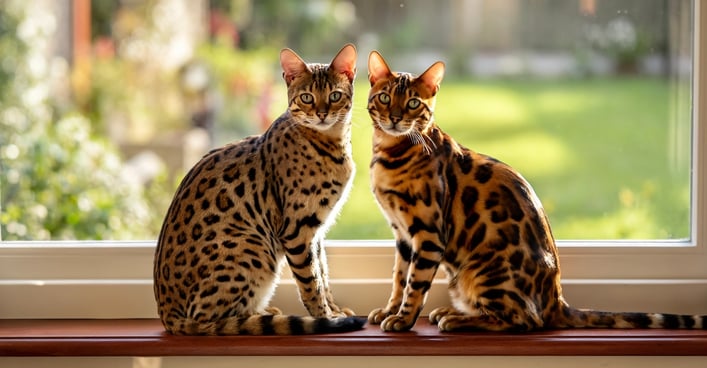
Choosing between an Ocicat and a Bengal? Compare their origins, personality, care needs, and costs to find the perfect spotted companion for your lifestyle.
Share this page
Ocicat vs Bengal Cat: 2026 Breed Comparison Guide
For cat lovers captivated by the allure of a wild-looking spotted coat, the Ocicat and Bengal stand out as two of the most popular choices. While they share a visually stunning aesthetic, these breeds have fundamentally different origins, temperaments, and care requirements. This definitive guide provides a detailed, side-by-side comparison to help you determine which of these magnificent felines is the right fit for your home.
Breed Origins and History
Ocicat Origins
The Ocicat is a fascinating example of a happy genetic accident. In 1964, breeder Virginia Daly aimed to create an Abyssinian-pointed Siamese. Instead, she produced a kitten with a stunning ivory coat and golden spots, reminiscent of a wild ocelot—despite having zero wild ancestry. This breed is the result of intentional domestic crosses:
Initial Cross: Abyssinian × Siamese
Later Addition: American Shorthair (for silver colors and a more substantial build)
Ocicat vs Bengal Cat: 2026 Breed Comparison Guide - Articles
Key Facts:
100% domestic cat breed
Named for its resemblance to the Ocelot
No wild cat DNA in its lineage
Recognized for its unique, spotted coat pattern
Bengal Cat Origins
In contrast, the Bengal was a deliberate hybrid creation, pioneered by Jean Mill in the 1960s and 70s. The breed was developed by crossing:
Wild Ancestor: The Asian Leopard Cat (Prionailurus bengalensis)
Domestic Cats: Egyptian Mau, Abyssinian, and others
Key Facts:
A hybrid breed with confirmed wild ancestry
Considered fully domestic at the fourth generation (F4) and beyond
Bred specifically for an exotic, wild appearance
Often retains some instinctual, wild-type behaviors
Physical Appearance Comparison
Size and Build
Feature
Ocicat
Bengal
Weight (Male)
9-15 pounds
10-18 pounds
Weight (Female)
6-9 pounds
8-12 pounds
Body Type
Athletic, well-muscled, substantial
Sleek, muscular, powerfully athletic
Legs
Medium length, powerful
Medium, very muscular
Overall Impression
Graceful yet solid
Rugged, dynamic, and wild-looking
Coat and Coloration
Ocicat Coat:
Texture: Short, smooth, and satiny to the touch.
Pattern: Distinct, large "thumbprint" spots.
Colors: Tawny, chocolate, cinnamon, blue, lavender, fawn (all available with silver variants).
Pattern Placement: Spots are clearly defined and cover the entire body, running along the spine and down the legs.
Bengal Coat:
Texture: Dense, luxurious, and uniquely pelt-like.
Pattern: Renowned for two-toned rosettes (like a leopard) or spots; a marbled pattern is also accepted.
Colors: Brown, silver, and the beautiful snow varieties (lynx, mink, sepia).
Special Feature: Many Bengals possess the "glitter" gene, giving their coat a shimmering, iridescent quality in sunlight.
Head and Facial Features
Ocicat:
Modified wedge-shaped head.
Large, almond-shaped eyes in a variety of colors.
Wide-set ears that are alert.
Strong, square muzzle.
Overall expression is alert, friendly, and engaged.
Bengal:
Broad head with a modified wedge shape, smaller in proportion to the body.
Large, round to slightly oval eyes.
Relatively small ears with a wide base.
Prominent whisker pads and a strong chin.
Expression is undeniably wild, exotic, and intelligent.
Personality and Temperament
Ocicat Personality
Ocicats are celebrated for their "dog-like" devotion and social nature. They are:
Highly Social & People-Oriented: They thrive on companionship and do not like being left alone for long periods.
Intelligent & Trainable: They excel at learning tricks, walking on a harness, and even playing fetch.
Confidently Outgoing: They typically greet visitors and get along with other pets and children.
Playfully Vocal: They communicate with soft chirps and meows but are not excessively loud.
Ideal For: Families, multi-pet households, and anyone seeking a deeply interactive, affectionate companion.
Bengal Personality
Bengals are bundles of high-octane energy and curiosity. They are known for:
Extreme Activity & Intelligence: They are always on the move and require significant mental and physical stimulation.
Bold & Confident: They possess a fearless and adventurous spirit.
Strong Prey Drive & Playfulness: They love to chase, pounce, and engage in interactive play.
Fascination with Water: Unlike most cats, many Bengals are captivated by running water and may play in sinks or showers.
Ideal For: Experienced, active owners who can provide ample enrichment, space to climb, and dedicated playtime.
Temperament Comparison at a Glance
Trait
Ocicat
Bengal
Energy Level
High
Very High to Extreme
Affection Level
Very High
Moderate to High (on their terms)
Social with Strangers
Very Good
Cautious to Good
Vocalization
Moderate
High (varied chirps, meows, and growls)
Independence
Low (very people-dependent)
Moderate (more self-directed)
Playfulness
High
Very High
Grooming and Care Requirements
Both breeds have relatively low-maintenance coats due to their short hair.
Grooming Overview
Brushing: A weekly brush with a rubber grooming mitt or soft bristle brush is sufficient for both to remove loose hair and distribute skin oils.
Shedding: Both are considered low to moderate shedders.
Other Needs: Regular nail trimming, ear checks, and weekly dental care are essential for long-term health.
Monthly Grooming Time Investment
Task
Ocicat
Bengal
Weekly Brushing
10-15 minutes
10-15 minutes
Nail Trimming
5-10 minutes
5-10 minutes
Monthly Ear/Dental Care
15-20 minutes
15-20 minutes
Approx. Monthly Total
~1.5 hours
~1.5 hours
Health and Lifespan
Ocicat Health Profile
Average Lifespan: 12-18 years.
Common Health Considerations:
Hypertrophic Cardiomyopathy (HCM)
Renal Amyloidosis (rare)
Pyruvate Kinase (PK) Deficiency
Periodontal Disease
Bengal Health Profile
Average Lifespan: 12-16 years.
Common Health Considerations:
Hypertrophic Cardiomyopathy (HCM)
Progressive Retinal Atrophy (PRA-b)
Patellar Luxation
Bengal Nose (Nasal Dermatitis)
Important: Reputable breeders screen for these genetic conditions. Always request health clearances.
Estimated Annual Healthcare Costs
Expense
Ocicat
Bengal
Wellness Exam & Vaccinations
$200 - $450
$200 - $450
Dental Cleaning (as needed)
$300 - $800
$300 - $800
Pet Insurance (Monthly)
$30 - $60
$35 - $70
Annual Estimate
$660 - $1,500+
$720 - $1,600+
Cost of Ownership (2026 Estimates)
Initial Purchase & Setup
Item
Ocicat
Bengal
Kitten from Reputable Breeder
$1,000 - $3,000
$1,500 - $5,000+
Initial Vet Visit & Vaccinations
$200 - $400
$200 - $400
Essential Supplies (Carrier, Tree, etc.)
$300 - $600
$400 - $800 (may need more enrichment)
Spay/Neuter (if not included)
$200 - $500
$200 - $500
Total Initial Investment
$1,700 - $4,500
$2,300 - $6,700+
Monthly Ongoing Costs
Category
Ocicat
Bengal
High-Quality Food
$50 - $80
$60 - $100
Litter
$20 - $35
$25 - $40
Toys & Enrichment
$20 - $40
$40 - $80 (higher need)
Insurance & Savings
$40 - $70
$45 - $80
Monthly Estimate
$130 - $225
$170 - $300
Living Environment & Lifestyle Fit
Best Home for an Ocicat
Family Structure: Excellent for families with children, seniors with time to devote, or multi-pet households.
Living Space: Adaptable to apartments or houses, as long as they have companionship.
Owner Lifestyle: Best for someone who is home often and desires a constant, interactive companion. They can suffer from separation anxiety.
Best Home for a Bengal
Family Structure: Best for active families with older, respectful children or experienced cat owners.
Living Space: Prefers homes with ample vertical space (cat trees, shelves) and room to run. Secure outdoor enclosures (catios) are a major plus.
Owner Lifestyle: Essential for owners who can commit to 45-60+ minutes of active play daily and provide constant environmental rotation to prevent boredom.
Training and Intelligence
Both breeds are highly intelligent but apply their smarts differently.
Ocicat: Eager to please and highly trainable. They excel at leash walking, fetch, and learning commands for positive reinforcement (treats, praise).
Bengal: Brilliant problem-solvers and quick learners, but can be stubborn. Training must be engaging and consistent. They are master escape artists and need secure homes.
Pros and Cons Summary
Ocicat
Pros:
✅ Exceptionally affectionate and social "velcro" cat.
✅ Highly trainable and intelligent.
✅ Gets along wonderfully with other pets and children.
✅ Pure domestic temperament—predictable and friendly.
✅ Lower intensity exercise needs compared to Bengal.
Cons:
❌ Prone to separation anxiety; not suited for long, lonely days.
❌ Can be demanding of attention.
❌ Requires consistent social interaction.
Bengal
Pros:
✅ Breathtakingly beautiful, wild appearance.
✅ Incredibly intelligent and entertaining.
✅ Highly active and playful, providing constant amusement.
✅ Often enjoys water play and learning complex tricks.
Cons:
❌ Extremely high energy and stimulation requirements.
❌ Can become destructive or vocal if bored or under-stimulated.
❌ Higher purchase price and potential for higher ongoing costs.
❌ May be too intense or challenging for first-time cat owners.
Making Your Final Choice
Choose an Ocicat if:
You want a devoted, dog-like companion who will be your shadow.
Your household includes other pets or family members to provide company.
You value a predictable, affectionate, and purely domestic temperament.
You can provide daily interaction but may not have hours for intense play.
Choose a Bengal if:
You are captivated by the exotic, wild aesthetic and dynamic presence.
You lead an active lifestyle and can dedicate significant time to interactive play.
You are an experienced pet owner who enjoys training and providing complex enrichment.
You have a secure home with plenty of space for climbing and exploration.
Conclusion
The Ocicat and Bengal are both extraordinary breeds that offer the beauty of the wild in a domestic package. Your decision should hinge on lifestyle compatibility. The Ocicat is the ultimate social companion, offering unwavering affection. The Bengal is a living work of art and an athletic partner, offering endless entertainment and a touch of the untamed.
Whichever you choose, committing to a reputable breeder who prioritizes health and temperament is the first step to a rewarding life with your spotted feline friend.
Get expert advice about cat care, behavior, nutrition, grooming, and training. Ask our AI cat care expert anything about your cat and receive professional guidance.