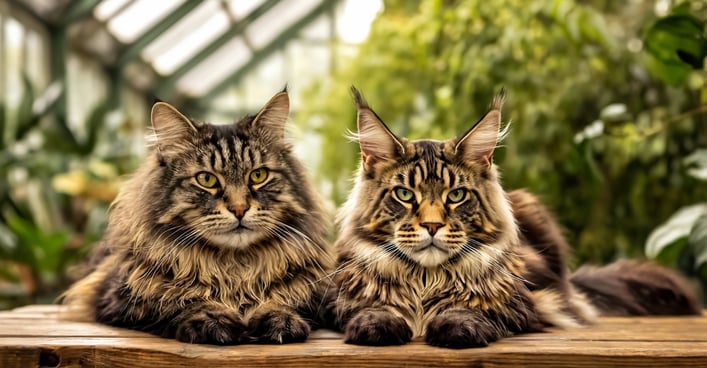
Norwegian Forest Cat vs Maine Coon: The Ultimate 2026 Gentle Giants Guide
Compare the majestic Norwegian Forest Cat and Maine Coon. Discover key differences in size, personality, grooming, and health to find your perfect gentle giant companion.
Share this page
Norwegian Forest Cat vs Maine Coon: The Ultimate 2026 Gentle Giants Guide
Meta Description: Deciding between a Norwegian Forest Cat and a Maine Coon? Our comprehensive 2026 guide compares size, temperament, grooming, health, and costs to help you choose the right gentle giant for your home.
The Norwegian Forest Cat and the Maine Coon are the titans of the domestic cat world. Both evolved naturally in harsh northern climates, developing into large, long-haired, and remarkably gentle companions. While they share an impressive stature and friendly demeanor, their origins, coat characteristics, and personalities have distinct nuances. This detailed comparison will guide you through every aspect to help you select the ideal feline giant for your lifestyle.
Ancient Origins & History
Norwegian Forest Cat: The Viking Companion
Origin: Norway, dating back to the Viking Age.
Mythology: Believed to be the favored cat of Norse gods like Freya.
Development: Evolved as a hardy farm and ship cat, surviving Scandinavia's brutal winters.
Conservation: Faced near extinction in the mid-20th century before dedicated breeding programs in the 1970s saved the breed.
Recognition: Officially recognized by FIFe in 1977 and the CFA in 1993.
Norwegian Forest Cat vs Maine Coon: The Ultimate 2026 Gentle Giants Guide - Articles
Maine Coon: The American Legend
Origin: Maine, United States, in the 1800s.
Folklore: Subject of the mythically impossible tale of being half-raccoon.
Development: Adapted to the cold Northeastern U.S. as a skilled mouser and resilient companion.
Status: Honored as the official state cat of Maine.
Recognition: One of the earliest breeds recognized by cat fanciers and consistently ranks among the top three most popular breeds globally.
Physical Characteristics: A Side-by-Side Look
Size & Build Comparison
Feature
Norwegian Forest Cat
Maine Coon
Male Weight
13-22 lbs (5.9-10 kg)
15-25 lbs (6.8-11.3 kg)
Female Weight
9-15 lbs (4.1-6.8 kg)
10-15 lbs (4.5-6.8 kg)
Body Length
12-18 inches (30-46 cm)
19-32 inches (48-81 cm)
Height at Shoulder
9-11 inches (23-28 cm)
10-16 inches (25-41 cm)
Body Type
Athletic, muscular, and substantial
Large, long, and rectangular
Overall Impression
Agile forest hunter
Substantial, gentle giant
Key Takeaway: While both are large, Maine Coon males often reach greater lengths and weights, holding the record for the longest domestic cats.
Coat & Grooming Profile
Norwegian Forest Cat Coat:
Texture: A double-layered coat with a dense, woolly undercoat and long, water-resistant guard hairs. It feels slightly coarse and oily.
Seasonal Change: Undergoes a dramatic "blowout" in spring, shedding the heavy winter undercoat.
Maintenance: Surprisingly low-matting due to its functional structure. Requires brushing 2-3 times weekly.
Maine Coon Coat:
Texture: Silky, shaggy, and uneven in length (shorter on the shoulders, longer on the stomach and britches).
Seasonal Change: Moderate shedding with seasonal increases.
Maintenance: Its softer texture can mat more easily, especially behind the ears and under the legs. Requires consistent brushing 2-3 times weekly.
Distinctive Facial & Structural Features
Norwegian Forest Cat:
Head: Equilateral triangle shape with a straight profile.
Eyes: Large, almond-shaped, and expressive.
Ears: Large with prominent lynx-like tufts.
Legs: Longer hind legs, contributing to an athletic, powerful stance.
Tail: Long, bushy, and carried high like a banner.
Maine Coon:
Head: Square-shaped muzzle with high cheekbones.
Eyes: Large, wide-set, and slightly oval.
Ears: Large, well-tufted, and often topped with distinctive lynx tips.
Body: Solid, rectangular frame.
Tail: Long, flowing, and bushy, often as long as the body.
Temperament & Personality: Heart of the Giant
Norwegian Forest Cat Personality
Affection Style: Loyal and deeply bonded to their family, but often reserved with strangers. They show love on their own terms.
Energy & Play: Moderately high activity level with an exceptional, innate climbing drive (the original "tree cat").
Independence: Highly intelligent and self-sufficient. They enjoy companionship but don't demand constant attention.
Vocalization: Generally quiet, communicating with soft chirps and trills.
Ideal For: Owners who appreciate a cat with a wild spirit, graceful independence, and a calm, confident presence.
Maine Coon Personality
Affection Style: Famously dog-like in devotion. They are outgoing, social, and love being involved in all family activities.
Energy & Play: Moderately active but often happy with interactive play sessions. Known for a lifelong kitten-like playfulness.
Independence: More people-oriented and less independent. They may follow you from room to room.
Vocalization: Not loud, but communicative with unique chirps, trills, and meows. Many have a fascination with water.
Ideal For: Families, first-time owners, and anyone seeking an extremely friendly, interactive, and gentle companion.
Temperament Comparison Table
Trait
Norwegian Forest Cat
Maine Coon
Affection with Family
High
Very High
Friendliness to Strangers
Moderate/Cautious
Very High
Activity & Climbing Drive
High
Moderate
Playfulness
High
Very High
Independence
High
Moderate
Compatibility with Children
Good (with respect)
Excellent
Compatibility with Other Pets
Good
Excellent
Health & Lifespan Considerations
Norwegian Forest Cat Health
Primary Concern: Hypertrophic Cardiomyopathy (HCM), a genetic heart condition. Reputable breeders screen for this.
Other Conditions: Glycogen Storage Disease Type IV (GSD IV) and hip dysplasia. Genetic testing is available for both.
Average Lifespan: 14-16 years.
Maine Coon Health
Primary Concern: Hypertrophic Cardiomyopathy (HCM). A specific genetic mutation has been identified in the breed, making screening crucial.
Other Conditions: Hip dysplasia (common in large breeds) and Spinal Muscular Atrophy (SMA).
Average Lifespan: 12-15 years.
Pro Tip: Always choose a breeder who provides documented health clearances for both parent cats for HCM, hips, and any breed-specific genetic tests.
Cost of Ownership: Budgeting for a Giant
Initial Purchase/Adoption
Source
Norwegian Forest Cat
Maine Coon
Reputable Breeder (Pet Quality)
$1,000 - $2,000
$1,200 - $2,500
Show/ Breeding Quality
$2,000 - $3,500+
$2,500 - $4,000+
Adoption/ Rescue
$100 - $400
$100 - $400
Estimated Annual Costs
Costs are higher due to greater food, litter, and potential veterinary needs.
High-Quality Food: $800 - $1,500
Routine Veterinary Care: $500 - $800
Insurance/Medical Fund: $300 - $600
Grooming Supplies/Professional: $150 - $300
Litter, Toys, Supplies: $400 - $600
Total Annual Estimate: $2,150 - $3,800
Living Requirements: Creating a Giant-Friendly Home
Space & Environment
Vertical Space is Key (Especially for NFCs): Invest in tall, sturdy cat trees, climbing shelves, and window perches.
Large Essentials: Provide jumbo-sized litter boxes (often recommended: one per cat plus one extra), large beds, and wide food bowls.
Enrichment: Both breeds are intelligent. Puzzle feeders, interactive toys, and secure outdoor access (like a catio) are highly beneficial.
Safety: Their size and curiosity mean you must cat-proof your home thoroughly, ensuring heavy items are secure.
The Final Decision: Which Gentle Giant is Your Perfect Match?
Choose a Norwegian Forest Cat if you:
Desire a cat with a majestic, wild appearance and graceful athleticism.
Appreciate a loyal but independent companion who isn't clingy.
Can provide ample vertical territory for climbing and exploring.
Want a generally quiet, observant presence in your home.
Are prepared for their dramatic seasonal shedding.
Choose a Maine Coon if you:
Dream of a dog-like cat that greets you at the door and follows you around.
Want an extremely social, friendly cat that gets along with everyone.
Don't mind a larger appetite and the associated costs.
Are captivated by their playful, gentle, and often goofy personality.
Seek a highly interactive family pet that thrives on companionship.
Finding Your Cat: Breeder vs. Rescue
Whether seeking a breeder or adopting, due diligence is critical.
Questions for a Reputable Breeder:
Can I see the health testing results for the parent cats (HCM, hips, genetic screens)?
May I visit your home to meet the parent cats and see the kittens' environment?
What is your socialization process for kittens?
Do you provide a written health guarantee and contract?
Are you a member of a recognized cat fancier association?
Consider Adoption:
Breed-specific rescues occasionally have purebred cats or mixes needing homes. This can be a wonderful way to offer a loving home to a cat in need, often at a lower cost.
Last Updated: 2026 | Both the Norwegian Forest Cat and Maine Coon are magnificent breeds that require committed, informed owners ready for the joys and responsibilities of living with a feline gentle giant.
Get expert advice about cat care, behavior, nutrition, grooming, and training. Ask our AI cat care expert anything about your cat and receive professional guidance.