Newborn Kitten Care: Your Complete Guide for the First 4 Weeks (2026)
Master the essentials of newborn kitten care from birth through week four. Learn feeding schedules, temperature control, development milestones, and critical warning signs for orphaned kittens.
Share this page
Newborn Kitten Care: Your Complete Guide for the First 4 Weeks (2026)
Newborn kitten care is one of the most demanding yet profoundly rewarding experiences for any cat lover. Whether you're assisting a mother cat or raising orphaned neonates, understanding the critical first four weeks is essential for their survival and thriving development.
Newborn kittens enter the world completely dependent—unable to regulate body temperature, eliminate waste independently, or even see. Their survival hinges on precise care, appropriate nutrition, and vigilant monitoring. This comprehensive 2026 guide provides everything you need to navigate this vulnerable period successfully.
Understanding Newborn Kittens (0-7 Days)
Physical Characteristics
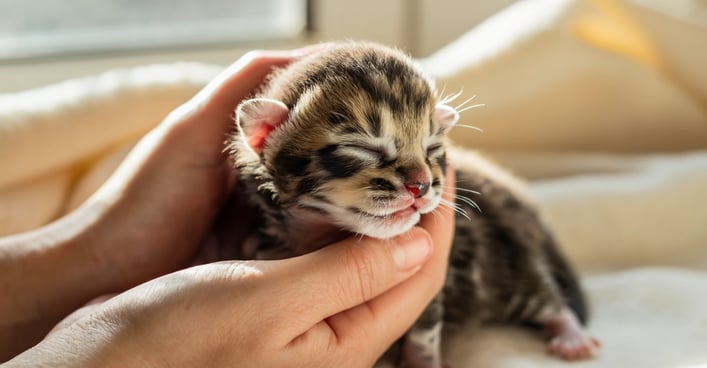
At birth, kittens weigh approximately 3-4 ounces (85-115 grams) and fit comfortably in your palm. Key characteristics include:
Eyes: Sealed shut; begin opening around 7-14 days.
Ears: Folded flat against the head; canals are sealed.
Newborn Kitten Care: Your Complete Guide for the First 4 Weeks (2026) - Articles
Temperature Regulation: Cannot self-regulate; requires external heat.
Elimination: Requires stimulation by mother or caregiver.
Weight Gain: Should gain ¼ to ½ ounce (7-14 grams) daily.
Critical Needs Overview
Need
Requirement
Frequency
Feeding
Kitten Milk Replacer (KMR)
Every 2-3 hours, around the clock
Temperature
95-99°F (35-37°C)
Constant monitoring and maintenance
Stimulation
Gentle genital rubbing with warm, damp cloth
After every single feeding
Hydration
Through formula only
With each feeding
Monitoring
Weight, activity, elimination patterns
Continuous, with daily logs
Creating the Ideal Environment
Temperature Requirements:
Environmental control is non-negotiable, as neonates cannot shiver to generate heat.
Birth to 7 days: 95-99°F (35-37°C)
Week 2: 90-95°F (32-35°C)
Week 3: 85-90°F (29-32°C)
Week 4: 80-85°F (27-29°C)
Safe Heating Methods:
Heating Pad: Set on low, covered with multiple towels, and placed under only half of the nesting box.
Heat Lamp: Use an infrared bulb positioned safely above the nesting area.
Microwaveable Discs: Warm according to instructions and wrap in a towel before placing under bedding.
Rice-Filled Socks: Heat briefly and monitor temperature to prevent overheating.
⚠️ Safety Warning: Always provide an unheated area within the nest so kittens can move away if too warm. Prevent direct contact with heat sources to avoid serious burns.
Nesting Box Setup:
Size: Spacious enough for kittens to spread out without crowding.
Sides: 4-6 inches high to prevent escapes.
Bedding: Soft, absorbent towels or fleece blankets, changed daily.
Location: In a draft-free, quiet area away from household traffic and other pets.
Cleanliness: Spot clean after each feeding; perform a complete bedding change daily.
Feeding Newborn Kittens
Kitten Milk Replacer (KMR)
Never feed cow's milk—it lacks essential nutrients and causes severe digestive upset, leading to dehydration. Use only commercially prepared kitten milk replacer.
Recommended Brands for 2026:
PetAg KMR (Powder or Liquid)
Breeder's Edge Foster Care
Just Born Highly Digestible Milk Replacer
In emergencies, Esbilac Puppy Milk Replacer can be a temporary substitute.
Formula Preparation Best Practices:
Mix powder with warm water according to package directions.
Serve at 100-105°F (38-41°C)—test a drop on your wrist.
Discard any unused mixed formula after 24 hours.
Refrigerate opened liquid formula and warm before feeding.
Feeding Schedule by Age:
Age
Frequency per 24 Hours
Approx. Amount per Feeding
Birth - 1 Week
8 times (every 3 hours)
2-6 ml
1 - 2 Weeks
6-8 times (every 3-4 hours)
6-10 ml
2 - 3 Weeks
6 times (every 4 hours)
10-14 ml
3 - 4 Weeks
4-6 times (every 4-6 hours)
14-18 ml
Bottle Feeding Technique
Equipment:
Use kitten-specific nursing bottles.
The nipple hole should allow one drop per second when inverted. Enlarge carefully with a sterilized needle if needed.
Proper Feeding Position:
Always place the kitten on its belly (a natural nursing position).
Never feed on its back, as this greatly increases aspiration risk.
Hold the bottle at a 45-degree angle.
Let the kitten suckle at its own pace; never force formula.
The Feeding Process:
Warm the formula.
Place a drop on the kitten's lips to stimulate interest.
Gently insert the nipple into its mouth as it licks.
Burp gently after feeding by patting its back.
⚠️ Critical Warning Signs During Feeding:
Bubbling at the nose: STOP immediately. This indicates aspiration (formula in the lungs).
Coughing or choking: Pause, clear the mouth, and resume more slowly.
Persistent refusal to eat: Check formula temperature and freshness. Consult a vet if it continues.
Diarrhea after feeding: The formula may be too rich; try diluting slightly.
Monitoring Nutrition & Growth
Daily Weight Tracking is Essential:
Weigh at the same time each day using a precise digital kitchen scale.
Healthy gain is ¼ to ½ ounce (7-14 grams) daily.
Weight loss or stagnation is a red flag requiring immediate attention.
Maintain a detailed written log.
Signs of a Well-Fed Kitten:
✅ Round, full (but not hard or distended) belly after feeding.
✅ Steady daily weight gain.
✅ Content, sleeping peacefully between feedings.
✅ Warm to the touch with pink gums.
✅ Active crawling and strong vocalization.
Signs of Trouble or Inadequate Nutrition:
❌ Constant, distressed crying.
❌ Restlessness or inability to settle.
❌ Cool body temperature (especially extremities).
❌ Weight loss or failure to gain.
❌ Lethargy or weakness.
❌ Sunken abdomen.
Elimination and Hygiene
Stimulation for Elimination
Newborns cannot urinate or defecate without help. Replicate the mother's licking action.
Supplies: Soft, lint-free cloth or cotton ball, warm water, paper towels.
The Process:
Moisten the cloth with warm water.
Gently rub the genital area in a circular motion.
Continue until the kitten eliminates.
Urine should flow easily; stool (1-2 times daily) should be yellowish-brown and pasty.
Perform this after every single feeding.
Warning Signs:
No urine for 12+ hours: A veterinary emergency indicating dehydration or blockage.
Constipation (hard, dry stool): May signal inadequate formula or dehydration.
Diarrhea (watery stool): Can result from overfeeding, wrong formula, or illness.
Keeping Kittens Clean
Daily Routine:
Face: Gently wipe with a damp cloth after feeding.
Genital Area: Clean after each stimulation.
Body: Spot clean as needed with a damp cloth.
Bathing (Only if Necessary):
Use lukewarm water and kitten-specific shampoo.
Make it quick and gentle.
Dry thoroughly and immediately to prevent hypothermia.
Keep the kitten warm until completely dry.
Week-by-Week Development & Care
Week 1 (Birth-7 Days): The Critical Period
Physical Development:
Eyes and ears sealed.
Umbilical cord dries and falls off (days 2-3).
Mobility is crawling only.
Care Requirements:
Feed every 2-3 hours, 24/7.
Maintain environment at 95-99°F.
Stimulate for elimination after every feeding.
Weigh daily. Handle minimally except for essential care.
🚨 Veterinary Alert: Seek immediate care for failure to gain weight, constant crying, diarrhea, hypothermia, lethargy, or discharge from eyes/nose.
Week 2 (7-14 Days): Eyes Opening
Physical Development:
Eyes begin opening from the inner corners.
Ears start to unfold.
First teeth may begin emerging.
Shaky standing attempts begin.
Care Requirements:
Feed every 3-4 hours (6-8 times daily).
Reduce ambient temperature to 90-95°F.
Continue stimulation.
Begin brief, gentle handling for early socialization.
Milestones: Eyes fully open by day 14 (blue), responding to sounds, more coordinated crawling.
Week 3 (14-21 Days): Walking Begins
Physical Development:
Eyes fully open (still blue).
Ears are erect.
Wobbly walking begins.
Self-grooming starts.
Care Requirements:
Feed every 4 hours (6 times daily).
Reduce temperature to 85-90°F.
May begin litter box introduction (use non-clumping, pellet litter).
Introductions: Gentle handling by different people, exposure to soft household sounds, shallow litter box.
Week 4 (21-28 Days): The Transitional Period
Physical Development:
Steady walking, running, and playing.
Sharp baby teeth are present.
Hearing is fully developed.
Eye color may start changing from blue.
Care Requirements:
Feed every 4-6 hours (4-6 times daily).
Reduce temperature to 80-85°F.
Begin weaning and full litter box training.
Weaning Process:
Offer high-quality kitten wet food mousse mixed with formula.
Use shallow saucers. Expect mess!
Supervise closely. Gradually decrease bottle frequency as solid food intake increases.
Common Health Issues in Newborn Kittens
1. Fading Kitten Syndrome
A rapid decline often due to congenital defects, infection, or hypothermia.
Symptoms: Failure to thrive, lethargy, difficulty feeding, low temperature.
Action: Warm gradually, offer a drop of honey/Karo syrup on gums for energy, and seek immediate veterinary care.
2. Hypothermia (Low Body Temperature)
Causes: Inadequate heat, separation from littermates.
Symptoms: Cold to touch, lethargy, refusal to feed.
Treatment:Gradual rewarming (never rapid), skin-to-skin contact, veterinary evaluation.
3. Dehydration
Causes: Inadequate feeding, diarrhea.
Symptoms: Skin "tenting," sunken eyes, dry gums.
Treatment: Increase feeding frequency, ensure proper formula mix. Often requires veterinary intervention for subcutaneous fluids.
4. Constipation
Causes: Inadequate stimulation, dehydration.
Symptoms: Straining, hard stool, distended abdomen.
Treatment: Ensure proper stimulation and hydration. A tiny drop of plain canned pumpkin in formula may help (ask your vet).
5. Diarrhea
Causes: Overfeeding, formula issues, infection.
Symptoms: Watery, frequent stool, dehydration.
Treatment: Temporarily dilute formula to 75% strength, feed smaller amounts more often, keep kitten clean. See a vet if it persists >24 hours.
Emergency Preparedness
When to Seek Immediate Veterinary Care
Critical Emergencies (Go Now):
Not breathing or gasping.
Unresponsive or severely lethargic.
Body temperature below 95°F.
No urination for 12+ hours.
Bloated, painful abdomen.
Blood in stool or urine.
Seizures.
Urgent Concerns (Call Your Vet Today):
Missing more than one feeding.
Diarrhea lasting over 24 hours.
No weight gain for 48 hours.
Eye/nose discharge or swelling.
Labored breathing.
Essential Emergency Kit
Kitten Milk Replacer (extra supply)
Nursing bottles/nipples
Digital gram scale
Safe heating pad
Rectal thermometer
Unflavored Pedialyte
Karo syrup or honey
Soft towels/blankets
Your vet's & emergency clinic's phone numbers
Cost Overview for 2026
Initial Setup Supplies
Item
Estimated Cost
Kitten Milk Replacer (powder)
$15 - $35
Nursing Bottle Kit
$10 - $20
Digital Kitchen Scale
$15 - $35
Safe Heating Pad
$20 - $40
Thermometer
$10 - $25
Bedding & Towels
$20 - $50
Total Initial Investment
$90 - $205
Ongoing & Veterinary Costs (First 4 Weeks)
Item
Estimated Cost
Weekly KMR
$15 - $30
Initial Veterinary Check-up
$75 - $150
Follow-up Weight Checks
$30 - $60 per visit
Emergency Care Fund
$200 - $1,000+
Total 4-Week Estimate
$300 - $1,500+
Conclusion
Raising newborn kittens is a marathon of dedication, patience, and meticulous care. The transformation from a helpless neonate to a playful, curious kitten is an unparalleled reward. Success rests on five pillars:
Precise Nutrition: The right formula, correct technique, and strict schedule.
Meticulous Hygiene: Regular stimulation and cleanliness to prevent illness.
Vigilant Monitoring: Daily weighing and behavioral observation.
Professional Partnership: Proactive and emergency veterinary care.
Your commitment during these foundational four weeks sets the stage for a lifetime of health and happiness. Remember, even with perfect care, some kittens may not survive due to factors beyond your control. Celebrate every life you help thrive, and know that the skills you gain—in patience, observation, and gentle nurturing—are invaluable.
The journey is exhausting, but the first purr, the confident head-butt, and the sight of a kitten you saved leaping into play are rewards that last a lifetime.
Get expert advice about cat care, behavior, nutrition, grooming, and training. Ask our AI cat care expert anything about your cat and receive professional guidance.