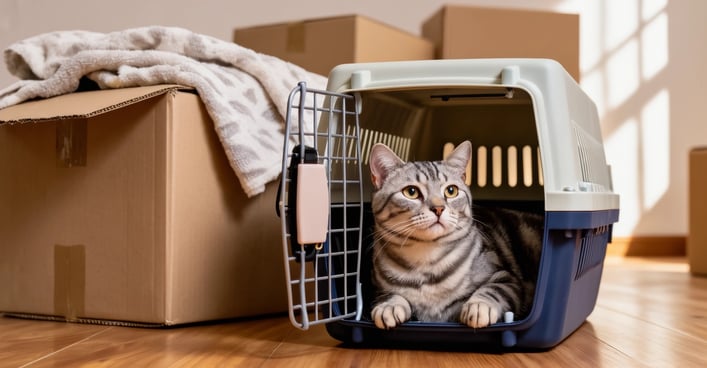
Moving with Cats: Your Complete Stress-Free Relocation Guide for 2026
A step-by-step guide to moving with your cat. Learn expert strategies to minimize stress, ensure safe transport, and help your feline friend adjust smoothly to their new home.
Share this page
Moving with Cats: Your Complete Stress-Free Relocation Guide for 2026
Moving is a major life event, and for our feline companions, it can be one of the most stressful experiences they face. Cats are creatures of profound habit and territorial instinct, making the disruption of relocation uniquely challenging. This comprehensive guide provides a structured, compassionate approach to moving with your cat, designed to minimize anxiety and foster a smooth transition for everyone involved.
Why Moving is Stressful for Cats
Understanding the feline perspective is the first step to a successful move. Cats form deep attachments to their territory—the specific sights, sounds, and scents of their home. This territory provides security. A move dismantles this world, triggering fear and disorientation. By anticipating this stress and planning accordingly, you can transform a potentially traumatic event into a manageable process.
Pre-Move Preparation: Your Strategic Timeline
A successful move with a cat is built on thoughtful preparation. This phased approach prevents last-minute chaos.
Moving with Cats: Your Complete Stress-Free Relocation Guide for 2026 - Articles
Phase 1: 4-6 Weeks Before the Move
Veterinary Preparation is Paramount:
Schedule a wellness check to ensure your cat is healthy for the journey.
Update all vaccinations and obtain any required health certificates, especially for interstate or international moves.
Request a copy of your cat’s complete medical records.
Update your contact information on their microchip registration to your new address.
Discuss anti-anxiety options (like gabapentin or trazodone) with your vet if your cat is particularly nervous.
Identification & Documentation:
Ensure your cat wears a secure collar with an updated ID tag.
Take clear, current photographs of your cat from multiple angles.
Prepare “Lost Cat” flyers in advance, just in case.
Carrier Acclimation:
Leave the carrier out in a common area with the door open.
Transform it into a positive space: add a soft blanket, catnip, and favorite treats inside.
Practice short, positive sessions of being in the carrier, gradually building up to closing the door and taking short car rides.
Phase 2: 2-3 Weeks Before the Move
Packing with Purpose:
Pack gradually over weeks, not in a frantic 48-hour period.
Designate one quiet room as your cat’s “sanctuary” and pack it last.
Crucial: Do not wash your cat’s bedding, blankets, or favorite soft toys. Their familiar scent is a powerful source of comfort.
Pheromone Support:
Purchase Feliway® or another feline pheromone diffuser and spray.
Start using the diffuser in your current home to lower your cat’s baseline anxiety before the move.
New Home Planning:
Identify which room in your new home will serve as the initial “safe room.” It should be quiet, have a door that closes, and be easy to set up first.
Phase 3: The Moving Week
Routine is Your Anchor:
Maintain your cat’s exact feeding, play, and litter box cleaning schedule.
Provide extra calm attention and reassurance.
Final Sanctuary Setup:
On the day before or the morning of the move, move your cat into their designated safe room in the old house.
Place their carrier, litter box, food, water, and bed in this room.
This keeps them secure, prevents a panicked escape during door traffic, and provides a calm haven amidst the chaos.
Moving Day: Execution with Care
Morning of Departure
Feeding: Offer only a light breakfast. Withhold food for 3-4 hours before travel to reduce motion sickness. Keep water available until departure.
Medication: If your vet prescribed anti-anxiety medication, administer it exactly as directed, typically 1-2 hours before travel.
Final Prep: Place your cat calmly in their carrier. Spray the carrier interior with Feliway spray 15 minutes prior. Cover the carrier with a light blanket to create a dark, den-like security.
During Transport
Secure the carrier in the car with a seatbelt or other restraint.
Maintain a comfortable, stable temperature (never leave a cat in a parked car).
Play soft music or speak in a calm, reassuring tone. Avoid loud noises.
Never open the carrier while the vehicle is moving or during stops.
For Long-Distance Moves
Book pet-friendly accommodations in advance.
Research emergency veterinary clinics along your route.
Bring a travel litter box, a jug of water from home (to avoid stomach upset from new water), and all documents.
Offer water at rest stops. Let your cat use the travel litter box in the secure hotel bathroom.
Arrival & The Critical First Days
Immediate Actions at the New Home
Set Up the Safe Room First: Before unloading a single box, prepare your cat’s designated safe room.
Place familiar items inside: their unwashed bed, favorite toys, and scratching post.
Set up their litter box, food, and water bowls away from each other.
Plug in a Feliway diffuser.
Bring your cat’s carrier directly into this room, open the door, and let them exit on their own terms. Sit quietly with them to offer reassurance. Keep the door closed.
How Long in the Safe Room?
A minimum of one week is recommended. This allows your cat to adjust to the new sounds and smells from a secure, manageable base. They are ready for more space when they:
Eat, drink, and use the litter box normally.
Explore the entire room confidently.
Show curiosity about the door and engage in normal play.
Helping Your Cat Adjust: The First Month
The Power of Scent
Scent Soaking: Continue to leave unwashed bedding and your worn clothing around the new home. Your scent equals safety.
Scent Swapping (Multi-Cat Homes): Rub a soft cloth on one cat and place it in the other cat’s area, and vice versa. This builds familiarity before a visual introduction.
Gradual Exploration
Introduce your cat to their new territory slowly to prevent overwhelm.
Week 1: Safe room only.
Week 2: Allow access to one adjacent room under supervision.
Week 3: Gradually expand access to other areas.
Week 4+: Full house access, assuming they are comfortable.
Always let your cat explore at their own pace and ensure they can always retreat to their safe room.
Maintaining Consistency
Keep their routine, food brand, and litter type identical to what they knew before the move. Familiarity breeds comfort during this time of great change.
Special Considerations
Multi-Cat Households
Ideal: Provide separate safe rooms for each cat initially.
Follow a structured introduction protocol: scent swapping, feeding on opposite sides of a closed door, then supervised visual and physical meetings.
Be patient; this process can take weeks or even months.
Cats with Outdoor Access
You must keep them strictly indoors for 4-6 weeks minimum to break their homing instinct and establish the new location as “home.”
After this period, any future outdoor access should be highly supervised, preferably in a secure catio (cat patio) or with cat-proof fencing.
Senior, Anxious, or Fearful Cats
These cats require extra patience and a longer adjustment timeline.
Extend the safe room period.
Utilize veterinary-prescribed anti-anxiety support fully.
Provide ample hiding places (cardboard boxes, covered beds) and minimize forced interaction.
Troubleshooting Common Post-Move Problems
Problem
Possible Cause
Solutions
Not Using Litter Box
Stress, location dislike, litter change, medical issue.
Use original litter brand, add extra boxes in quiet locations, keep immaculately clean, rule out medical cause with vet.
Not Eating/Drinking
Stress, disorientation.
Normal for 24-48 hrs. Encourage with warmed food, favorite treats, or a quiet hand-feeding session. Consult vet if >48 hours.
Excessive Hiding
Fear, feeling unsafe.
Don’t force them out. Place food/water near hiding spot. Ensure they have covered beds. Be patient; it can take days to weeks.
Excessive Vocalization
Stress, disorientation, seeking attention.
Ensure all needs are met, provide extra play sessions for energy release, maintain routine. Usually subsides within 2-4 weeks.
Cost Overview & Planning
DIY Moving Estimate (Average)
Item
Estimated Cost
Veterinary Visit & Health Certificate
$100 - $300
Carrier (if new needed)
$30 - $80
Feliway Diffusers & Refills
$50 - $100
Anti-Anxiety Medication
$30 - $80
Travel Supplies (bowls, litter)
$30 - $50
Total Estimated Range
$240 - $610
Cost-Saving Tip: Drive instead of fly when possible, use your existing carrier, and book pet-friendly hotels well in advance.
Essential Long-Distance Move Checklist
4-6 Weeks Before: Vet visit, microchip update, research destination state laws, book pet-friendly hotels, start carrier training.
2-3 Weeks Before: Purchase Feliway, plan safe room, prepare travel kit, confirm vet records.
1 Week Before: Pack cat supplies last, ID vet clinics on route, prepare medications.
Moving Day: Light breakfast, secure cat in carrier, set up new safe room FIRST.
First Week: Maintain safe room, monitor vital habits (eat/drink/eliminate), provide reassurance, preserve familiar scents.
When to Contact Your Veterinarian
Seek professional advice if your cat exhibits:
No food intake for >48 hours.
No water intake for >24 hours.
No urination for >24 hours.
Persistent vomiting or diarrhea.
Complete withdrawal and hiding for over a week.
Uncharacteristic aggression or signs of illness (lethargy, labored breathing).
Conclusion
Moving with your cat is a significant undertaking that tests patience and planning. By understanding the feline experience of relocation—the profound importance of territory, routine, and scent—you can guide your companion through this transition with empathy and skill. Remember, every cat is an individual. Some may adjust in days, while others need months. Respect their pace, provide unwavering consistency, and offer gentle reassurance. The effort you invest in a low-stress move will pay profound dividends in your cat’s long-term wellbeing and the strength of your shared bond in your new home together.
Get expert advice about cat care, behavior, nutrition, grooming, and training. Ask our AI cat care expert anything about your cat and receive professional guidance.