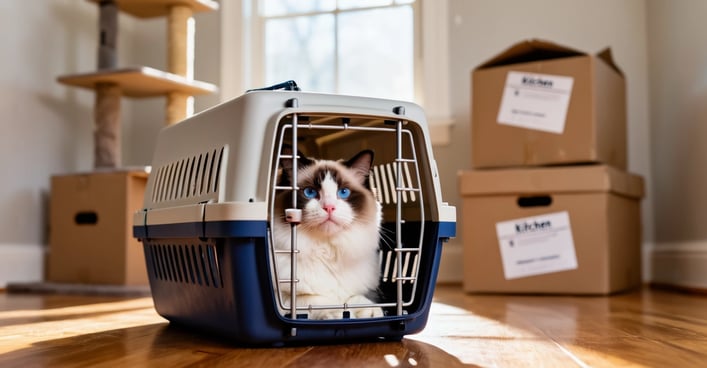
Moving with Cats: The Complete Guide to a Stress-Free Relocation in 2026
Minimize your cat's stress during a move with our expert-backed guide. From pre-move prep to post-move adjustment, learn how to ensure a smooth transition for your feline friend.
Share this page
Moving with Cats: The Complete Guide to a Stress-Free Relocation in 2026
By Emily Rodriguez, Certified Animal Behaviorist | Published: January 15, 2026 | Reading Time: 15 minutes
Introduction
Moving is consistently ranked among life's most stressful events—for both humans and cats. Unlike their human companions, cats don't understand why their safe, familiar territory is being dismantled and transported to an unknown location. With careful planning and execution, however, you can significantly minimize stress and help your cat adjust to their new home successfully. This guide provides a comprehensive, step-by-step approach.
Pre-Move Preparation
Timeline: 4-6 Weeks Before Move
Veterinary Preparation:
Schedule a wellness exam.
Update all vaccinations.
Obtain a health certificate for interstate moves.
Secure copies of medical records.
Refill any necessary medications.
Discuss anti-anxiety options with your vet if needed.
Moving with Cats: The Complete Guide to a Stress-Free Relocation in 2026 - Articles
Update microchip information with your new address.
Update Information:
Microchip registry (update after the move).
Veterinary contact (research a new vet near your new home).
Pet insurance address.
Local pet license if required.
Emergency contacts.
Carrier Training Refresh
If your cat is already carrier-trained:
Reinforce positive associations with treats and praise.
Practice short car rides to acclimate them.
Ensure the carrier is secure and escape-proof.
If carrier training is needed:
Start immediately (4+ weeks before moving).
Leave the carrier open in a common living area.
Feed meals in or near the carrier.
Use high-value treats to build positive associations.
Practice closing the door for gradually increasing short periods.
Gathering Supplies
Essential Moving Supplies:
Item
Purpose
Cost
Secure, well-ventilated carrier
Safe transport
$30-100
Feliway diffuser
Calming pheromones for new room
$25-40
Feliway spray
Travel calming for carrier/car
$15-25
Old blankets/towels
Provide familiar scents
$0
Disposable litter boxes
Easy temporary setup
$10-20
Travel litter
Small, portable container
$5-10
Travel food/water bowls
Collapsible or spill-proof set
$10-20
Favorite toys
Comfort items
$0
Calming treats or supplements
Stress reduction
$10-20
Paper towels & enzymatic cleaner
Accident cleanup
$10
Total Estimated Cost
$115-265
Packing Strategically
Cat-Safe Packing Approach
Room-By-Room Strategy:
Pack the least-used rooms first.
Keep your cat's favorite room intact until the very last.
Maintain their normal routine as long as possible.
Provide approved hiding spaces among the boxes.
Keeping Routine Consistent:
Stick to the same feeding times.
Schedule regular play sessions.
Maintain the litter box cleaning schedule.
Keep sleeping arrangements unchanged.
Safe Room Setup
Designate a "Cat Safe Room":
Choose a room that will be packed last.
Contains some familiar furniture.
Has a door that closes securely.
Includes all cat necessities.
Must be kept strictly off-limits to movers.
Safe Room Checklist:
Clean litter box
Food and fresh water
Favorite bed or blanket
Scratching post
A few familiar toys
Hiding spots (cardboard boxes, carrier)
Feliway diffuser plugged in
The Moving Day Plan
Before Movers Arrive
Secure Your Cat:
Place your cat in the safe room with the door securely closed.
Put a clear "DO NOT ENTER - CAT INSIDE" sign on the door.
Double-check that all windows are secured.
Provide food, water, and a clean litter box.
Include familiar items for comfort.
Final Preparations:
Feed a light breakfast 3-4 hours before travel.
Trim nails to reduce damage if they scratch when stressed.
Set up the travel carrier with an absorbent pad.
Apply Feliway spray to the carrier lining 15 minutes before use.
During the Move
Keeping Cat Secure:
Check on your cat quietly if possible.
Ensure the safe room door remains closed.
Provide verbal reassurance through the door.
Do not remove the cat until you are ready to transport them.
Last Thing Out:
Make your cat the final item to leave the old home.
This minimizes their time confined in the carrier.
Reduces their exposure to the moving chaos.
Transporting Your Cat
Car Travel Best Practices:
Carrier Placement:
Secure the carrier with a seatbelt in the back seat.
Cover with a light blanket to reduce visual overstimulation.
Ensure good ventilation.
Avoid direct sunlight on the carrier.
During the Drive:
Speak in a calm, reassuring tone.
Play soft music or white noise if your cat is accustomed to it.
Never open the carrier while the vehicle is moving.
For long trips, plan breaks every 2-3 hours.
Offer water at stops but do not force it.
Signs of Distress:
Excessive vocalization (beyond normal meowing)
Panting (abnormal for cats)
Drooling
Aggression attempts through the carrier door
Unusual lethargy
If Your Cat is Distressed:
Find a safe place to pull over and stop.
Speak calmly and softly.
Do not open the carrier in an unsecured area.
Wait for your cat to calm down before continuing.
Consider contacting a veterinary telemedicine service if severe.
Long-Distance Moves & Hotels:
Plan and book pet-friendly hotels in advance.
Bring a portable litter box for overnight stops.
Maintain their regular feeding routine.
Keep the carrier covered during hotel stays for security.
Arriving at the New Home
Immediate Setup
Before Letting Your Cat Out:
Inspect the new home for hazards:
Open windows (install screens immediately).
Toxic plants.
Cleaning chemicals or pesticides left by previous owners.
Small spaces where a cat could hide or get stuck.
Potential escape routes.
Set up the safe room first:
Choose a quiet room with a closable door.
Set up the litter box, food, and water in separate areas.
Place familiar bedding, toys, and the scratching post.
Plug in a Feliway diffuser.
Provide hiding spots like a cardboard box or open carrier.
The Initial Release
Bringing Your Cat Inside:
Carry the carrier directly to the prepared safe room.
Close the door securely behind you.
Open the carrier door and let your cat exit on their own terms.
Don't force interaction or pull them out.
Allow them to explore the room at their own pace.
First 24 Hours:
Keep your cat confined to the safe room only.
Visit frequently for short periods with treats and gentle talk.
Closely monitor eating, drinking, and litter box use.
Expect hiding—this is a normal stress response.
Maintain a calm, quiet environment in the home.
The Adjustment Period
Timeline of Adjustment
Week 1: Hiding and Caution
Normal behaviors: Hiding, decreased appetite, reduced activity.
Action: Keep confined to the safe room. Make frequent, quiet visits.
Week 2: Emerging Curiosity
Normal behaviors: May venture out when alone, explore the safe room thoroughly.
Action: Appetite should normalize. They may start asking to leave the room.
Weeks 3-4: Gradual Expansion
Normal behaviors: Begin supervised exploration of one adjacent room.
Action: Slowly expand territory. Continue using the safe room as a home base.
Month 2+: Full Integration
Normal behaviors: Exploring the entire home, normal behavior patterns return.
Action: Your cat is fully integrated. They will engage in territorial marking (scratching, rubbing).
Expanding Territory
Gradual Introduction Protocol:
Week 1: Safe room only.
Week 2: Open the door, let cat explore further when they seem ready.
Week 3: Allow supervised access to one additional room.
Week 4: Gradually expand access to the full house.
Signs Your Cat is Ready to Expand:
Appears comfortable and relaxed in their current space.
Approaches the closed door with curiosity.
Eating, drinking, and using the litter box normally.
Exhibiting playful or inquisitive behavior.
Special Considerations
Multi-Cat Households
Separate Initially:
Each cat should have its own safe room if possible.
Alternatively, use one large room with multiple, separated resources (litter boxes, food stations).
This prevents redirected aggression and allows for individual adjustment.
Reintroduction:
If cats were separated, reintroduce slowly.
Start with scent swapping (exchange bedding).
Progress to gradual visual introductions using a baby gate.
Always supervise initial interactions. This process may take 1-2 weeks.
Outdoor Access Considerations
Never Allow Immediate Outdoor Access:
Your cat does not recognize the new territory as "home."
The risk of getting lost is extremely high.
They may try to return to their old home.
Enforce a minimum 4-6 week indoor-only period.
Eventual Outdoor Transition (if applicable):
Only after your cat is fully settled indoors.
Start with short, supervised sessions in a secure area.
Consider cat-proof fencing or a catio.
Ensure microchip details are current and use a breakaway collar with an ID tag.
Senior Cats
Additional Challenges:
Often less adaptable to change.
Cognitive dysfunction may be exacerbated by stress.
Arthritis can make hiding in awkward positions uncomfortable.
May require a significantly longer adjustment period.
Senior Cat Strategies:
Exercise extra patience.
Maintain as much routine as possible.
Ensure easy access to necessities (low-sided litter box, nearby water).
Discuss anti-anxiety medication with your vet.
Monitor more closely for signs of distress or illness.
Special Needs Cats
Medication Management:
Do not skip doses during the move.
Set up a clear medication station immediately in the new safe room.
Monitor for stress-related changes in condition.
Have your new veterinarian's contact information ready.
Medical Conditions:
Kidney disease: Ensure consistent water intake; consider a water fountain.
Diabetes: Maintain the strict feeding and medication schedule.
Heart conditions: Prioritize minimizing stress; consult your vet pre-move.
Troubleshooting Common Problems
Not Eating
Normal for 24-48 Hours:
Stress is a common appetite suppressant.
Solutions: Offer favorite, strong-smelling foods (wet food, tuna juice). Warm food slightly. Try hand-feeding. Ensure they are drinking water.
Seek Veterinary Help If:
No food intake for over 48 hours.
Accompanied by lethargy or vomiting.
In cats with pre-existing conditions like diabetes.
Not Using the Litter Box
Common During Adjustment:
Stress or dislike of new box location/litter type.
Solutions:
Use the same litter brand and box style as the old home.
Place the box in a quiet, low-traffic area.
Provide multiple boxes during the transition.
Clean accidents thoroughly with an enzymatic cleaner.
Excessive Hiding
Normal Behavior:
Hiding is a primary stress-coping mechanism for cats.
Encouraging Confidence:
Provide multiple approved hiding options (boxes, tunnels).
Leave the carrier accessible as a safe cave.
Use treat trails to gently encourage exploration.
Engage in quiet play with a wand toy from a distance.
Attempting to Escape
High Risk Period: First few weeks.
Prevention:
Be hyper-vigilant when entering/exiting.
Install secure screens on all windows.
Warn all visitors about your new cat.
Consider a pet gate as a secondary barrier at the front door.
Ensure microchip and ID collar are in place.
Post-Move Care
Establishing Routine
Maintain Consistency:
Reinstate the same feeding, play, and grooming schedule.
Be consistent with litter box maintenance.
New Territory Marking:
Place scratching posts in key locations (near sleeping areas, entries).
Gently rub a soft cloth on your cat's cheeks to collect pheromones, then wipe it on furniture at cat height.
Allow and encourage rubbing and scratching behaviors.
Finding a New Veterinarian
Research Before Moving:
Ask your current vet for referrals.
Read online reviews and check credentials.
Visit the facility if possible before committing.
First Visit:
Schedule a wellness check within the first month.
Establish a relationship before an emergency arises.
Have your cat's medical records transferred.
Cost of Moving with Cats
Direct Costs
Expense
Cost Range
Veterinary visit & health certificate
$100-300
Feliway diffuser & spray
$40-80
Travel supplies (carrier, bowls, litter)
$100-200
Pet-friendly hotel (if needed)
$50-150/night
New supplies for new home (litter box, etc.)
$100-300
Total Direct Costs
$340-1,030
Potential Additional Costs
Expense
Cost Range
Anti-anxiety medication
$20-50
Emergency vet visit
$200-500
Professional pet transport service
$500-2,000
Replacement items (scratching post, bed)
$100-300
Potential Additional Costs
$320-2,850
Long-Distance Moving Tips
Road Trip Planning
Route Planning:
Identify emergency veterinary clinics along your route.
Research and book pet-friendly hotels in advance.
Limit driving to 8-10 hours maximum per day.
Avoid traveling in extreme heat or cold.
Crossing State Lines:
A health certificate issued within 10 days is often required.
Carry proof of current rabies vaccination.
Check the USDA and destination state's specific requirements.
Air Travel
When Flying is Necessary:
Consult your veterinarian well in advance.
A health certificate is mandatory.
Book direct flights whenever possible.
Use an airline-approved, hard-sided carrier.
Discuss sedation options with your vet (e.g., gabapentin).
Arrive at the airport early to manage check-in calmly.
Frequently Asked Questions
Q: How long does it take a cat to adjust to a new home?A: Most cats adjust within 2-4 weeks. Some may take 2-3 months. Senior or particularly anxious cats often need extra time and patience.
Q: Should I let my cat outside in the new home?A: Keep them indoors for a minimum of 4-6 weeks to establish the new location as "home." After that, any outdoor access should be highly supervised and gradual.
Q: My cat hasn't eaten in two days. Is this normal?A: Decreased appetite is common for the first 24-48 hours. If it persists beyond that, or is accompanied by lethargy or vomiting, contact your veterinarian.
Q: Can I use sedatives for my cat during the move?A: Only under veterinary guidance. Medications like gabapentin can be very helpful for some cats. Never administer human medications or over-the-counter pet sedatives.
Q: Should I board my cat instead of taking them on the move?A: Generally, cats are less stressed staying with their trusted owners. However, for extremely complex moves, temporary boarding at the destination can sometimes be the lesser stressor.
Q: What if my cat gets lost during the move?A: Prevention is key. Ensure the microchip is updated before you move. If lost, search immediately, notify local shelters and vets, and place items with familiar scents (their bed, your worn shirt) outside.
Disclaimer: Every cat is an individual. Some adjust quickly, while others need more time and patience. Never punish a cat for stress-related behaviors during this major life transition. When in doubt, consult your veterinarian.
Get expert advice about cat care, behavior, nutrition, grooming, and training. Ask our AI cat care expert anything about your cat and receive professional guidance.