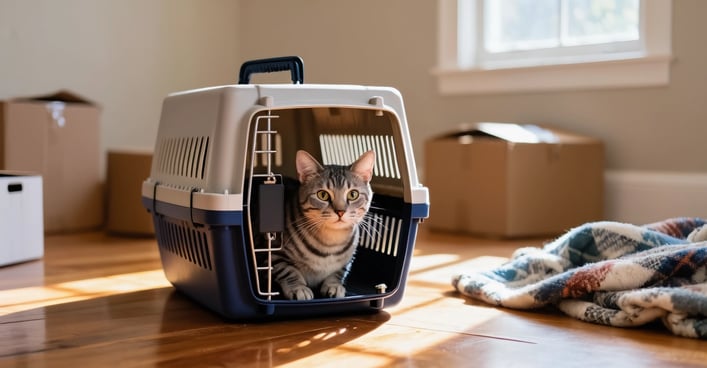
Moving with Cats: The Complete 2026 Guide to a Stress-Free Relocation
A step-by-step guide to moving with your cat. Learn expert strategies for preparation, safe travel, and helping your feline friend settle into their new home with minimal stress.
Share this page
Moving with Cats: The Complete 2026 Guide to a Stress-Free Relocation
Moving is a major life event for humans, but for cats—creatures of profound habit and territorial attachment—it can be a deeply unsettling experience. A successful relocation hinges on understanding feline psychology and executing a meticulous, cat-centric plan. This definitive guide provides a clear roadmap for every stage of your move, ensuring your feline companion's safety and well-being.
Pre-Move Preparation (2-4 Weeks Before)
Veterinary Preparation
A proactive veterinary visit is your first and most critical step. Ensure your cat is healthy and prepared for the journey ahead.
Moving with Cats: The Complete 2026 Guide to a Stress-Free Relocation - Articles
Task
Timeline
Why It's Important
Wellness Exam
3-4 weeks before
Confirms your cat is fit for travel and change.
Update Vaccinations
3-4 weeks before
Often required for boarding, travel, or new vet registration.
Obtain Health Certificate
If moving interstate/international
A legal requirement for air travel or crossing borders.
Refill Medications
2 weeks before
Secure an uninterrupted supply.
Microchip Check & Update
2 weeks before
Verify the chip works and your contact info is current.
Discuss Anxiety Aids
During vet visit
Explore vet-recommended options like pheromones or medication for highly anxious cats.
Collect Vet Records
1 week before
Essential for your new veterinarian.
Packing Strategy for Cat Comfort
Your packing approach can significantly reduce your cat's anxiety. The goal is to maintain normalcy for as long as possible.
Maintain Normalcy:
Pack your cat's areas (bed, favorite spots) last.
Keep litter boxes in their usual place until moving day.
Stick to their regular feeding and play schedule.
Do not wash their bedding, toys, or blankets—familiar scents are comforting.
Prepare a Designated Safe Room:
Choose one quiet room (like a bedroom or bathroom) that will remain a "cat-only" sanctuary.
This room should be packed last and unpacked first at the new home.
Equip it with all cat essentials: litter box, food, water, bed, and a hiding spot.
Keep the door closed during packing and moving chaos.
Gather Essential Moving Supplies:
Item
Quantity
Purpose
Secure Cat Carrier
1 per cat + 1 extra
Safe, confined transport.
Feliway/Calming Diffuser
2-3
Releases synthetic calming pheromones.
Disposable Litter Boxes
4-6
For travel and easy setup upon arrival.
Familiar Bedding & Toys
Multiple
Provides immediate scent-based comfort.
Food Supply
2+ weeks worth
Avoid running out during the transition.
Medications & Records
Full supply + copies
Keep these with you, not in the moving truck.
Travel Water & Bowls
1 set
For hydration during the journey.
Choosing a Transportation Method
By Car (The Most Common & Controlled Option)
Advantages:
Full control over the environment, temperature, and stops.
The car carries familiar scents from your family.
Generally more cost-effective than air travel.
Preparation Checklist:
Acclimate to Carrier: Leave the carrier out weeks in advance with treats and bedding inside.
Practice Drives: Take short, positive trips to build positive associations.
Secure Properly: Use a seatbelt to strap the carrier in place, preventing sliding.
Never Leave Alone: A parked car can become dangerously hot or cold in minutes.
Road Trip Strategy:
Trip Duration
Recommended Strategy
Under 4 hours
Likely no stops needed for litter/food.
4-8 hours
Plan one quiet stop to offer water and a litter box in the car.
Over 8 hours
Book a pet-friendly hotel for an overnight break.
By Air (Planning is Paramount)
In-Cabin (Strongly Preferred):
Your small cat stays in a carrier under the seat in front of you.
Book early, as airlines limit the number of pets per flight.
A health certificate issued within 10 days of travel is typically required.
Consult your vet about sedation; it's often discouraged due to altitude risks.
Cargo Hold (Last Resort):
Avoid if at all possible due to temperature extremes, noise, and stress.
If unavoidable, book a direct flight and use an airline-approved, sturdy kennel.
Research airline pet safety records and policies thoroughly.
Moving Day Strategy: Minimizing Chaos
Before the Movers Arrive
Secure Cats: Place them in the prepared safe room with all their essentials.
Post Clear Signage: Put a sign on the door: "CATS INSIDE - DO NOT ENTER."
Final Check: Ensure the room is comfortable, with water and a clean litter box.
During Loading
Keep the safe room door closed and locked.
Consider playing soft, calming music or a pheromone diffuser in the room.
Offer a small, bland meal a few hours before departure (withholding food can reduce motion sickness).
Final Departure Check
Gently place each cat into their individual, secure carrier.
Have an emergency kit (food, water, meds, litter) easily accessible.
Keep veterinary records and medications in your personal bag, not the moving truck.
Arrival and Settling Into the New Home
The First Priority: Create a New Safe Room
Before you unload a single box:
Take the cat carriers directly to a quiet, small room (e.g., bathroom, office).
Set up a litter box, food, and water bowls on opposite sides of the room.
Place their familiar, unwashed bedding and a couple of toys inside.
Plug in a Feliway diffuser.
Open the carrier door and let them exit on their own terms. Do not force them out.
Critical "Do Nots" for the First 24-48 Hours:
Do not let them freely explore the entire house.
Do not allow any outdoor access.
Do not introduce them to other household pets yet.
Do not rearrange furniture around them during this initial phase.
The Feline Adjustment Timeline
Phase 1: Hiding & Observation (Days 1-3)
Behavior
Is This Normal?
How to Respond
Hiding under furniture
Yes.
Let them be. Forcing interaction increases stress.
Reduced appetite
First 24 hours is common.
Offer strong-smelling, favorite wet food.
Not using litter box
Monitor closely.
Contact a vet if there's no urination for 48 hours.
Excessive meowing/hissing
Yes.
A normal stress response. Speak softly and reassure them.
Phase 2: Tentative Exploration (Days 4-7)
They may start exploring the safe room thoroughly and venture into adjacent hallways at night.
Appetite and litter box use should normalize.
They begin to map the new territory's scents and sounds.
Phase 3: Settling In (Weeks 2-4)
Explorations become more confident and occur during the day.
Normal routines (feeding, play) are re-established.
Their unique personality begins to re-emerge.
Phase 4: Full Adjustment (Months 2-3)
The new home is fully accepted as their territory.
They have claimed favorite sleeping spots and perches.
Behavior is fully back to baseline.
Special Circumstances & Considerations
Multi-Cat Households
Bonded Pairs: Often do best kept together in one large safe room for mutual comfort.
Cats with Tension: Consider separate safe rooms initially, followed by a slow, scent-swapping reintroduction process.
Litter Box Rule: Provide number of cats + 1 litter boxes in the new home.
Moving with Outdoor Cats
This requires extreme caution to prevent them from trying to return to their old territory.
Mandatory Indoor Time: Keep them indoors only for a minimum of 4-6 weeks.
Establish New Routine: Feed, play, and cuddle indoors to build positive associations with the new home.
Supervised Exploration First: Use a harness and leash for initial yard visits after the confinement period.
Use a GPS Tracker: Highly recommended for any future outdoor access.
Senior or Anxious Cats
Senior Cats (10+ years): May need a longer adjustment period (2+ months). Keep routines rigidly consistent and consult your vet about supportive care.
Anxiously Prone Cats: Extend the safe room phase. Utilize multiple Feliway diffusers, consider a pheromone collar, and discuss short-term anti-anxiety medication with your vet.
Recognizing Stress: Normal vs. Concerning
Normal Stress Behaviors (Typically Resolve in Days):
Hiding
Temporary decrease in appetite
Increased vocalization
Slight lethargy
Over-grooming one area
Concerning Signs (Contact Your Veterinarian):
No eating for more than 48 hours.
No drinking for more than 24 hours.
No urination for more than 48 hours.
Persistent vomiting or diarrhea.
Extreme lethargy or unresponsiveness.
Open-mouth breathing or panting.
Cost Breakdown & Planning
Basic Moving Costs with Cats
Expense
Estimated Cost Range (2026)
Veterinary Visit & Health Certificate
$75 - $250
New Carriers (if needed)
$40 - $150
Calming Pheromone Products (Feliway)
$60 - $200
Travel Supplies (disposable boxes, pads)
$50 - $120
Emergency Vet Fund (Recommended)
$300 - $1,000
Pet Deposit / Fee (for rentals)
$250 - $600
Estimated Total
$775 - $2,320
Checklist Summary
4 Weeks Before Moving
Schedule veterinary wellness exam.
Update microchip and ID tag information.
Order calming pheromone products (e.g., Feliway).
Request copies of all veterinary records.
2 Weeks Before Moving
Refill all prescriptions and preventatives.
Begin positive carrier acclimation training.
Pack a separate "Cat Essentials" box (do not ship this).
Research emergency vet clinics along your travel route and near your new home.
1 Week Before Moving
Designate and prepare the "safe room" in both homes.
Purchase disposable litter boxes for travel.
Obtain official health certificate if flying.
Confirm all pet-friendly hotel bookings.
Moving Day
Secure cats in the safe room with clear signage.
Perform final headcount before leaving the old home.
Keep carriers, emergency kit, and records with you.
Arrival Day
Set up the new safe room before unloading the truck.
Release cats calmly into the safe room.
Allow them to hide; do not flood them with attention.
Maintain their old feeding and care routines as much as possible.
Frequently Asked Questions (FAQ)
Q: Is it safe to sedate my cat for travel?A: Generally, no. Sedatives can cause dangerous drops in blood pressure and temperature at altitude or in stressful conditions. Always consult your veterinarian for safer anti-anxiety alternatives tailored to your cat.
Q: How long will it take for my cat to adjust to the new home?A: The average adjustment period is 2 to 4 weeks for confident cats. Shy or anxious cats may require 2 to 3 months to feel completely secure. Patience is key.
Q: My cat hasn't eaten since we moved 36 hours ago. What should I do?A: Try hand-feeding, offering a stinky favorite (like tuna juice or chicken baby food), or gently warming their wet food. If they refuse all food and water for 48 hours, contact your veterinarian, as this can lead to serious health issues.
Q: Can I let my outdoor cat outside in the new neighborhood right away?A: Absolutely not. They must be kept strictly indoors for 4-6 weeks minimum to break their homing instinct and establish the new location as "home." Premature outdoor access is the leading cause of cats getting lost after a move.
Q: Should I clean my cat's belongings before the move?A: No. Their unwashed bedding, cat trees, and toys carry the familiar scents of home, which provide immense comfort during the transition. Wash them a few weeks after they are fully settled.
Last Updated: 2026 | Remember, every cat is an individual. This guide provides general advice, but always consult your veterinarian for concerns specific to your pet's health and temperament.
Get expert advice about cat care, behavior, nutrition, grooming, and training. Ask our AI cat care expert anything about your cat and receive professional guidance.