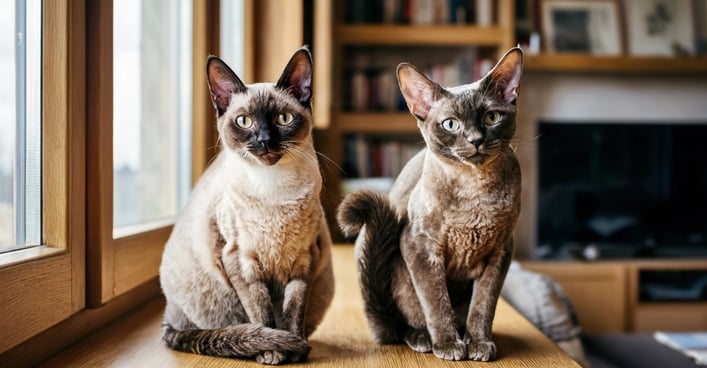
Manx vs American Bobtail: A Complete 2026 Breed Comparison Guide
Choosing between a Manx and an American Bobtail? Our guide compares their health, personality, and care to help you find your perfect short-tailed feline friend.
Share this page
Manx vs American Bobtail: A Complete 2026 Breed Comparison Guide
When considering cats with unique tail characteristics, the Manx and American Bobtail stand out as distinctive and charming choices. Both breeds offer delightful personalities wrapped in unusual physical packages, but they differ significantly in origin, genetics, health, and temperament. This comprehensive 2026 comparison will help you make an informed decision between these fascinating, tail-challenged companions.
Breed Overview
Manx Cats
Origin and History
The Manx originated on the Isle of Man in the Irish Sea, where a spontaneous genetic mutation caused taillessness. Isolated from other feline populations, this mutation became common within the island's gene pool. Historical records on the Isle of Man mention these cats for centuries, with folklore suggesting they arrived from a shipwrecked Spanish Armada vessel in 1588.
One of the first breeds exhibited at cat shows in the late 1800s, the Manx gained early recognition. Today, it remains popular for its unique appearance and dog-like personality, though breeding requires careful management due to significant health concerns linked to the tailless gene.
Manx vs American Bobtail: A Complete 2026 Breed Comparison Guide - Articles
Physical Characteristics
Weight: 8-12 pounds
Length: 14-16 inches
Coat: Double coat; can be short or long (the longhaired variety is called the Cymric)
Colors & Patterns: All colors and patterns are accepted
Eyes: Round; color varies with coat
Distinctive Feature: Taillessness or a very short tail
Lifespan: 8-14 years
Body Type: Stocky, rounded, and substantial with a broad chest
Tail Classifications:
Rumpy: Completely tailless (ideal for show)
Rumpy Riser: A small bone protuberance at the base of the spine
Stumpy: A short tail stump
Stubby: A short tail (about half the normal length)
Longy: A normal or near-normal length tail
American Bobtail
Origin and History
The American Bobtail was developed in the United States during the 1960s. The foundation cat was a brown tabby kitten named Yodie, discovered near an Indian reservation in Arizona. Yodie possessed a naturally short, bobbed tail. Breeders selectively developed this trait by crossing him with various domestic cats, creating a robust and healthy breed.
Crucially, the American Bobtail's short tail results from a different genetic mutation than the Manx's, one that does not carry the same severe health risks. The breed gained formal recognition in the 1980s and continues to be developed today.
Physical Characteristics
Weight: 7-16 pounds (males are typically larger)
Length: 17-19 inches
Coat: Medium length, shaggy, and water-resistant
Colors & Patterns: All colors and patterns
Eyes: Almond-shaped; color varies
Distinctive Feature: A short, expressive bobbed tail (1-4 inches)
Lifespan: 13-15 years
Body Type: Athletic, moderate, and rectangular with a well-muscled frame
Physical Characteristics Comparison
Tail Differences
Manx Tail:
Cause: Spontaneous dominant genetic mutation (the M gene)
Length: None to partial, highly variable
Health Concerns: High risk of Manx Syndrome (spinal and neurological defects)
Appearance: Often a dimple where the tail should be, or a short stump
Genetics: Dominant gene with variable expression; breeding two tailless cats increases health risks.
American Bobtail Tail:
Cause: A different, unrelated genetic mutation
Length: 1-4 inches (ideally about 1 inch)
Health Concerns: None specifically associated with the tail mutation
Appearance: A visible, short tail that may be straight, curved, or slightly kinked
Genetics: Dominant gene without associated spinal defects
Critical Distinction:
The Manx gene can cause serious, life-limiting spinal problems (Manx Syndrome), while the American Bobtail mutation is considered benign and does not carry these health risks.
Body Type Comparison
Feature
Manx
American Bobtail
Build
Stocky, rounded, substantial
Athletic, moderate, rectangular
Body
Deep flanks, broad chest
Medium length, well-muscled
Legs
Hind legs longer than front (can cause a rabbit-like hop)
Medium length, proportionate
Back
Short, arches upward to the hips
Level and athletic
Overall Impression
Compact and cobby
Wild and natural
Weight Range
8-12 pounds
7-16 pounds
Coat & Grooming Differences
Aspect
Manx
American Bobtail
Coat Types
Short or long (Cymric)
Medium length, shaggy
Texture
Double coat, dense and plush
Resilient, water-resistant, non-matting
Grooming (Short)
Brush 2-3 times per week
Brush 1-2 times per week
Grooming (Long)
Daily brushing recommended to prevent mats
Not applicable
Shedding
Moderate
Moderate
Overall Effort
Moderate to High (for longhairs)
Low to Moderate
Temperament and Personality Comparison
Manx Personality
Dog-Like Devotion: Forms extremely strong bonds, often with one person. Known to follow owners, play fetch, and greet at the door.
Playful & Intelligent: Retains a kitten-like playfulness into adulthood. Highly intelligent and adept at problem-solving (e.g., opening doors).
Strong-Willed & Vocal: Knows what it wants and is not shy about demanding it. Uses a moderate voice to communicate.
Family-Friendly: Typically patient and gets along well with children, other cats, and cat-friendly dogs.
Natural Hunter: Possesses strong hunting instincts and may present "gifts."
American Bobtail Personality
Friendly & Adaptable: Confident, outgoing, and adapts well to new people, pets, and environments. Makes an excellent travel companion.
Playful & Goofy: Maintains a playful, kitten-like demeanor throughout life. Enjoys games, puzzles, and interactive play.
Intelligent & Trainable: Highly smart and can learn tricks, walk on a leash, and play fetch. Requires mental stimulation.
Communicative: Has a pleasant, chirpy voice used to interact with family members.
Excellent Family Pet: Its easygoing and patient nature makes it superb for families with children and other pets.
Temperament Summary
Trait
Manx
American Bobtail
Energy Level
Moderate to High
Moderate
Playfulness
High
High
Affection Level
Very High
High
Independence
Moderate
Moderate
Intelligence
High
High
Vocalization
Moderate
Moderate
Trainability
Excellent
Very Good
Good with Children
Very Good
Excellent
Good with Other Pets
Good
Very Good
Adaptability
Good
Excellent
Health and Lifespan: The Most Critical Difference
Manx Health Concerns
The defining Manx gene is linked to serious health issues, collectively known as Manx Syndrome.
Manx Syndrome (Spina Bifida):
The most severe concern, affecting up to 20% of completely tailless (rumpy) Manx cats.
Caused by incomplete development of the spine and spinal cord.
Symptoms include:
Incontinence (urine and/or fecal)
Constipation and megacolon
Partial paralysis or weakness in the hind legs
Lack of sensation around the tail area
Often requires euthanasia on welfare grounds. Symptoms typically appear by 4-6 months of age.
Other Issues: Higher incidence of arthritis and megacolon due to spinal structure abnormalities.
Responsible Breeding Practices: Ethical breeders avoid mating two tailless cats together and often use "longy" or "stumpy" cats in their programs to reduce risk. Kittens should not be placed in homes before 6 months to screen for Manx Syndrome.
Average Lifespan: 8-14 years (often shorter than average due to potential health complications).
American Bobtail Health
Generally Healthy: A robust breed with no known breed-specific genetic diseases.
Tail Mutation: The bobtail gene is not associated with any spinal or neurological defects.
Common Health: Only the typical health concerns of any domestic cat (e.g., dental disease, obesity if overfed).
Average Lifespan: 13-15 years.
Health Comparison Table
Health Factor
Manx
American Bobtail
Overall Health
Fair (due to genetic risks)
Excellent
Major Genetic Concern
Manx Syndrome (serious)
None
Tail-Related Issues
Common and severe
None
Average Lifespan
8-14 years
13-15 years
Expected Veterinary Costs
Higher (potential for specialized care)
Normal
Breeding Ethics
Controversial due to health risks
Straightforward and ethical
Cost of Ownership (2026 Estimates)
Initial & Annual Costs
Expense
Manx
American Bobtail
Kitten Price
$400 - $1,500+
$600 - $1,200+
Initial Vet & Supplies
$600 - $1,300
$600 - $1,300
Total Initial Cost
$1,000 - $2,800
$1,200 - $2,500
Annual Food & Litter
$650 - $1,300
$650 - $1,300
Annual Veterinary Care
$400 - $800+*
$300 - $600
Annual Pet Insurance
$300 - $600
$300 - $600
Total Annual Cost
$1,350 - $2,700
$1,250 - $2,500
*Manx costs may be significantly higher if managing Manx Syndrome.
Lifetime Cost Estimate (Based on Average Lifespan)
Cost Category
Manx (11-year estimate)
American Bobtail (14-year estimate)
Initial Costs
$1,000 - $2,800
$1,200 - $2,500
Ongoing Annual Costs
$14,850 - $29,700
$17,500 - $35,000
Recommended Emergency Fund
$2,000 - $4,000+
$2,000 - $4,000
Total Lifetime Estimate
$17,850 - $36,500+
$20,700 - $41,500
Ethical Considerations
The Manx Breeding Debate
The intentional breeding of Manx cats is a significant ethical concern within the veterinary and animal welfare communities.
The Issue: Breeding for the tailless trait knowingly perpetuates a gene that causes severe suffering and shortened lifespans in a substantial minority of cats.
Responsible Choices: If drawn to the Manx, consider:
Adopting an adult with a known clean bill of health.
Seeking a "stumpy" or "longy" Manx, which have a lower risk of Manx Syndrome.
Supporting only breeders who openly discuss health risks, screen breeding stock, and avoid rumpy-to-rumpy matings.
American Bobtail Ethics
Generally Considered Ethical: The breed's bobtail is a natural mutation not linked to pain or disability.
Breeding practices are straightforward, focusing on health, temperament, and conformation without compromising animal welfare.
Which Breed Is Right for You?
Choose a Manx If:
You are deeply committed to this specific breed and fully understand the serious health risks.
You are prepared for potentially high veterinary costs and specialized care.
You seek an intensely devoted, dog-like companion and can provide constant monitoring.
You are open to adopting an adult cat with a confirmed healthy history.
Choose an American Bobtail If:
You desire a cat with a unique, short tail but prioritize health and longevity.
You want a friendly, adaptable, and intelligent pet that thrives in most families.
You prefer a breed with straightforward, ethical breeding practices.
You seek a playful, communicative companion with fewer inherent health concerns.
Final Conclusion
While both the Manx and American Bobtail are captivating breeds with short tails, they represent vastly different choices in terms of health and ethics.
The American Bobtail emerges as the clear, practical, and welfare-conscious choice for most families and first-time owners. It offers the unique bobtail appearance, a wonderful temperament, and a robust bill of health, leading to a longer, happier life with your pet.
The Manx, despite its endearing personality, carries a heavy burden of potential suffering due to its genetics. If you are considering a Manx, adoption of a healthy adult is the most responsible path. Prospective owners must enter this commitment with eyes wide open to the potential for heartbreak and significant expense.
For those enchanted by the idea of a feline companion with a little less tail, the American Bobtail provides all the charm with a clear conscience and a healthier future.
Disclaimer: Individual cats may vary from general breed descriptions. Always meet a kitten's parents and review health screening documentation from breeders. For Manx cats, especially, consult with a veterinarian experienced with the breed before making a decision.
Get expert advice about cat care, behavior, nutrition, grooming, and training. Ask our AI cat care expert anything about your cat and receive professional guidance.