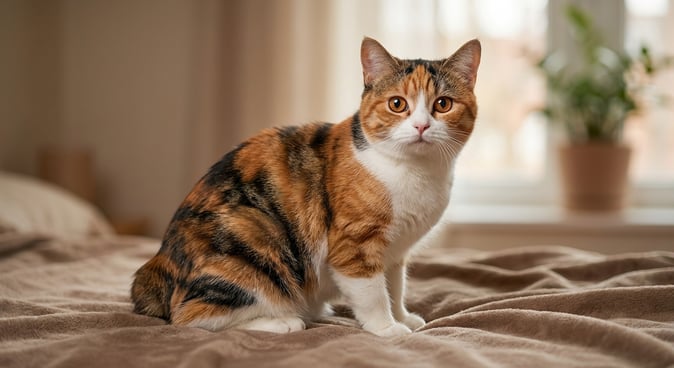
Discover how a tiny Isle of Man gene pool turned a whimsical tailless mutation into the prized Manx cat, journeying from 1700s farmsteads to modern show halls.
The Manx cat, instantly recognizable by its missing tail and rounded silhouette, hails from the mystical Isle of Man and carries centuries of maritime legend in its powerful hind legs. Beyond the striking look lies a heart of gold: calm yet playful, fiercely loyal, and startlingly intelligent. Whether trotting like a rabbit or curling into a perfect ball on your lap, the Manx turns everyday moments into quiet magic.
Sailors’ tales claim the Manx lost its tail when Noah slammed the Ark door too quickly, but genetics tell a different story. A spontaneous natural mutation on the isolated Isle of Man limited the island’s gene pool, allowing the tailless trait to flourish among shorthaired farm cats by the 1700s. The first written records appear in 1810, and by the late 1800s Manx cats were winning prizes at early British cat shows. Exported to America in the 1880s, they helped found the CFA in 1906 and remain the Isle’s global ambassador, even appearing on coins and stamps.
The Manx is all circles: a round head with full cheeks, round eyes set at a slight angle, and a round rump that sports either a dimple, a tiny rise of cartilage, or absolutely no tail at all. Males weigh 4.5–5.5 kg (10–12 lb), females 3.5–5.5 kg (8–12 lb), with compact bodies 35–40 cm long. Powerful hind legs are noticeably longer than the front, giving the signature “rabbit hop” gait and impressive leaping ability. The double coat—short, dense, and plush—can flaunt every color and pattern, from classic tabby to shaded silver, tortoiseshell to colorpoint. Eye color ranges from gold and copper to green and blue, always harmonizing with coat shade.
From the windswept shores of the Isle of Man to modern living rooms worldwide, the tailless Manx cat remains a living legend—equal parts athlete, scholar, and cuddle-bug. Their calm loyalty, playful wit, and striking silhouette create a feline experience unlike any other. Give them love, mental stimulation, and vigilant health care, and your Manx will hop straight into your heart for 12–14 unforgettable years.
Calm without being lazy, playful without chaos—that’s the Manx sweet spot. They bond deeply, often choosing one human as their “person” but remaining courteous to everyone else. Intelligence scores a perfect 5/5: they learn door handles, fetch toys on command, and come when called like a dog. With affection and friendliness at 4/5, expect head-butts, slow blinks, and a quiet tailless shadow following you room to room. They rate 4/5 for kids and other pets, making them ideal multi-species diplomats. Vocalization is a soft 2/5; instead of demanding yowls, you’ll get gentle trills and melodic chirps when dinner is late.
Despite a plush double coat, grooming is refreshingly low-maintenance at 2/5. A five-minute brush twice a week removes dead hair and keeps the dense undercoat from matting. During spring and fall shedding peaks (4/5), daily brushing plus a rubber grooming glove controls the snowstorm. Exercise needs sit at a moderate 3/5—interactive wand toys, puzzle feeders, and cat trees satisfy their athletic jumps. Manx cats excel at leash training and love supervised outdoor walks in safe enclosures. Provide sturdy scratching posts to protect furniture from those powerful hind legs.
The same gene that deletes the tail can affect the spine. “Manx syndrome” appears before six months and may include spina bifida, pelvic canal narrowing, or urinary issues; always adopt from breeders who x-ray breeding stock and never homozygous mate two tailless cats. Arthritis in the unusual tail area and megacolon (chronic constipation) can arise with age, so monitor litter-box habits and stool quality. Corneal dystrophy is rare but screenable; obesity is common when those rabbit-like hops turn couch-potato. Feed measured meals, encourage daily play, and schedule annual vet checks that include tail-rump palpation and spinal imaging if symptoms appear.
A Manx holds the record for “longest jump by a cat”—an incredible 7 ft (2.13 m). Their powerful back legs let them stand upright like meerkats to survey rooms. On the Isle of Man, folklore says a tailless cat on the doorstep brings good luck, and local sailors refused to sail without one aboard for centuries. The breed inspired the “Manx” term in genetics for tailless mutations in other species, including dogs and mice.
Choose a Manx if you want a smart, loyal companion who plays fetch one minute and naps beside you the next. They thrive in homes with respectful children, cat-friendly dogs, or seniors looking for a gentle lap buddy. Budget for possible spinal care, keep meals portion-controlled, and provide vertical space for those bunny hops. If you adore quiet affection, playful intelligence, and the intrigue of a tailless silhouette, the Manx will repay you with years of devoted companionship.
Get AI-powered advice about your cat's health and care. Enter your cat's information and start a conversation with our veterinary assistant.
Start Chat with AIGet expert advice about cat care, behavior, nutrition, grooming, and training. Ask our AI cat care expert anything about your cat and receive professional guidance.
Start Chat with Expert