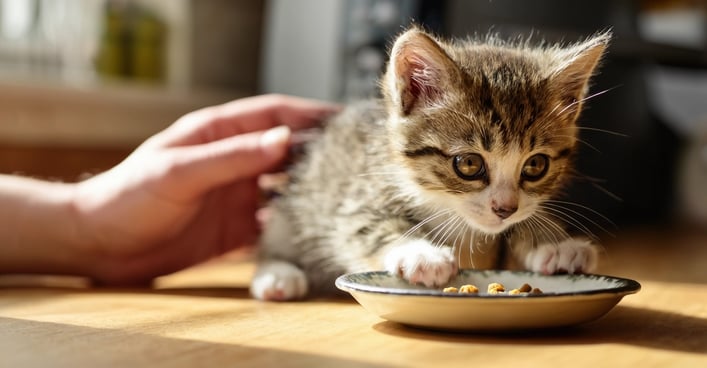
Kitten Weaning: Your Complete Guide to a Smooth Transition to Solid Food
A step-by-step guide to successfully weaning kittens, covering timelines, nutrition, troubleshooting, and how to ensure healthy development from milk to solid meals.
Share this page
Kitten Weaning: Your Complete Guide to a Smooth Transition to Solid Food
Weaning is a pivotal developmental milestone where kittens transition from their mother's milk (or bottle feeding) to a solid food diet. This process demands patience, precise timing, and optimal nutrition to support healthy growth. Our comprehensive guide provides all the essential knowledge for successfully navigating this important stage.
Understanding the Weaning Process
Natural Weaning Timeline
Weeks 1-2: Exclusive Nursing Phase
Kittens rely entirely on nursing.
Eyes remain closed; they are fully dependent.
No capability for solid food.
Week 3: The Exploration Begins
Eyes begin to open.
Kittens start walking.
First signs of interest in the mother's food.
Time to introduce food concepts, not actual consumption.
Goal: Introduce the concept of food without expecting consumption.
Steps:
Prepare a Slurry: Mix high-quality kitten wet food with kitten milk replacer.
Initial Ratio: 75% formula to 25% food.
Warm Gently: Warm the mixture to approximately body temperature (around 100°F or 38°C).
Placement: Put a small amount in a very shallow dish in the kittens' safe area.
Let Them Explore: Allow kittens to investigate—stepping in it is normal!
Effective Techniques:
Let the mother cat eat nearby; kittens learn by observation.
Gently dip your finger in the slurry and touch the kitten's mouth.
Place a tiny amount on their tongue.
Be Patient: Most will not eat initially; this stage is about curiosity.
Expected Outcomes:
Curiosity about the dish and food.
Stepping in and playing with the food.
Licking food from their paws.
Possible first tentative licks from the dish by week 4.
Stage 2: Active Transition (Weeks 4-5)
Goal: Systematically increase solid food intake while decreasing milk dependency.
Slurry Consistency Progression:
Week
Formula
Food
Texture
4
75%
25%
Very liquid, soupy
4.5
60%
40%
Thin gruel
5
50%
50%
Thicker gruel
5.5
40%
60%
Thick, mashed consistency
Feeding Schedule:
Offer the slurry mixture 4-5 times daily.
Remove uneaten food after 20-30 minutes to maintain freshness.
Continue allowing nursing or bottle feeding on demand.
Provide a shallow dish of fresh water at all times.
Crucial Monitoring:
Weigh kittens daily. Healthy kittens should gain 10-15 grams per day.
Observe stool quality and consistency.
Note each kitten's interest level and individual progress.
Stage 3: Gaining Independence (Weeks 5-6)
Goal: Kittens eat primarily solid food with only minimal nursing for comfort.
Food Transition Steps:
Move to a thicker, mashed wet food consistency.
Begin adding small amounts of moistened dry kitten kibble to the mix.
Gradually reduce and then eliminate the formula from the mixture.
Introduce new protein sources or flavors one at a time.
Feeding Routine Adjustments:
Provide 4 scheduled meals of solid food daily.
Optional: Leave a small amount of dry kibble available.
Nursing/bottle feeding is reduced to comfort sessions only.
Ensure constant access to fresh water.
Signs of Success:
Eating enthusiastically from their own dish.
Round, full bellies after meals.
Consistent daily weight gain.
Noticeably less interest in seeking out the mother to nurse.
Well-formed, normal stools.
Stage 4: Completion & Independence (Weeks 6-8)
Goal: Fully independent eating and complete weaning.
By Week 6:
Eating wet kitten food independently.
Drinking water confidently from a dish.
Minimal to no nursing.
Can be safely separated from the mother for short periods.
By Weeks 7-8:
Fully weaned.
Eating scheduled meals without assistance.
Nursing has ceased (though brief comfort nursing may occur).
Ideally ready for adoption to new homes at 10-12 weeks of age.
Special Weaning Considerations
Orphaned or Bottle-Fed Kittens
Key Differences:
May wean slightly earlier or later than naturally weaned kittens.
More dependent on human guidance and patience.
Often require extended bottle feeding for emotional comfort.
Modified Approach:
Begin food introduction at 3 weeks as usual.
Continue bottle feeding through week 5 or longer.
Offer slurry after a bottle feeding session when the kitten is relaxed.
Gradually reduce the amount in each bottle as solid food intake increases.
Managing Large Litters
Common Challenges:
Competition at feeding dishes.
Varying developmental rates among littermates.
Need for multiple, spaced-out feeding stations.
"Runts" may require supplemental feeding.
Effective Strategies:
Set up several identical, shallow feeding dishes.
Feed smaller or slower-developing kittens separately.
Supplement runts with extra bottle feedings as needed.
Monitor individual weights even more closely.
Early Weaning (Emergency Situations Only)
When It Might Be Necessary:
Illness or rejection by the mother cat.
Kitten health issues preventing nursing.
Unsafe environment for the mother to nurse.
Critical Precautions:
Consult your veterinarian immediately.
Avoid weaning before 4 weeks of age unless absolutely necessary.
Be prepared for extended, careful bottle feeding.
Use specialized nutrition formulas as directed by your vet.
Increase the frequency of health monitoring.
Troubleshooting Common Weaning Problems
Problem
Likely Cause
Recommended Solution
Refusal to Eat
Food too cold, wrong texture, not developmentally ready, stress.
Ensure food is warm (body temp). Adjust consistency. Try a different high-quality food. Feed in a quiet, safe location. Be patient.
Diarrhea
Sudden diet change, overeating, food too rich, formula intolerance, parasites.
Slow down the transition. Reduce food concentration in slurry. Double-check formula preparation. Contact your vet if it persists over 24 hours. Ensure hydration.
Aspiration Risk
Food consistency too liquid, improper feeding position, force-feeding.
Use proper gruel consistency (not watery). Feed kittens in a natural, upright position. Never force-feed. Stop immediately if coughing occurs.
Weight Loss / Failure to Gain
Not consuming enough calories, underlying illness, competition.
Immediately resume or supplement with bottle feeding. Schedule a veterinary checkup. Consider an extended weaning timeline for that individual.
Nutritional Requirements for Weaning Kittens
Caloric Needs by Age
Age (Weeks)
Approx. Daily Calories
Recommended Meals Per Day
4
100-125 kcal
6-8
5
150-175 kcal
6
6
200-225 kcal
5-6
7
225-250 kcal
4-5
8
250-275 kcal
4
Calculating Intake: Check the calorie content on your kitten food (kcal/can or cup). Divide the daily need by the number of meals. Adjust portions based on individual weight gain and activity.
Essential Nutrients for Growth
Protein: Minimum 30% for muscle and tissue development.
Fat: Minimum 20% for concentrated energy and brain development.
DHA: An Omega-3 fatty acid critical for brain and vision development.
Calcium & Phosphorus: Properly balanced for strong bone growth.
Taurine: An essential amino acid for heart and eye health.
Hydration is Key
Introduce a very shallow water dish at 4 weeks.
Some kittens need encouragement; try tapping the surface or using a pet water fountain.
Remember, wet food provides significant moisture.
Always monitor to ensure they are drinking adequately.
Creating a Successful Feeding Schedule
Sample Schedule for a 6-Week-Old Kitten
Time
Activity
7:00 AM
Wake up, refresh water bowl, make a small amount of dry kibble available.
7:30 AM
Wet Food Meal #1 (e.g., ¼ of a 3oz can).
11:00 AM
Small snack or access to moistened dry food.
12:00 PM
Wet Food Meal #2 (¼ can).
4:00 PM
Wet Food Meal #3 (¼ can).
7:00 PM
Wet Food Meal #4 (¼ can).
10:00 PM
Optional small bedtime snack.
Overnight
Fresh water and a few dry kibbles available.
Post-Weaning: Setting Up for a Healthy Life
Transition to Regular Kitten Food (8-12 Weeks)
Feed a complete kitten diet.
Provide 4 scheduled meals daily.
A mix of wet and dry food is ideal for variety and dental health.
Foods to Absolutely Avoid
Cow's milk (lactose causes severe diarrhea in kittens).
Adult cat food (lacks essential nutrients for growth).
Dog food.
Table scraps, especially toxic foods like onions, garlic, grapes, chocolate, and xylitol.
Raw meat or fish (high risk of parasites and bacteria).
Veterinary Care Timeline
4-5 Weeks: First vet visit for a health check, fecal exam, and deworming.
6-8 Weeks: First round of core vaccinations (FVRCP), weight check, and discussion about spay/neuter.
10-12 Weeks: Second vaccination booster and typically ready for adoption/spay/neuter procedures.
Call Your Veterinarian Immediately If You Notice:
Diarrhea or vomiting lasting more than 24 hours.
Weight loss or failure to gain weight.
Lethargy, weakness, or hiding.
Refusing all food and water.
A bloated or painful abdomen.
Difficulty breathing or persistent coughing.
The Bottom Line: Keys to Weaning Success
Successful weaning is built on patience, consistency, and careful observation. While most kittens naturally progress between 4-8 weeks, always be prepared to adapt to individual needs.
Your 6 Key Success Factors:
Start Early, Go Slow: Introduce food concepts at 3 weeks without pressure.
Progress Gradually: Never rush the transition; follow the kitten's lead.
Monitor Relentlessly: Daily weight checks are your best indicator of health.
Invest in Quality: Use premium, kitten-specific food formulated for growth.
Maintain Cleanliness: Wash dishes frequently and remove old food promptly.
Partner with Your Vet: When in doubt, seek professional guidance.
Proper weaning establishes the foundation for lifelong healthy eating habits and robust development. The care and attention you invest during these crucial weeks will result in confident, well-adjusted kittens ready to thrive in their forever homes.
Last Updated: 2026 This guide provides general information. Always consult your veterinarian for specific guidance regarding your kittens' unique nutritional needs and health status.
Get expert advice about cat care, behavior, nutrition, grooming, and training. Ask our AI cat care expert anything about your cat and receive professional guidance.