catscare.xyz Your comprehensive guide to cat breeds, care, and everything feline.
Language & Social Links Connect © 2026 catscare.xyz. All rights reserved.
Kitten Proofing Your Home: The Complete 2026 Safety Guide Protect your curious new kitten from hidden household dangers. Our comprehensive guide covers room-by-room hazards, toxic substances, and essential safety modifications.
Kitten Proofing Your Home: The Complete 2026 Safety Guide
Meta Description: Create a safe environment for your new kitten with this comprehensive kitten-proofing guide. Learn about hidden dangers, toxic substances, and essential safety modifications.
Introduction
Kitten-proofing your home is an essential responsibility that protects curious, energetic kittens from the numerous dangers lurking in everyday household items. Kittens are natural explorers with boundless energy, sharp teeth, and a compulsion to investigate everything through chewing, climbing, and squeezing into tight spaces. What appears safe to adult humans often presents serious hazards to these tiny adventurers.
Creating a kitten-safe environment requires a systematic assessment of every room, identification of potential dangers, and implementation of protective measures. This comprehensive guide walks you through each area of your home, highlighting risks you might never have considered and providing practical solutions to keep your new family member safe.
Kitten Proofing Your Home: The Complete 2026 Safety Guide - Articles
Understanding Kitten Behavior and Risks
Why Kittens Get Into Trouble Behavior Purpose Risk Chewing Teething, exploration Ingesting toxins, choking Climbing Escape, hunting practice Falls, knocked items Squeezing Seeking safe spaces Getting stuck, trapped Pouncing Hunting practice Broken items, injury Batting Play, coordination Knocking dangerous items Investigating Learning environment Exposure to hazards
Teething (3-6 months): Intense urge to chewHigh energy: Need for constant activitySmall size: Can access tight spacesFearlessness: Haven't learned danger yetCuriosity: Everything must be investigated
Common Kitten Injuries Emergency Vet Statistics:
Ingestion of foreign objects (toys, string, rubber bands)
Toxic substance exposure (plants, medications, chemicals)
Falls from heights
Burns (stoves, candles, heating pads)
Crushing injuries (recliners, rocking chairs, doors)
Electrocution (chewing cords)
Room-by-Room Kitten Proofing
Living Room Recliners and Rocking Chairs:
Risk: Kittens climb underneath and get crushed when chair movesSolution:
Block access to reclining mechanism with furniture guards
Check under chair before operating
Consider temporarily disabling rocking function
Use chair only when kitten is supervised
Sofas and Chairs with Gaps:
Risk: Kittens get stuck inside furniture, ingest foam/staplesSolution:
Repair torn upholstery immediately
Block access to undersides with plywood or cardboard
Consider furniture covers that seal gaps
Bookshelves and Media Centers:
Risk: Climbing leads to falling objectsSolution:
Secure tall furniture to walls with anti-tip straps
Remove heavy items from upper shelves
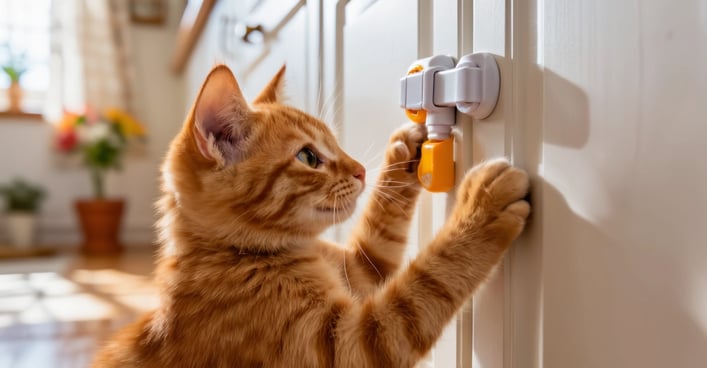
Add cabinet locks to keep doors closed
Television and Entertainment Systems:
Risk: Chewing cords, climbing on unstable surfaces, knocking overSolution:
Use cord management systems to bundle and conceal
Apply bitter apple spray to accessible cords
Use cord covers for exposed wiring
Secure TV with anti-tip straps
Gaming Consoles and Cable Boxes:
Risk: Heat burns, chewing small parts, cord hazardsSolution:
Place in enclosed cabinets when possible
Ensure adequate ventilation
Secure all loose cables
Plants (See Toxic Plants Section):
Remove all toxic plants
Place non-toxic plants out of reach
Consider artificial alternatives
Risk: Burns, fire, knocked overSolution:
Eliminate candles or use enclosed lanterns
Use fireplace screens
Never leave burning candles unattended
Small Decorative Objects:
Risk: Choking, intestinal blockage if ingestedSolution:
Remove items smaller than a golf ball
Secure larger items with museum putty
Display in closed cabinets
Kitchen
Chocolate, grapes, raisins, onions, garlic, xylitol, alcohol, caffeine
Solution: Store in secure cabinets, never leave unattended on counters
Risk: Ingestion of bones, toxic scraps, spoiled foodSolution:
Use locking trash cans
Store under sink with child locks
Empty frequently
Never leave food waste accessible
Risk: Burns, jumping on hot surfaces, climbing on knobsSolution:
Use stove knob covers
Keep oven door closed
Supervise when cooking
Consider induction cooktop (cools faster)
Risk: Access to dirty dishes, detergent residue, hot waterSolution:
Keep door closed and latched
Don't leave dirty dishes inside
Rinse dishes before loading
Risk: Getting trapped inside, ingesting dropped foodSolution:
Check inside before closing
Keep floor clear of dropped items
Risk: Toxic ingestion of cleaners, bleach, detergentsSolution:
Install child safety locks on all cabinets
Store chemicals in upper cabinets if possible
Use pet-safe cleaning products
Never leave buckets of cleaning solution unattended
Toaster and Coffee Maker:
Risk: Pulling down by cord, hot surfaces, electrical hazardsSolution:
Keep cords wrapped and secured
Place appliances away from counter edges
Unplug when not in use
Bathroom
Risk: Drowning, drinking toilet water with chemicalsSolution:
Keep toilet lid closed
Install toilet lid lock
Never use automatic toilet bowl cleaners
Risk: Falling in, slipping, hot water burnsSolution:
Keep drains closed
Never leave water running unattended
Check water temperature
Medications and Toiletries:
Risk: Ingestion of pills, creams, liquidsSolution:
Keep cabinet closed and latched
Store medications in upper cabinets
Never leave pills on counters
Risk: Ingestion of soaps, shampoos, dental productsSolution:
Store in closed cabinets
Never leave products on tub edge or counters
Use pet-safe alternatives when possible
Shower and Tile Cleaners:
Risk: Toxic fumes, ingestionSolution:
Store in locked cabinets
Rinse surfaces thoroughly after cleaning
Use pet-safe cleaning products
Ensure good ventilation
Risk: Getting trapped inside, ingesting detergentSolution:
Always close doors
Check inside before starting
Store detergent in locked cabinets
Never leave laundry baskets accessible (attractive hiding spots)
Bedroom
Risk: Getting inside, ingesting foam or fabricSolution:
Use encasements that seal completely
Repair any tears immediately
Block access to underside
Risk: Suffocation if trapped, ingestion of fillingSolution:
Remove decorative pillows with beads or small parts
Avoid electric blankets
Ensure kitten can exit bedding easily
Risk: Getting trapped, ingesting clothing items (string, buttons)Solution:
Keep closet doors closed
Store shoes in closed containers
Hang clothing high enough that kitten can't reach
Risk: Getting closed inside, ingesting stored itemsSolution:
Check drawers before closing
Use child locks on low drawers
Store dangerous items high
Charging Cords and Devices:
Risk: Electrocution from chewingSolution:
Use cord protectors
Charge devices in inaccessible areas
Unplug chargers when not in use
Risk: Strangulation from cords, climbing and fallingSolution:
Use cordless blinds
Secure cord loops out of reach
Ensure screens are secure
Laundry Room Washing Machine and Dryer:
Risk: Getting trapped inside, detergent ingestionSolution:
Always keep doors closed
Check inside before starting
Don't leave laundry baskets accessible
Risk: Toxic ingestionSolution:
Store in locked cabinets
Use high shelves
Clean up spills immediately
Garage and Basement Immediate Action Required:
Garages and basements are extremely dangerous for kittens and should generally be off-limits. If access is unavoidable:
Antifreeze (extremely toxic, even small amounts fatal)
Motor oil and fuels
Pesticides and fertilizers
Paint and solvents
Solution: Store in locked cabinets, clean all spills immediately, use pet-safe alternatives
Tools and sharp objects
Small parts and hardware
Open drains and sump pumps
Insulation materials
Solution: Organize in closed storage, block access to dangerous areas
Engines (kittens seek warmth)
Wheels (crushing risk)
Chemicals
Solution: Check under and in engine before starting vehicle, honk horn
Outdoor Areas If Kitten Goes Outside (Not Recommended):
Secure, escape-proof fencing required
Consider "cat fence" toppers
Check for gaps regularly
Remove all toxic plants (see comprehensive list)
Check neighbor's plants that overhang
Fertilizers, pesticides, herbicides
Antifreeze from vehicles
Pool chemicals
Solution: Store securely, use pet-safe alternatives
Predators (coyotes, dogs, birds of prey)
Vehicles
Parasites and diseases
Poisonous animals
Recommendation: Keep kittens indoors for safety
Toxic Substances Comprehensive List
Toxic Foods
Chocolate (theobromine)
Grapes and raisins
Onions, garlic, chives
Xylitol (artificial sweetener)
Alcohol
Caffeine
Raw dough with yeast
Macadamia nuts
Avocado
Fruit pits and seeds
Toxic Plants Common Toxic Houseplants:
Plant Toxicity Level Symptoms Lilies EXTREME Kidney failure Sago Palm EXTREME Liver failure Azalea/Rhododendron HIGH Cardiac issues Oleander EXTREME Heart failure Tulips MODERATE GI upset, CNS depression Daffodils MODERATE Vomiting, seizures Dieffenbachia MODERATE Oral irritation Philodendron MODERATE Oral irritation Pothos MODERATE Oral irritation Peace Lily MODERATE Oral irritation Aloe Vera MILD GI upset Jade Plant MILD GI upset
Spider plant
Boston fern
African violet
Orchids
Bamboo palm
Cat grass (wheat grass)
Catnip
Toxic Chemicals and Medications
Bleach and ammonia
All-purpose cleaners
Drain cleaners
Oven cleaners
Toilet bowl cleaners
Antifreeze
Motor oil
Pesticides
Fertilizers
Rat/mouse poison
Acetaminophen (Tylenol)
Ibuprofen (Advil, Motrin)
Antidepressants
ADHD medications
Sleep aids
Cold medications
Vitamins (especially with iron)
Essential Safety Equipment
Must-Have Items Item Purpose Cost Child safety locks Secure cabinets $10 - $20 Cord protectors Prevent electrocution $15 - $30 Baby gates Restrict access $40 - $100 Feliway diffusers Reduce stress $25 - $40 Bitter apple spray Deter chewing $10 - $15 Furniture straps Prevent tipping $10 - $20 Toilet lid locks Prevent drowning $5 - $10 Trash can with lock Secure waste $30 - $60 Pet-safe cleaning products Safe cleaning $20 - $40 First aid kit Emergency care $30 - $60
Kitten-Proofing Checklist
Pre-Kitten Arrival
Daily Maintenance
Emergency Preparedness
Poison Control ASPCA Animal Poison Control Center:
Phone: (888) 426-4435
Fee: $75 per case
Available 24/7
Phone: (855) 764-7661
Fee: $75 per case
Available 24/7
Emergency Kit Contents
Gauze and bandages
Hydrogen peroxide (for inducing vomiting—vet guidance only)
Digital thermometer
Tweezers
Scissors
Emergency contact numbers
Medical records
Carrier
Towels
Flashlight
Cost of Kitten Proofing
Essential Supplies Budget Category Low Cost High Cost Safety locks/latches $20 $50 Cord management $15 $40 Baby gates $40 $100 Furniture securing $10 $30 Trash containment $30 $60 Toxic plant replacement $0 - $50 $100 - $200 Pet-safe cleaning supplies $20 $50 Miscellaneous $25 $75 Total $160 $605
Potential Emergency Costs Situation Cost Range Emergency vet visit $150 - $500 Toxic ingestion treatment $500 - $3,000+ Foreign body surgery $2,000 - $5,000+ Burn treatment $200 - $1,000+
Conclusion Kitten-proofing your home is not a one-time task but an ongoing commitment to safety that evolves as your kitten grows and explores new areas. The initial investment of time and money in creating a secure environment prevents emergencies, protects your belongings, and provides peace of mind.
Remember that no home can be made 100% kitten-proof—supervision remains essential, especially during the first months. However, systematic elimination of the most common hazards significantly reduces risks and allows your kitten to explore, learn, and develop confidence in a secure environment.
The comprehensive approach outlined in this guide, from room-by-room assessment to emergency preparedness, creates a foundation for safe kittenhood and establishes habits that protect your cat throughout their life. The cost of prevention is always less than the cost of emergency veterinary care or the heartbreak of preventable accidents.
Your diligence in kitten-proofing allows your new family member to focus on what they do best—being adorable, playful, and endlessly entertaining—while you enjoy the confidence that comes from knowing you've created the safest possible home for their adventures.
Cat's Doctor Get AI-powered advice about your cat's health and care. Enter your cat's information and start a conversation with our veterinary assistant.
Start Chat with AI Cat's Expert Get expert advice about cat care, behavior, nutrition, grooming, and training. Ask our AI cat care expert anything about your cat and receive professional guidance.
Start Chat with Expert