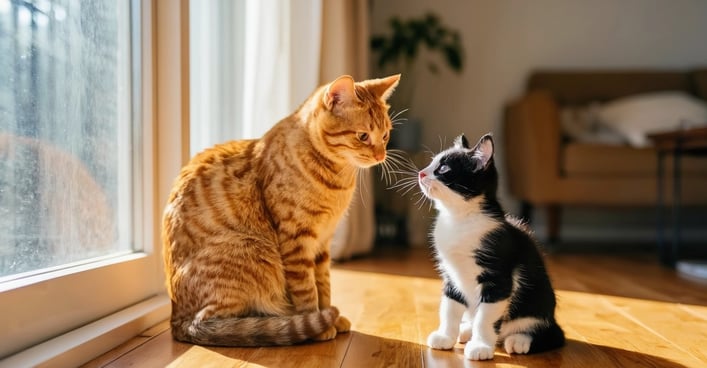
Introducing a Kitten to an Adult Cat: The 2026 Complete Guide
A step-by-step, stress-free guide to integrating a new kitten with your resident adult cat. Learn proven techniques for building harmony and preventing conflict in your multi-cat home.
Share this page
Introducing a Kitten to an Adult Cat: The 2026 Complete Guide
Meta Description: Master the art of introducing a kitten to an adult cat with our expert, step-by-step guide. Learn to minimize stress, prevent aggression, and foster a peaceful, multi-cat household.
Introduction
Successfully introducing a kitten to an adult cat is a delicate process that demands patience, strategy, and a deep understanding of feline psychology. While cats can form strong social bonds, they are inherently territorial creatures. A rushed or poorly managed introduction can lead to lasting hostility, chronic stress, and behavioral issues that are difficult to reverse.
The encouraging reality is that with the right approach, most adult cats will eventually accept a new kitten, and many develop affectionate, lifelong bonds. The secret lies in respecting feline instincts, progressing at a cat-led pace, and consistently creating positive associations between the newcomer and the resident.
Introducing a Kitten to an Adult Cat: The 2026 Complete Guide - Articles
This definitive guide provides a proven, structured framework for a successful introduction, whether you're bringing a playful kitten into a home with a serene senior cat or expanding your feline family.
Understanding Feline Social Dynamics
Territory and Resources
Cats are profoundly territorial. They perceive their home environment as a kingdom to be defended. Understanding this is key to a smooth introduction.
Core Territory: Their most secure zones—favorite sleeping spots, elevated perches.
Home Range: Areas they regularly patrol and monitor.
Resource Locations: Critical sites for food, water, litter boxes, and scratching posts.
Scent Marking: How cats "claim" space through facial rubbing, scratching, and occasionally urine marking.
Why Introductions Are Inherently Challenging:
Factor
Impact on Introductions
Territorial Instinct
Resident cat views the home as theirs alone.
Scent-Based Recognition
Unfamiliar scents trigger immediate suspicion and alertness.
Resource Guarding
Potential competition for food, attention, and prime resting spots.
Social Maturity
Adult cats are generally less socially flexible than kittens.
Past Experiences
Previous negative encounters with other cats shape current responses.
The Adult Cat's Perspective
Common Concerns of a Resident Cat:
Loss of Territory: Fear that the new cat will claim their cherished spaces.
Resource Competition: Anxiety over reduced access to food, human attention, and favorite spots.
Social Disruption: Stress from changes to established daily routines.
Safety Threat: Perception of the unknown kitten as a potential danger.
Generalized Stress: The mere presence of a stranger creates ongoing anxiety.
Potential Positive Outcomes for the Resident Cat:
Companionship during your absences.
A playful partner (if energy levels are compatible).
Opportunities for social grooming (allogrooming).
Increased environmental enrichment and mental stimulation.
The Kitten's Perspective
Kitten Advantages in Introductions:
Smaller physical size (appears less threatening).
High degree of social flexibility and adaptability.
Natural inclination to display submissive behaviors.
Innate playfulness that can engage some adult cats.
Easier for adults to establish a clear hierarchy with.
Potential Kitten Challenges:
Boundless energy that may annoy a sedate adult.
Poor understanding of social boundaries (may pester relentlessly).
Prone to fear if not properly socialized.
Requires protection from overly rough adult play or correction.
Pre-Introduction Preparation
Preparing Your Home Environment
Establish Separate, Secure Territories:
The Kitten Zone (A separate room is essential):
A dedicated room with a closable door.
Separate food and water bowls.
Its own litter box.
A comfortable bed and sleeping area.
Age-appropriate toys and a scratching post.
Adequate hiding spots (like a cardboard box or cat cave).
Essential Introduction Supplies:
Item
Quantity
Purpose & Notes
Food/Water Bowls
2+ sets
Keep completely separate from the adult cat's dishes.
Litter Boxes
1+ extra
Follow the "n+1" rule (one per cat, plus one extra).
Beds/Hiding Spots
2+ minimum
Provide safe retreats in multiple rooms.
Scratching Posts
2+
Different types (vertical, horizontal) in different areas.
Interactive Toys
Multiple
Use to distract and create positive associations.
Sturdy Baby Gates
2-3
Crucial for controlled visual introductions.
Feliway® Diffusers
2+
Synthetic calming pheromones to reduce household stress.
Strategic Space Modifications:
Install baby gates to create visual barriers in doorways.
Enhance vertical space with cat trees, shelves, and perches.
Ensure all rooms have multiple escape routes to prevent cornering.
Block off dangerous hiding spots (e.g., under heavy appliances).
Strategically place all new resources before the kitten arrives.
Preparing the Resident Adult Cat
Health & Wellness Check:
Schedule a veterinary check-up to ensure your cat is healthy.
Confirm all vaccinations are up-to-date before the introduction.
Address any existing medical or behavioral issues (like anxiety).
Environmental & Routine Preparation:
Introduce new cat trees or shelves a week or two in advance.
Maintain your cat's normal feeding, play, and cuddle schedule.
Ensure their favorite resting spots remain undisturbed and accessible.
Calming Support:
Plug in Feliway® diffusers in common areas 1-2 weeks prior.
Discuss calming supplements (e.g., Zylkene®, calming collars) with your vet.
Provide extra play sessions to burn energy and reinforce bonding.
Preparing the New Kitten
Mandatory Health Protocols:
Immediate veterinary examination.
Age-appropriate FVRCP vaccinations.
Deworming and parasite prevention (fleas/ticks).
Testing for FIV/FeLV, especially if background is unknown.
The Quarantine Period (7-14 days):
Non-negotiable. Keeps the kitten confined to its "safe room."
Prevents potential transmission of illness or parasites.
Allows the kitten to acclimate to new sounds, smells, and routines.
Begin scent exchange during this period (see Phase 1).
The Introduction Process: A Step-by-Step Guide
Phase 1: Scent Exchange (Days 1-3)
Goal: Familiarize each cat with the other's scent before any visual contact.
Effective Techniques:
Scent Swapping:
Daily exchange of bedding or small blankets between rooms.
Gently rub a clean sock or cloth on one cat's cheeks (where scent glands are), then place it near the other cat's food bowl or bed.
Exchange toys between their spaces.
Feeding Association:
Feed both cats on opposite sides of the same closed door.
Start with bowls several feet from the door.
Over days, gradually move the bowls closer to the door.
This builds a powerful positive association: "Your scent means mealtime!"
Duration: Minimum 2-3 days. Proceed only when both cats are calm and eating well near the door.
Signs of Readiness for Phase 2:
Both cats eat calmly near the shared barrier.
They show curiosity—sniffing at the door crack, not avoiding it.
No hissing, growling, or stressed body language in response to the scent.
Phase 2: Visual Introduction (Days 3-7)
Goal: Allow controlled visual contact while maintaining a physical barrier.
Setup Options:
Cracked Door: Secure the door open just 1-2 inches with a door stop.
Double Baby Gates: Stack two sturdy gates in a doorway (foils climbers).
Carrier Method: Place the kitten in a secure carrier in a common room for short, supervised visits.
Session Protocol:
Aspect
Recommendation
Duration
Start with 5-10 minute sessions.
Frequency
2-3 times daily.
Supervision
Constant. Never leave them unattended.
Distraction
Offer high-value treats or play with a wand toy during the session.
Ending
Always end on a positive note, before any signs of stress appear.
Interpreting Behavior:
Positive/Normal Signs:
Calm observation, ears forward.
Sniffing at the barrier with curiosity.
Ignoring each other to play or eat treats.
Warning Signs (End Session Immediately):
Hissing, growling, or yowling.
Swatting aggressively at the barrier.
Puffed fur, arched back, flattened ears.
Stalking or fixated staring.
If Warning Signs Appear:
Calmly separate the cats.
Return to scent-only activities (Phase 1) for a day or two.
Slow down your timeline. Let the cats set the pace.
Challenges: Major energy mismatch, potential for the senior to feel harassed, disruption of cherished routines.
Adaptations:
Create exclusive, kitten-free zones for the senior cat (e.g., a cozy bedroom).
Actively manage the kitten's energy with multiple, scheduled play sessions throughout the day.
Provide the senior cat with quiet, elevated retreats.
Monitor the senior's health and stress levels closely with your vet.
Cats with a History of Aggression
Seek professional guidance from the start. Consult a Certified Cat Behavior Consultant or a Veterinary Behaviorist.
Medication (like fluoxetine) prescribed by a vet may be a necessary tool to lower anxiety.
The introduction process will be much slower and may require permanent management strategies.
Troubleshooting Common Problems
Problem
Likely Cause
Solutions
Resident Cat Hides Constantly
Feels overwhelmed and unsafe.
Slow way down. Use more Feliway®. Ensure they have a secure, kitten-free sanctuary. Consult a vet for anti-anxiety options.
Resident Cat is Aggressive
Territorial defense or fear-based aggression.
Immediately return to Phase 2 (visual only). Increase all resources. Rule out pain with a vet. Hire a professional behaviorist.
Kitten Won't Stop Pestering Adult
Excess energy and poor social skills.
Increase structured play with the kitten to tire them out. Provide solo puzzle toys. Ensure the adult has high-up escape routes.
New Litter Box Issues
Stress, insufficient boxes, or medical problem.
Add more boxes in quiet, accessible locations. Clean boxes daily. First step: rule out a UTI or other illness with a vet.
Resident Cat Stops Eating
Serious stress or illness.
This is a veterinary emergency. Feed cats in completely separate rooms. Try hand-feeding or warming food to increase appeal.
Realistic Timeline & Cost Expectations
Typical Progression Timeline
Timeline
Expected Milestone
Week 1
Scent exchange and quarantine. Visual introductions through a barrier begin.
Week 2
Short, supervised physical meetings in a neutral room.
Week 3
Extended supervised time together in more areas of the home.
Week 4-6
Gradual increase in unsupervised time. Monitoring for stable coexistence.
Week 8+
Full integration achieved. (Note: This can vary from 3 weeks to 6+ months).
Factors for a Faster Integration: Young, sociable resident cat; ample space; no history of conflict.
Factors for a Slower Integration: Senior cat; limited space; history of aggression; shy/anxious personalities.
Estimated Cost Breakdown (2026)
Initial Setup Supplies:
Feliway® Diffusers & Refills: $60 - $100
Baby Gates & Barriers: $50 - $120
Additional Litter Boxes & Supplies: $40 - $100
Extra Bowls, Beds, Scratching Posts: $60 - $150
Total Estimated Range: $210 - $470
Potential Professional Support:
Certified Cat Behavior Consultant: $100 - $250 per session.
Veterinary Behaviorist Consultation: $300 - $600.
Prescription Anxiety Medication: $20 - $80 per month.
Conclusion
Introducing a kitten to an adult cat is an investment in your multi-cat household's future harmony. Rushing the process is the most common cause of failure, while patience and a structured plan are the pillars of success.
The reward—whether it's watching them play, groom each other, or simply share a sunbeam in peaceful silence—is immeasurable. By respecting their individual personalities, providing ample resources, and letting them set the pace, you create the foundation for a loving and stress-free feline family. Remember, a peaceful truce is just as successful as a devoted friendship. Your careful efforts now will pay dividends in their shared happiness for years to come.
Get expert advice about cat care, behavior, nutrition, grooming, and training. Ask our AI cat care expert anything about your cat and receive professional guidance.