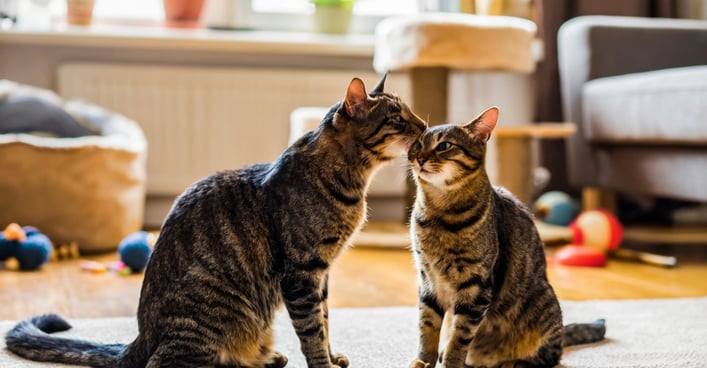
Introducing Cats to Each Other: A Complete Step-by-Step Guide for 2026
A proven, stress-free guide to introducing cats. Learn the gradual scent-to-sight method to build harmony and prevent lasting conflicts in your multi-cat home.
Share this page
Introducing Cats to Each Other: A Complete Step-by-Step Guide for 2026
Introducing a new cat to your resident feline is a delicate process that requires patience and strategy. When done correctly, it can lead to a harmonious, enriching relationship. Rushed introductions, however, can create long-term stress and conflict. This guide provides a proven, step-by-step method to ensure a smooth transition for everyone involved.
Pre-Introduction Preparation
Before Bringing the New Cat Home
Veterinary Preparation is Crucial:
Ensure both cats are healthy and protected before any contact.
Confirm overall health and identify any underlying issues.
FIV/FeLV Testing
Protect your resident cat from contagious diseases.
Vaccinations
Ensure all core vaccines are up to date.
Parasite Treatment
Prevent the transmission of fleas, worms, or mites.
Spay/Neuter
Essential for reducing hormonally-driven aggression and territorial behavior.
Essential Supplies Checklist:
Separate food and water bowls for each cat
Additional litter boxes (follow the N+1 rule: one per cat, plus one extra)
Designated sleeping areas
Feliway MultiCat or other calming pheromone diffusers
Secure carriers for both cats
Sturdy baby gates (optional but helpful)
High-value treats and engaging toys
Setting Up Your Home
Create a Separate Sanctuary:
Designate a "safe room" for the new cat—a quiet space with a closable door where they can acclimate without pressure.
The resident cat maintains free reign of the rest of the house initially.
This room should contain all the new cat's necessities.
Safe Room Essentials:
Litter box
Food and water stations
Comfortable bedding
Secure hiding spots (like a covered bed or cardboard box)
Scratching post
A few interactive toys
Access to a window view, if possible
The Gradual Introduction Timeline
Phase 1: Scent Exchange (Days 1-3)
Goal: Familiarize the cats with each other's scent before any visual contact.
Scent Swapping Techniques:
Day
Activity
1
Exchange bedding or blankets between the cats' spaces.
2
Swap rooms: let each cat explore the other's area while the other is confined.
3
Rub a soft cloth on one cat and place it near the other's food or favorite resting spot.
Observing Reactions:
Hissing at the scent: A normal, communicative reaction.
Ignoring the scent: A very positive sign.
Aggression or extreme fear: Extend this phase for several more days.
Phase 2: Visual Introduction (Days 4-7)
Goal: Allow the cats to see each other without physical contact, creating positive associations.
Effective Methods:
The Cracked Door:
Open the safe room door just 1-2 inches.
Supervise closely to prevent paws from reaching through.
Baby Gate Barrier:
Install a sturdy, tall baby gate in the doorway.
Feed both cats on opposite sides of the gate to build positive associations.
The Carrier Method:
Place the new cat in a carrier in a common area.
Allow the resident cat to approach and observe safely.
Rotate which cat is in the carrier in subsequent sessions.
Positive Signs:
Calm observation or casual glancing
Curious but relaxed approach
Normal body language (ears forward, tail relaxed)
Willingness to eat treats near the barrier
Warning Signs (Slow Down if Seen):
Prolonged hissing, growling, or yowling
Swatting aggressively through the barrier
Puffed fur, arched back, or flattened ears
Refusing to eat or turning away
Phase 3: Supervised Contact (Days 8-14)
Goal: Facilitate brief, positive face-to-face interactions in a controlled environment.
Setup for Success:
Choose a large, neutral room.
Ensure multiple escape routes and high perches are available.
Have toys and high-value treats ready to distract and reward.
Procedure:
Bring both cats into the room.
Let them approach each other on their own terms; do not force interaction.
Keep initial sessions very short (5-10 minutes).
Always end on a positive note, like giving treats.
Separate them immediately at the first sign of serious tension.
What to Expect & How to Respond:
Some hissing: Normal communication; monitor closely.
Avoidance: An acceptable form of peaceful coexistence.
Brief swatting: Redirect with a toy; may need shorter sessions.
Full-blown aggression (lunging, tackling): Separate immediately and return to Phase 2.
Phase 4: Increasing Integration (Weeks 2-4)
Goal: Gradually increase the duration of supervised time together.
Week
Recommended Activity
2
Daily supervised sessions of 15-30 minutes.
3
Extend sessions to 1-2 hours, monitoring interactions.
4
Allow supervised coexistence for most of the day.
Supervised Exploration:
Allow the new cat to explore more of the house while the resident cat is in another room, and vice-versa.
Closely monitor all interactions around shared resources (food, litter boxes).
Phase 5: Full Integration (Week 4+)
Goal: Achieve peaceful, unsupervised coexistence.
Proceed Only When:
No signs of aggression or intense fear for at least one week.
Cats are consistently relaxed in each other's presence (ignoring or tolerating each other is fine).
No resource guarding (food, litter boxes, beds) is observed.
First Unsupervised Steps:
Start with very short periods (30 minutes) while you are home but in another room.
Gradually increase the unsupervised time over days and weeks.
Be prepared to step back to Phase 4 if any new conflicts arise.
Managing a Harmonious Multi-Cat Home
The Golden Rules of Resource Management
Litter Boxes:
Number: One per cat, plus one extra.
Placement: In separate, quiet, low-traffic locations—not lined up together.
Type: Offer variety (covered/uncovered) if cats show preferences.
Food and Water:
Provide separate feeding stations to prevent competition.
Use visual barriers (like feeding in separate corners) if needed.
Place multiple water bowls around the house.
Resting and Vertical Space:
Offer multiple beds, cat trees, shelves, and perches at different heights.
Spread these resources throughout various rooms to prevent territorial disputes.
Scratching Posts:
Provide one scratching post per cat, plus one extra, in different locations.
Troubleshooting Common Challenges
Addressing Aggression
Type of Aggression
Recommended Solution
Fear-Based
Slow down the process. Spend more time on scent exchange.
Territorial
Increase resources (litter boxes, beds). Use Feliway diffusers.
Play Aggression
Redirect with interactive wand toys to establish appropriate play.
Redirected
Identify and eliminate the trigger (e.g., outdoor cat sighting). Separate cats before they become overstimulated.
Signs One Cat is Bullying Another
Blocking access to food, litter boxes, or favorite spots.
Intense staring and stalking.
Constant chasing that causes the other cat to flee or hide.
Solutions: Increase resource availability, create more vertical escape routes, feed separately, and implement time-outs if necessary.
Supporting a Stressed Resident Cat
Signs: Hiding more than usual, decreased appetite, over-grooming, house soiling.
Actions: Slow the introduction pace, give your resident cat extra one-on-one attention, maintain their routine, and consult your vet to rule out medical issues.
Helping an Overwhelmed New Cat
Signs: Constant hiding, not eating, excessive fearfulness.
Actions: Extend the confinement period, introduce them to the house in smaller sections, provide ample hiding spots, and be patient.
Special Introduction Scenarios
Introducing a Kitten to an Adult Cat
Usually easier, but requires supervision.
The adult may exhibit maternal or paternal behavior.
The kitten's high energy may annoy the adult; provide the adult with quiet escape routes.
Supervise all play to ensure it doesn't become too rough.
Introducing an Adult to a Senior Cat
Can be challenging.
The senior may desire a calm environment and not want a playful companion.
The stress of introduction can exacerbate age-related health issues.
Proceed with extreme caution and patience; it may not be the right fit.
Introducing Two Adult Cats
Often the most challenging scenario.
Requires the most time, patience, and adherence to the gradual process.
The goal may be peaceful coexistence rather than close friendship.
Don't hesitate to seek professional help from a certified behavior consultant.
Signs of a Successful Introduction
Positive Indicators of Bonding
Behavior
Likely Meaning
Sleeping in the same room (even apart)
Comfort and acceptance
Eating calmly near each other
Tolerance and lack of competition
Mutual grooming (allogrooming)
Strong social bond
Playing together with relaxed body language
Friendship
Passing each other peacefully or sharing a sunbeam
Successful coexistence
Remember: Peaceful coexistence—where cats simply ignore each other—is a completely successful and common outcome. Not all cats will be best friends.
When to Seek Professional Help
Consult a veterinarian or certified cat behavior consultant if:
One cat becomes completely withdrawn, stops eating, or eliminates outside the litter box.
You feel overwhelmed or unsure how to proceed.
Realistic Timeline Expectations
Relationship Level
Typical Timeline
Basic Tolerance
2 to 4 weeks
Peaceful Coexistence
1 to 3 months
Casual Friendship
3 to 6 months (if it develops)
Close Bond
6+ months (less common)
Individual variation is significant. Personality is the biggest factor.
Frequently Asked Questions (FAQ)
Q: How long does it take for cats to get along?
A: Most cats learn to tolerate each other within 2-4 weeks using a proper introduction. Developing a true friendship can take months, and some cats may only ever achieve peaceful coexistence, which is still a success.
Q: Should I let my cats "fight it out" to establish dominance?
A: No. Allowing cats to fight often escalates the conflict and can cause lasting physical and emotional damage, making future harmony much harder to achieve. Always intervene and separate them, then slow down the introduction process.
Q: My cats hissed once and now avoid each other. Is this bad?
A: Not necessarily. Hissing is a normal form of cat communication that means "give me space." Avoidance can be a strategic choice for maintaining peace and is a form of successful coexistence.
Q: Can I speed up the introduction process?
A: It is strongly advised not to rush. Slow, methodical introductions that allow cats to adjust at their own pace have a dramatically higher success rate than fast ones. Patience is your most important tool.
Q: What if my cats never become friends?
A: This is a common and acceptable outcome. The goal of cat introduction is a stress-free home, not necessarily a feline friendship. If your cats coexist peacefully without conflict or fear, you have succeeded.
Guide updated for 2026. Remember, patience and a structured approach are the keys to a harmonious multi-cat household. Rushing the process is the most common cause of long-term problems.
Get expert advice about cat care, behavior, nutrition, grooming, and training. Ask our AI cat care expert anything about your cat and receive professional guidance.