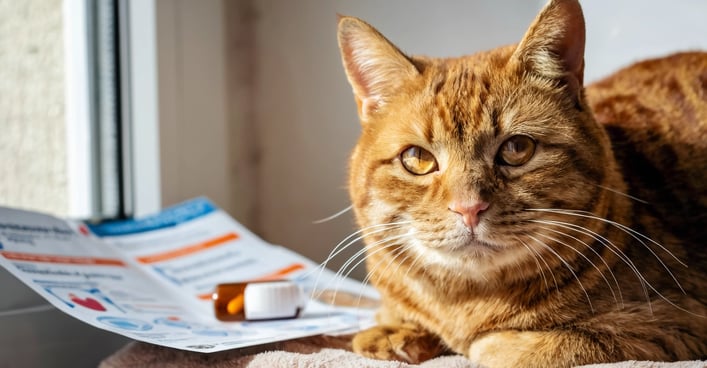
Hyperthyroidism in Cats: A Complete Guide to Diagnosis and Treatment in 2026
Your essential guide to feline hyperthyroidism. Learn to recognize symptoms, understand treatment options, and manage this common condition for your senior cat's best health.
Share this page
Hyperthyroidism in Cats: A Complete Guide to Diagnosis and Treatment in 2026
Hyperthyroidism is the most common endocrine disorder in middle-aged and senior cats, affecting approximately 10% of felines over the age of 10. This condition arises when the thyroid glands produce excessive thyroid hormones (T3 and T4), which accelerates the body's metabolism and impacts nearly every organ system. For owners of older cats, understanding this disease is essential for ensuring long-term health and quality of life.
Understanding Feline Hyperthyroidism
What is Hyperthyroidism?
The thyroid glands, located in the neck, produce hormones that regulate critical bodily functions, including:
Metabolic Rate: The speed at which the body converts food into energy.
Heart Function: Heart rate and contraction strength.
Body Temperature: Internal heat production and regulation.
Gastrointestinal Function: The pace of digestion and motility.
Nervous System: Activity levels, behavior, and mood.
In hyperthyroidism, benign tumors (adenomas) cause these glands to overproduce hormones, putting the cat's entire system into overdrive.
Hyperthyroidism in Cats: A Complete Guide to Diagnosis and Treatment in 2026 - Articles
Primary Cause:
Benign thyroid adenomas (approximately 98% of cases).
Malignant thyroid carcinoma (rare, about 2%).
The condition typically affects both thyroid glands.
Identified Risk Factors:
Age: The average age of diagnosis is 12-13 years.
Sex: No strong gender predisposition has been established.
Breed: Siamese and Himalayan breeds may have a slightly increased risk.
Diet: Potential links exist with certain canned diets, BPA exposure, and variable iodine levels.
Environment: Ongoing research investigates connections to environmental chemicals like fire retardants.
Recognizing the Symptoms
Classic Clinical Signs
The most hallmark sign is significant weight loss despite a ravenous appetite. Owners often report their cat is "eating everything in sight" but continues to lose body mass.
Other Common Symptoms:
Symptom
Approximate Frequency
Description
Weight Loss
95%
Progressive and often dramatic, despite normal or increased food intake.
Increased Appetite
90%
Ravenous, demanding behavior around food.
Hyperactivity/Restlessness
80%
Pacing, inability to settle, anxious behavior.
Increased Thirst (Polydipsia)
60%
Noticeably drinking more water than usual.
Increased Urination (Polyuria)
60%
Producing larger, more frequent clumps in the litter box.
Vomiting
40%
Frequent episodes, often containing food.
Diarrhea
30%
Soft stools or increased bowel movement frequency.
Poor Coat Condition
30%
Fur appears greasy, matted, or unkempt.
Behavioral Changes
Cats may exhibit noticeable personality shifts, including:
Restlessness and constant pacing.
Excessive vocalization, especially at night.
Increased irritability or aggression.
Demanding excessive attention.
Inappropriate elimination outside the litter box.
Disrupted sleep patterns.
Physical Examination Findings
During a check-up, your veterinarian may detect:
A palpable, enlarged thyroid gland (a "goiter") in the neck.
A rapid heart rate (tachycardia), often exceeding 200 beats per minute.
A heart murmur.
Poor overall body condition and muscle wasting.
Hypertension (high blood pressure).
Diagnosis: A Step-by-Step Approach
Initial Blood Testing
Total T4 Test: This is the primary screening test. An elevated T4 level confirms the diagnosis in about 90% of cases. It's a simple blood draw with results typically available within 24 hours.
Additional Thyroid Testing (for borderline or complex cases):
Test
Purpose
Free T4 by Equilibrium Dialysis
A more sensitive test used when Total T4 is normal but clinical signs are strongly suggestive.
TSH Test
Can help confirm diagnosis in challenging cases, though its use in cats is less common than in dogs.
Comprehensive Health Assessment
Because hyperthyroidism affects the whole body and can mask other diseases, additional testing is essential before starting treatment.
Test
Purpose
Importance
Complete Blood Count (CBC) & Chemistry Panel
Evaluates overall health, organ function (especially kidneys and liver), and checks for anemia.
Essential
Urinalysis
Provides a direct assessment of kidney health and function.
Essential
Blood Pressure Measurement
Screens for hypertension, a common and serious complication.
Essential
Chest X-rays / Echocardiogram
Assesses heart size and function, especially if a murmur is detected.
Highly Recommended
The Critical Kidney Connection
Hyperthyroidism increases blood flow through the kidneys, which can artificially improve their lab values and mask underlying chronic kidney disease (CKD). Successfully treating the hyperthyroidism can reduce this blood flow, potentially revealing the true state of kidney function. A full diagnostic workup establishes a crucial baseline to balance thyroid and kidney management.
Treatment Options: Weighing the Choices
Option 1: Daily Medication (Methimazole)
How It Works: Methimazole blocks the production of thyroid hormones. It manages the disease but does not provide a cure, requiring lifelong administration.
Available Forms & Cost (Monthly Estimate):
Oral Tablets: Given 1-2 times daily. Cost: $20-$40.
Transdermal Gel: Applied to the inner ear. Cost: $40-$60.
Compounded Liquid: An alternative oral form. Cost: $30-$50.
Advantages:
Non-invasive and reversible.
Lower initial cost.
Ideal for cats who are not candidates for curative treatments.
Disadvantages & Side Effects:
Requires lifelong, twice-daily dosing.
Potential side effects include vomiting, lethargy, decreased appetite, and facial itching (with the transdermal gel).
Rare but serious effects can involve liver issues or blood cell abnormalities.
Requires regular blood tests for monitoring.
Option 2: Radioactive Iodine (I-131) Therapy
How It Works: This is the gold-standard curative treatment. A single, subcutaneous injection of radioactive iodine is selectively absorbed by the overactive thyroid tissue, destroying it while sparing healthy tissue. It is a permanent cure in over 95% of cases.
The Process:
Pre-treatment health screening.
Hospitalization for 3-7 days in a specialized facility until radiation levels are safe.
Single I-131 injection.
Follow-up blood tests to confirm normal thyroid levels.
Advantages:
Curative, permanent solution.
No daily medication or anesthesia.
Minimal to no side effects.
Preserves normal thyroid function.
Disadvantages:
Higher upfront cost ($1,500 - $3,000).
Requires hospitalization and specialized facilities.
Not suitable for cats with uncontrolled kidney disease, heart failure, or thyroid cancer.
Option 3: Surgical Removal (Thyroidectomy)
How It Works: The affected thyroid gland(s) are surgically removed under general anesthesia. This offers a permanent cure but carries surgical risks.
Advantages:
Permanent cure.
Immediate results.
No radiation concerns.
Disadvantages:
Anesthesia risk for older cats.
Surgical risks include bleeding, nerve damage (affecting voice), and accidental damage to the parathyroid glands (which control calcium levels).
May require a second surgery if the second gland becomes affected.
Note: Due to the high success and lower risk of I-131 therapy, surgery is less commonly performed today.
How It Works: Feeding a prescription diet (e.g., Hill's® y/d®) that is severely restricted in iodine. Since iodine is essential for thyroid hormone production, this diet can control hormone levels.
Critical Requirements:
Exclusive feeding only—no other food, treats, or hunting/scavenging.
In multi-cat households, all cats must eat the diet, or cats must be fed completely separately.
Advantages:
No medication or procedures.
Disadvantages:
Extremely difficult to ensure perfect compliance.
Limited to one commercial food option, which some cats may refuse.
Long-term efficacy and safety data beyond 5 years is limited.
On Medication: T4 levels are checked 2-3 weeks after starting, with dosage adjustments as needed. Kidney values are closely monitored.
Post I-131/Surgery: T4 is checked at 1 month and 3 months to ensure normal levels and watch for hypothyroidism.
Long-Term Monitoring:
Medicated Cats: T4 and kidney values every 3-6 months; blood pressure checked annually.
Cured Cats (I-131/Surgery): Annual wellness exams with T4 and kidney checks to monitor overall health.
Associated Complications
Hypertension (High Blood Pressure): Affects 10-20% of hyperthyroid cats and can lead to blindness (retinal detachment), stroke, or kidney damage. It is often treated with medication (e.g., amlodipine) and may resolve with thyroid control.
Heart Disease: "Thyrotoxic cardiomyopathy"—a thickening of the heart muscle—is common and usually reversible with successful thyroid treatment.
Kidney Disease: The interplay between hyperthyroidism and chronic kidney disease (CKD) requires careful, ongoing management to balance the treatment of both conditions.
Prognosis and Life Expectancy
With appropriate treatment and monitoring, the prognosis for a hyperthyroid cat is excellent. Most cats regain lost weight, their behavior normalizes, and they can enjoy a normal life expectancy.
Survival Statistics: Studies show approximately 80% survival at 2 years and 60% at 4 years post-diagnosis. The presence and severity of concurrent conditions, especially kidney disease, are the primary factors influencing longevity.
Living with and Managing a Hyperthyroid Cat
Daily Tips for Success:
Medication: Administer at the same time(s) each day, potentially with a small treat or meal. The transdermal gel is a valuable option for cats that resist pills.
Diet & Nutrition: Focus on high-quality, palatable, calorie-dense food to support weight gain. Always provide fresh water.
Vigilance: Monitor for any changes in appetite, energy, vomiting, or thirst/urination habits and report them to your veterinarian promptly.
Conclusion
Feline hyperthyroidism is a highly manageable condition. Early detection through recognition of subtle symptoms, followed by a comprehensive veterinary workup, paves the way for successful treatment. By working closely with your veterinarian to choose the best option—whether it's the curative I-131 therapy, daily medication, or dietary management—you can ensure your cat maintains an excellent quality of life for years to come.
Last Updated: February 2026 This guide is for informational purposes only. Always consult your veterinarian for diagnosis and to develop a treatment plan tailored to your cat's specific health needs.
Get expert advice about cat care, behavior, nutrition, grooming, and training. Ask our AI cat care expert anything about your cat and receive professional guidance.